Fresh Eyes on Marrakech
Blending architectural heritage, contemporary art and inspired hospitality, the Red City has always been a captivating destination. These just-opened (and recently renovated) hideaways show off the city’s creative side.

Jnane Rumi
“Love is the only truth. Everything else is an illusion.” This poem catches the eye as I leaf through the guestbook of this new hotel in the Palmeraie. The words are accompanied by a sketch capturing a beautiful moment at this verdant sanctuary, where love really does seem to be all around us.
Indeed, love is at the core of this project led by Dutch art lawyer Gert-Jan van den Bergh and his wife, Corinne, a somatic therapist and sculptor. A love, first and foremost, for this architectural gem from the mid-20th century by the iconic Tunisian architect Charles Boccara (who also designed Marrakech’s Royal Theatre). An elegant four-bedroom bungalow, it was transformed, under the direction of architect Nicolas Bodé, into a two-storey villa with self-contained pavilions and a total of 12 bedrooms.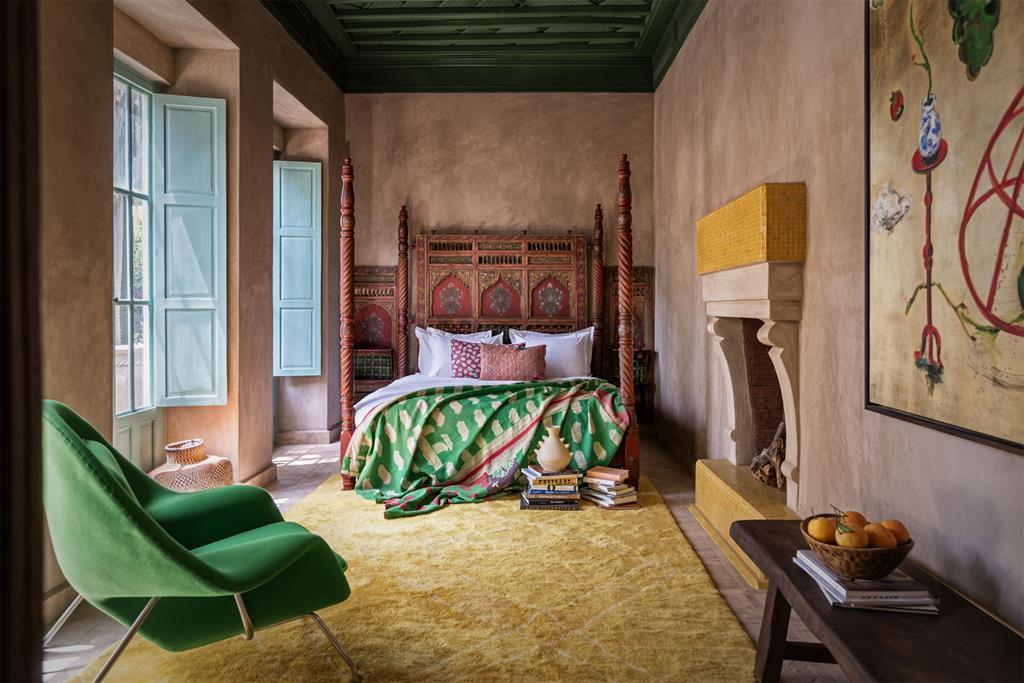 (Photo: David Dumon)
The seven-year project was fraught with challenges, including the discovery that the original house had no foundations. “If I had known what awaited me, we would never have done it,” van den Bergh reflects. Today, the brick domes, light-filled loggias, honeycomb fireplaces and arched French windows have been meticulously preserved and restored. A host of unexpected details have been added, too, including sunken marble bathtubs and a tea room underneath a nine-metre-high dome.
This homage to heritage, however, hides a much greater ambition: to transform Jnane Rumi into a vibrant gallery, where contemporary North African art meets European works. Thanks to the curation of Moroccan artist Samy Snoussi, the hotel’s programming extends far beyond its walls with private studio visits, specialist architectural tours, and curated experiences centred on Marrakech’s progressive creative scene, such as the annual 1-54 Contemporary African Art Fair.
Perhaps this is where Jnane Rumi’s strength lies: making space for creative experiences while indulging in a love of contemplation and tranquillity. You can spend hours reading a book on a peaceful shaded terrace, or in the garden filled with palm trees, ancient cedars and bougainvillaea. You can swim laps in the elegant pool, with its turquoise herringbone tiles. Or delight in the tagines and seasonal specialities of chef Moula Erraissi (formerly of the fêted Australian restaurant Plus61) and Dutch chef Karin Gaasterland, previously of El Fenn. Love may be the only truth, but at Jnane Rumi, so is an appreciation of the good life.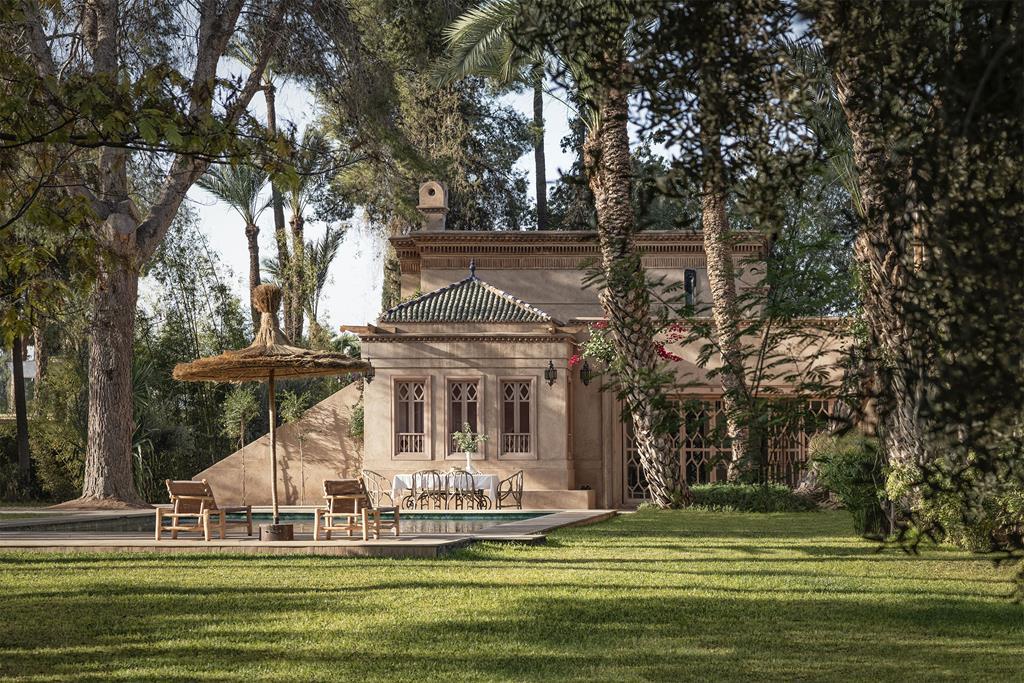 (Photo: David Dumon)
Farasha Farmhouse
This house, nestled in the heart of an olive grove 30 minutes from the centre of Marrakech, shares its name with the Arabic word for butterfly. Formerly the residence of French painter Patrice Arnaud, this bucolic haven immediately captivated Rosena and Fred Charmoy, the Franco-Irish duo known for bringing their own flair to Morocco’s nightlife. Themes of metamorphosis and transcendence are poetically reflected in two upstairs suites, a double room with garden views and a private casita (the addition of a second building will bring the total to 11 suites by 2026). Beyond impeccable style, farm-to-table offerings and a 50m-long swimming pool lined with private alcoves and shaded loungers, it’s the details that seduce here: sculptures installed by Moroccan artist Amine El Gotaibi; a rare collection of books from the library of American fashion icon Diana Vreeland; and a traditional orange-juice cart painted by LRNCE Studio.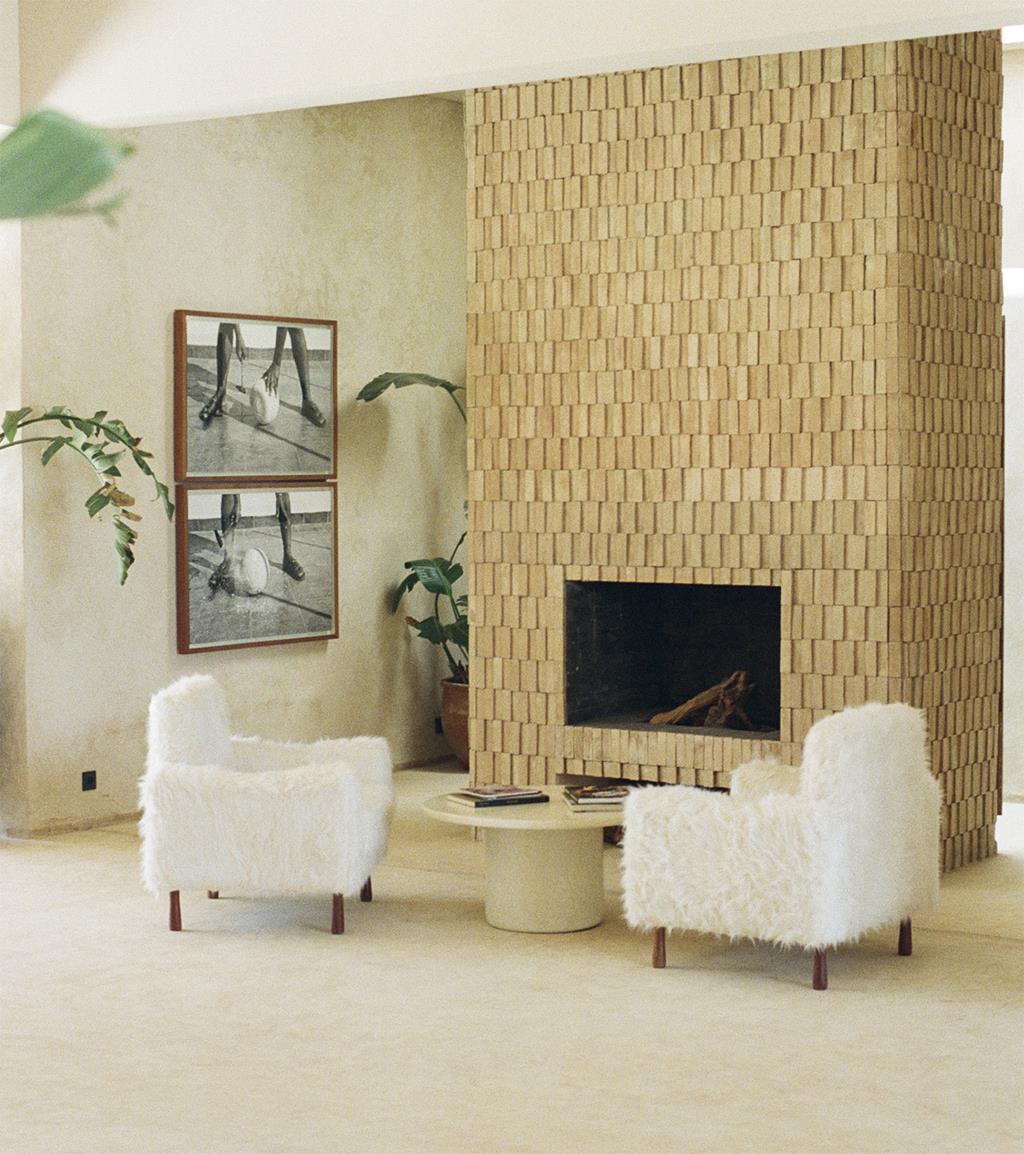 (Photo: Tristan Hollingsworth)
The Mellah
In Morocco, “mellah” refers to a neighbourhood surrounded by high walls where Jewish communities once lived. These days, The Mellah is also a new designer address with 10 rooms in the heart of the Medina. It combines the graphic boldness of the 1970s with the traditional charm of riads, featuring zellige tiles, interior courtyards and arcades. But the greatest asset of this intimate hotel is revealed at the top of a staircase: a rooftop terrace with a year-round heated pool and the peaks of the Atlas Mountains as a backdrop. Without formality or pretension, guests revel in the simple pleasures of life while observing the bustle of the city ... at a peaceful distance.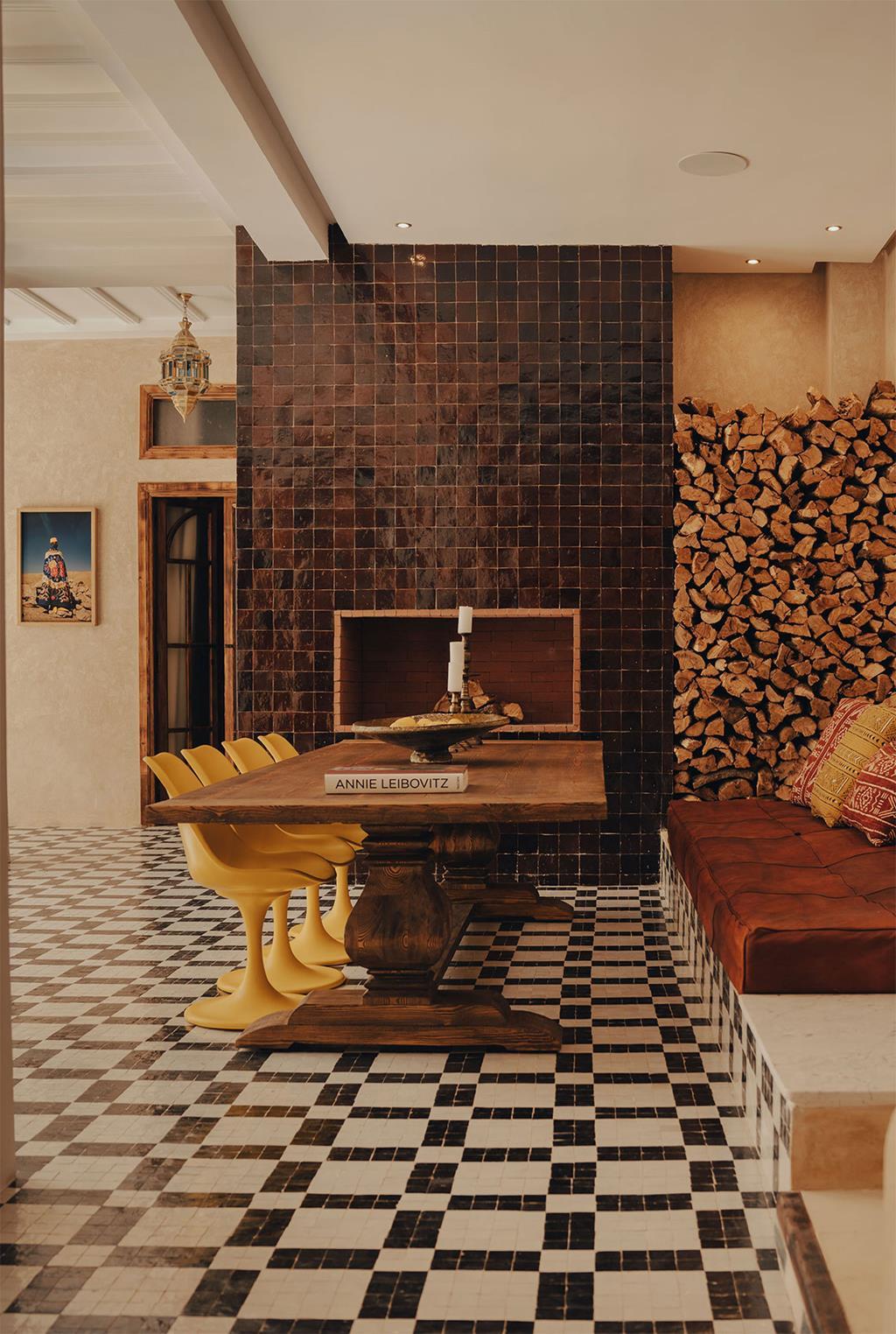 (Photo: The Mellah)
El Fenn
For over 20 years, the Medina’s most pop art-oriented hotel has continually adapted to travellers’ tastes. Originally a collection of only six rooms, it now boasts 41 unique suites and a newly renovated rooftop terrace. The establishment’s iconic red and white stripes have been enriched with large hanging lamps, textiles featuring swirling, geometric lines, and tables crafted by local artisans using the traditional zellige tiling. Under the artistic direction of Yann Dobry, the hotel will also host a series of retreats dedicated to fashion and design in 2026, as well as an artist residency. This ambitious programme is faithful to the spirit of the hotel’s founder, Vanessa Branson, who has scattered her contemporary-art collection across every corner of the property.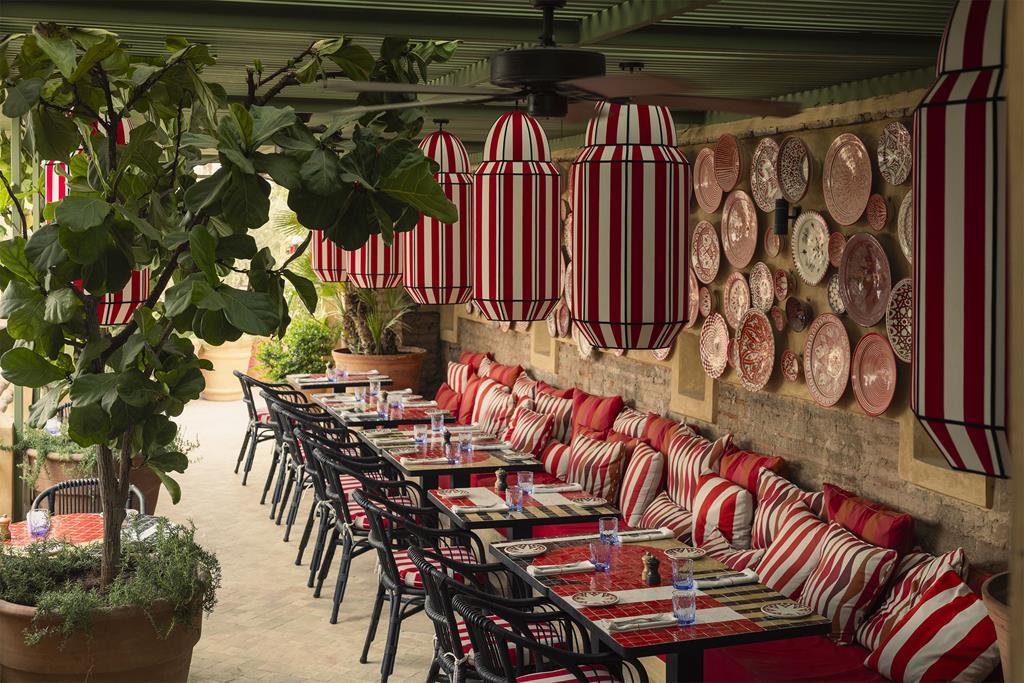 (Photo: Moggi Studio/El Fenn)
IZZA
Jack Kerouac, Jimi Hendrix, Yves Saint Laurent … Marrakech has always been a haven for free spirits and intellectuals. But among the personalities who frequented the city in the 1960s and 1970s, Bill Willis, an idiosyncratic architect and socialite, is surely the one who left the strongest mark. His spirit lives on at IZZA, a collection of seven interconnected riads that resemble a small museum. More than 300 works of art are on display: photographs that serve as an ode to the counterculture of the previous era, contemporary Moroccan creations – and, most astonishing of all – one of the world’s largest collections of digital and generative art (prints by Sebastião Salgado, works by AI-art talent Refik Anadol and rising Ethiopian star Yatreda, to name just a few). With its rooftop views, the hotel’s Noujoum restaurant deserves its strong reputation, and there are few better nightcaps in the city than those served at Bill’s Bar, designed as a tribute to Rick’s Café Américain from the film Casablanca.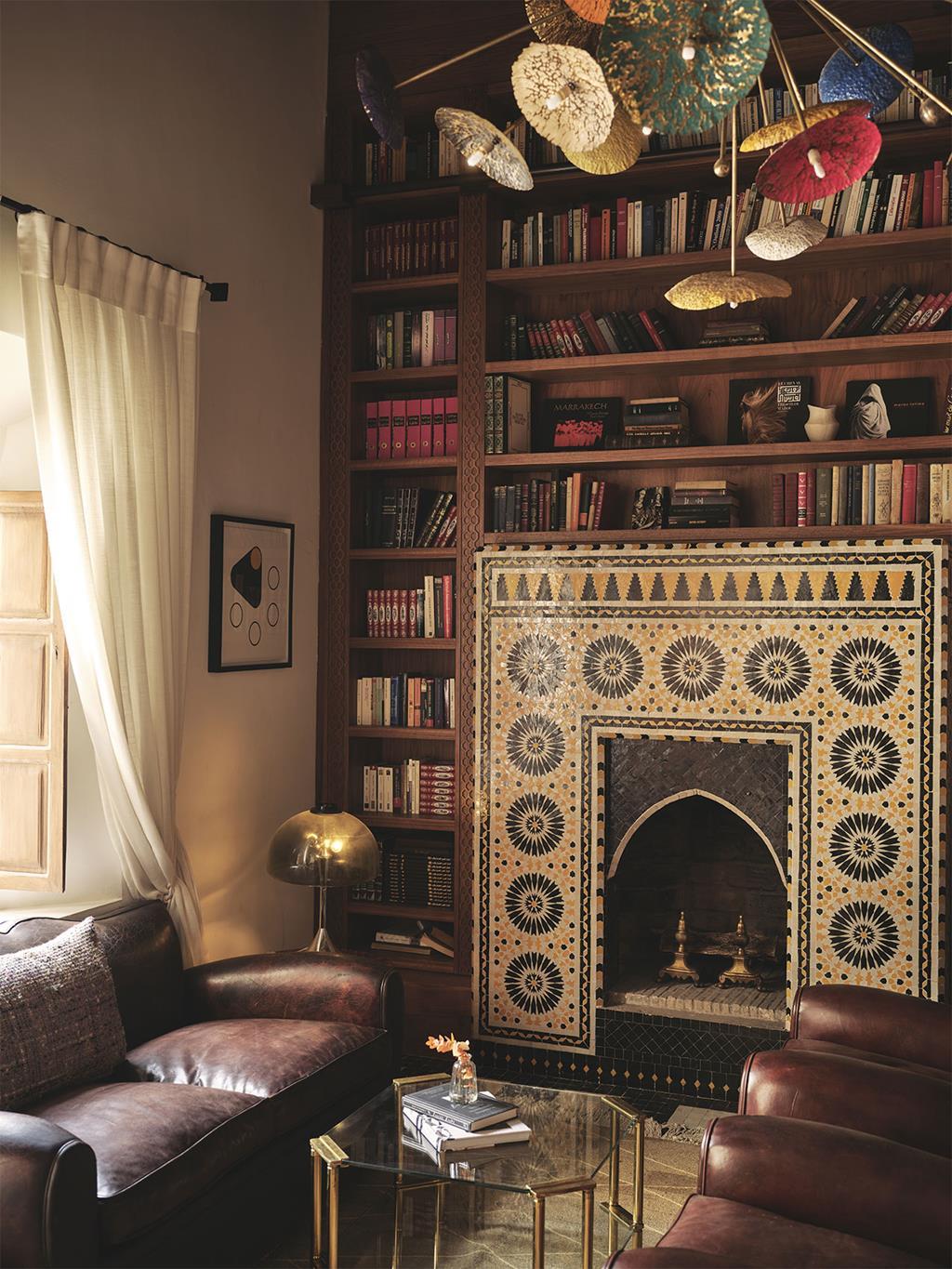 (Photo: Izza)