A Feast for the Senses
From fine dining in soaring skyscrapers to Michelin-minted eateries inside the world’s great art institutions, today’s most memorable restaurants pair serious culinary chops with extraordinary – and Instagrammable – settings.

Don’t tell the chef, but it’s not always about the food. People go to restaurants for all sorts of reasons: to see and be seen, to socialise, to celebrate with friends or family, for the ambience, for the view, or simply for convenience – to avoid the irksome chores of shopping, cooking and washing-up.
And, in our social-media age, restaurateurs have found themselves battling “food influencers” who demand free meals, disrupt other diners, stand on chairs to get the perfect shot, then leave an over-ordered plethora of dishes to languish cold and uneaten on the table. And there is no guarantee that their side of the deal – posting a complimentary, lavishly illustrated review to their multitude of followers – will be honoured.
One veteran London restaurateur told me that he has become almost nostalgic about the time when a handful of opinionated newspaper critics was all he had to worry about: “They might have given you a roasting later, but at least they knew how to behave in a restaurant.”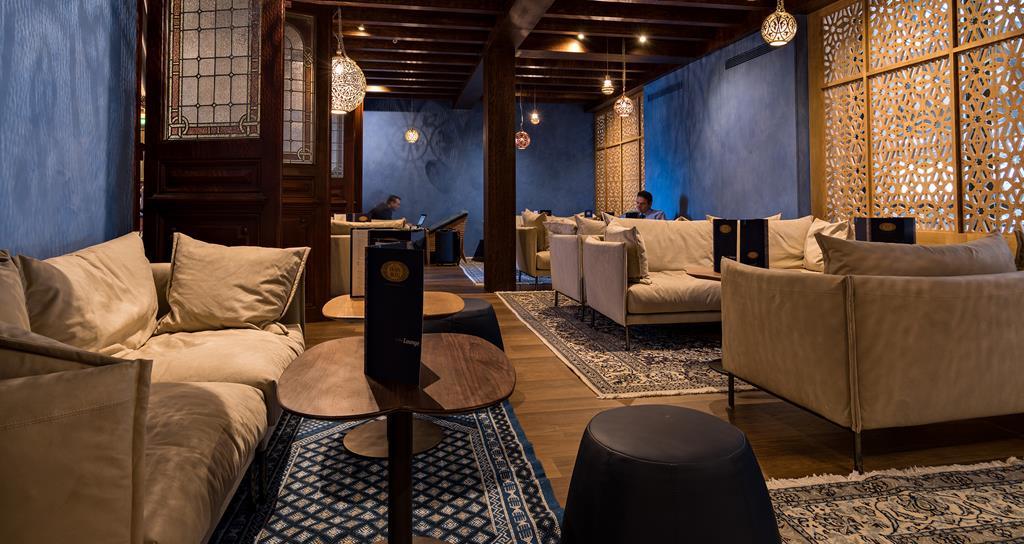 Le Train Bleu, Paris, France (Photo © Le Train Bleu)
The backlash has seen some restaurants ban mobile phones in the dining room, refuse to give free meals to influencers, or even deliberately create dishes that taste wonderful, but look terrible: unglamorous and un-Instagrammable. Anything brown is a good policy.
Mostly, however, restaurants have recognised that when diners have multimegapixel cameras in their pockets, resistance is futile. If your establishment has a glorious interior, ancient or modern; if it has jaw-dropping vistas from its windows; if it is perched above a winsomely pretty fishing port; if it is on the squillionth floor of a skyscraper; and especially if it is surrounded by elephants, pyramids or glaciers, then money shots are part of the deal.
And, in fact, the food does matter. Take art galleries, where those suffering from cultural indigestion were once happy to make do with a sandwich, a coffee and a chance to rest tired feet. No longer: high-end dining in galleries has become so popular that many patrons book tables at their restaurants and completely ignore the art.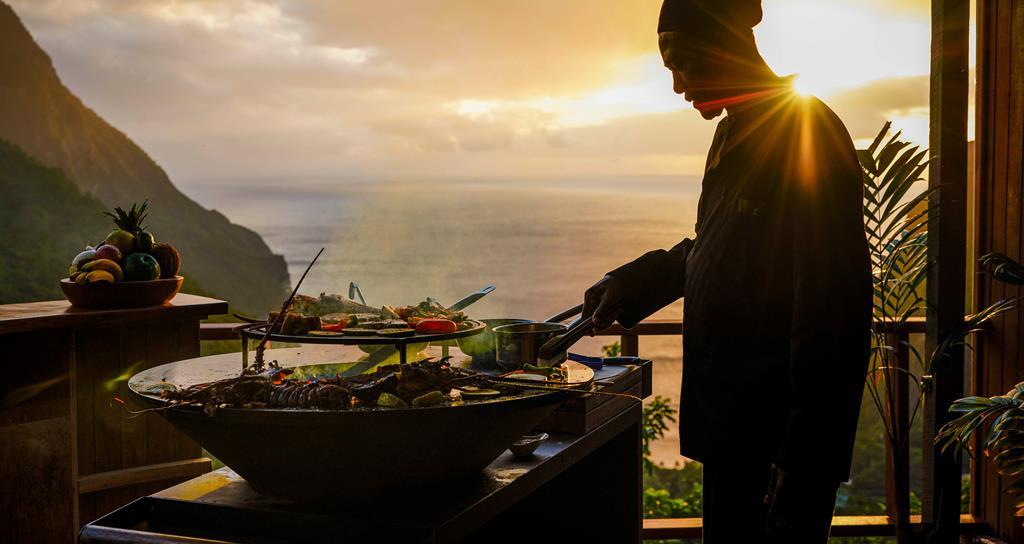 Dasheene, St Lucia (Photo: Ernesto Roman)
You can sample Thomas Allan’s refined American cuisine at The Modern, housed in New York’s Museum of Modern Art; Julien Royer’s clever French fusion dishes made with Asian techniques and luxury ingredients at Odette, in Singapore’s National Gallery; or Alain Ducasse’s cuisine in a Philippe Starck-designed dining room at Idam, housed in the Museum of Islamic Art in Doha. These three restaurants have six Michelin stars between them: it sure beats a stale ham roll and a cold cappuccino.
Ducasse’s fifth-floor restaurant also offers superb views of the Doha skyline: not so long ago, one of the immutable laws of dining was that the quality of the food was inversely proportional to the elevation of the dining room: in other words, the more spectacular the panorama, the worse the food was.
But hotels, in particular, have upped their game, realising that great dining spaces are increasingly important to their guests, and that competition between hotels in the world’s great cities is fierce, and getting fiercer.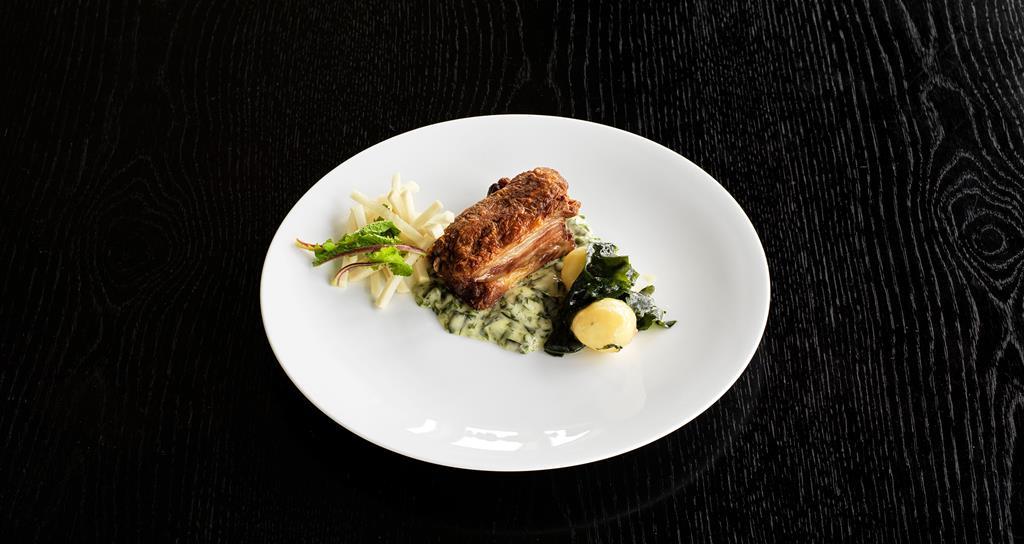 Infinity By Mark Best, Sydney, Australia
Take Shanghai, a city which has some 70 buildings over 200 metres high, more than 60 of them built in the last 25 years. The tallest by some distance is the Shanghai Tower, at 632 metres, its topmost floors occupied by J Hotel. Its Heavenly Jin restaurant, on the 120th floor and serving a high-end Chinese menu to 256 diners, is officially the world’s highest restaurant in a building. Cuisine has never been more haute.
But the diners at Heavenly Jin, transported above the clouds in super-fast lifts while clutching their smartphones, are merely demonstrating a deep-seated, atavistic urge in humans to eat, drink and be merry.
Take the humble taverna, for example, an integral part of Greek culture that has been exported around the world. It has ancient beginnings: excavations at the Agora of Athens in the 1970s uncovered the remains of a restaurant: plates, mixing bowls, spits for roasting meat and casserole dishes with lids, as well as oyster shells, mussel shells and fishbones. A nearby wine shop, possibly connected to the restaurant, offered its patrons both local wines and wines from several islands.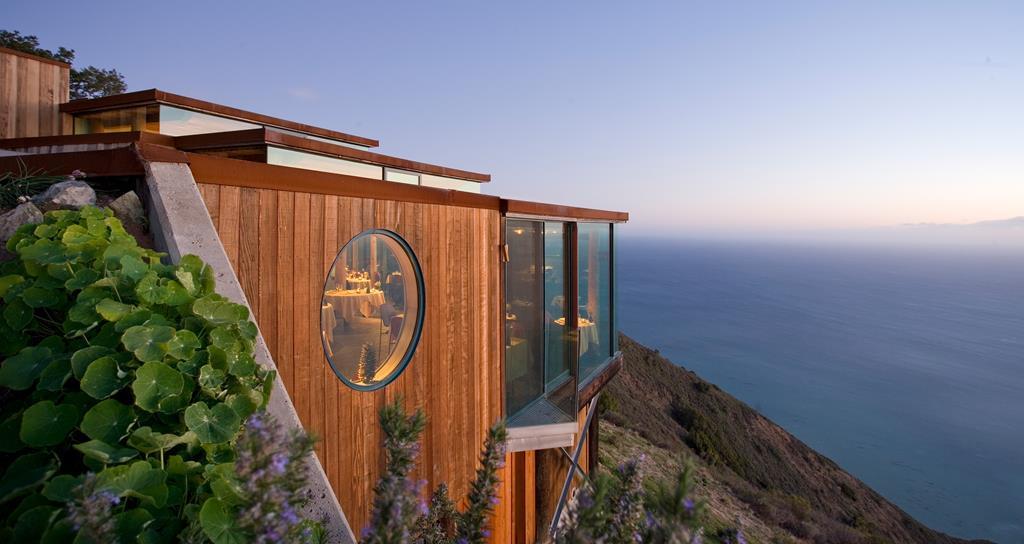 Sierra Mar, Big Sur, USA (Photo: Kodiak Greenwood)
The patrons of these establishments were not the banqueting upper classes of the symposium, lolling on cushioned couches while discussing philosophy. They were “hoi polloi”, ordinary people, often living in apartment blocks without kitchens of their own, drawn to tavernas for sustenance, but staying for conversation and camaraderie. Today, tavernas are popular with all layers of Greek society, much as coaching inns in Britain – once a necessity for weary travellers and their even wearier horses – evolved into the egalitarian pubs of today.
The restaurant, or a version of it, may stretch back even further than the tavernas of ancient Greece. There are records from 512 BC of an establishment in ancient Egypt (it did, however, only serve one dish: cereal, wildfowl and onions). Eleventh- and 12th-century China – the Song dynasty – saw the opening of numerous establishments catering to travelling merchants; unfamiliar with the local cuisine, they craved a taste of home, and eateries sprang up that catered to their needs (usually close to the bars, hotels and brothels that fulfilled any other desires they might have had). Hangzhou, the capital of China for the second half of the Song dynasty, was particularly notable for its variety of cuisines, price points and sensitivity to any religious restrictions.
But the real emergence of the restaurant as a place to dine in elegant surroundings, to hobnob with the crème de la crème, happened in late-19th-century Paris. Restaurants had proliferated after the French Revolution, many of them started by cooks who had lost their positions in grand houses after their aristocratic employers had lost their heads during la Terreur, but many were simple establishments dubbed bouillons after the broth they served.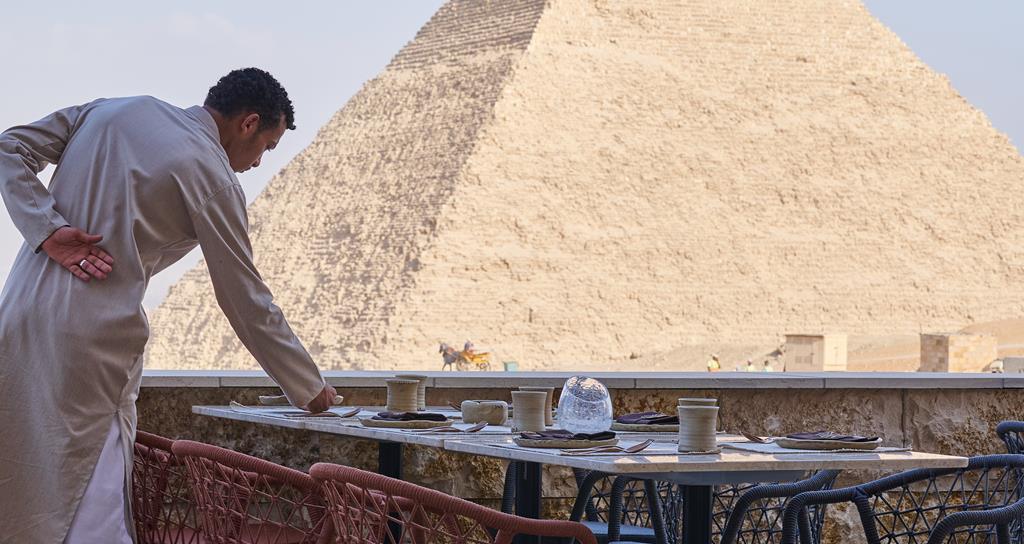 Khufu's, Cairo, Egypt (Photo © Khufu's)
It took the Belle Époque, a peaceful period that started in 1871 and was marked (at least among Paris’s wealthier denizens) by general optimism and a flowering of arts and science, to cement Paris’s reputation as the most stylish city for diners in Europe. It was the golden age both for brasseries and for Art Nouveau, from which many restaurant designers drew inspiration, including the 17 artists who are credited with decorating Le Train Bleu, the eatery in the Gare de Lyon. Like today’s art-shy visitors to galleries, not all of their diners had a train to catch.
But what has really changed over the last decade or so are travellers’ expectations. If you had visited the Great Pyramids of Giza just a few years ago, for example, you would not have anticipated sitting on the terrace of the best restaurant in Egypt with an uninterrupted view of the only remaining wonder of the ancient world, but Khufu’s, opened in 2022, offers exactly that. In Australia, Uluru’s visitors had to wait until 2012 for Tali Wiru, where superb food is interwoven with Aboriginal history and culture, while in the same year, travellers to the east coast of Zanzibar could clamber aboard a boat and have dinner at an Italian-inspired restaurant perched on a tiny island.
Restaurants are not all about the food, but – when thoughtfully conceived and beautifully executed – they can augment our enjoyment of the world around us, add another dimension to unforgettable experiences, nourishing both body and soul. Just don’t stand on a table to take your photos. »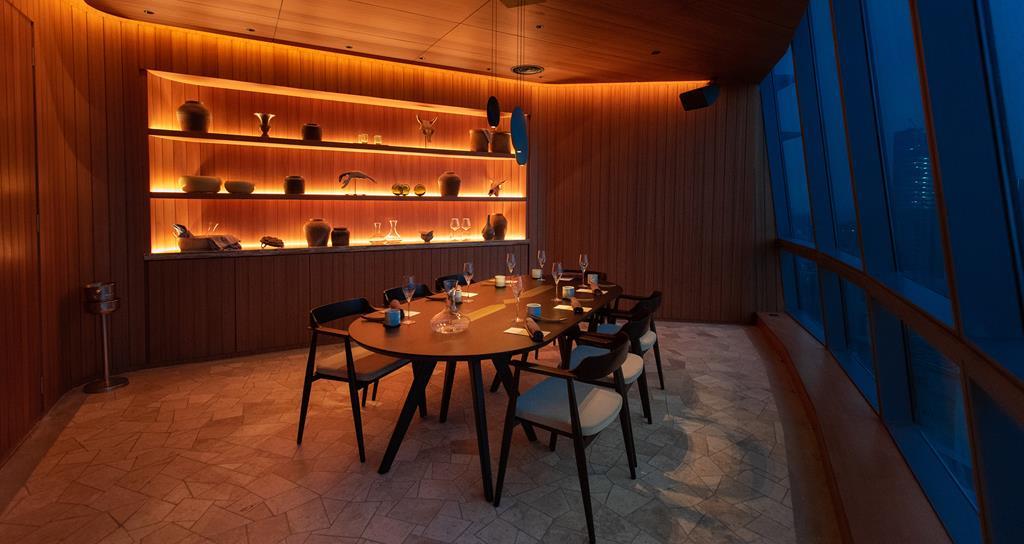 Dewakan, Kuala Lumpur, Malaysia (Photo © Dewakan)
Off the Eaten Track
Culinary temples in the middle of nowhere
The Rock, Zanzibar, Tanzania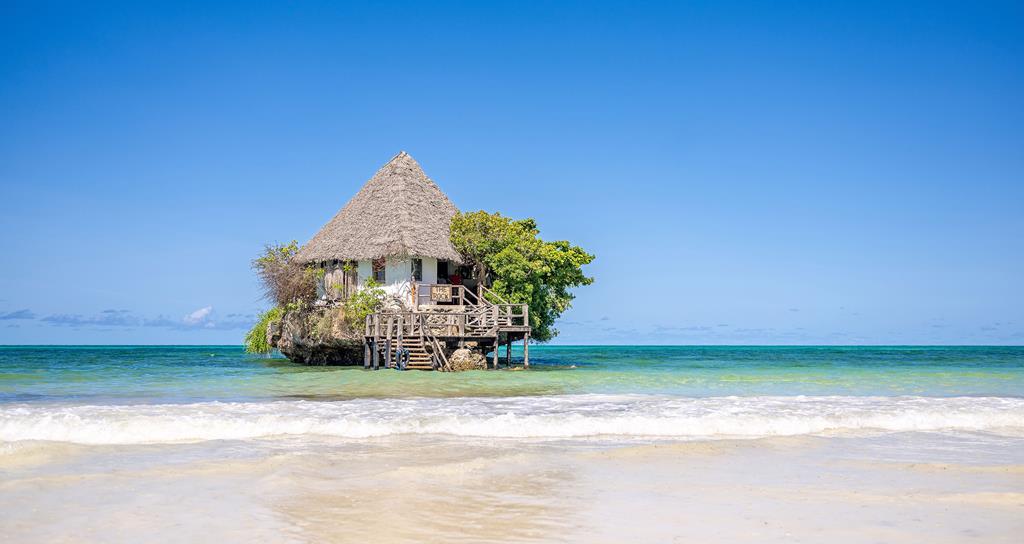 © The Rock Restaurant Zanzibar
Scroll through the posts on The Rock, Zanzibar’s Instagram account (it has 52.9k followers) and – unusually for a restaurant – you will struggle to find any pictures of food. This is not because The Rock’s cuisine isn’t photogenic – its fusion of Zanzibari ingredients, especially seafood, with Italian technique looks great on the plate – but because the setting (the restaurant is unfeasibly perched on a tiny island just off the island’s east coast) is so picture-perfect that its guests’ lenses are drawn to little else; at low tide, diners can walk to the island, but a meal at The Rock usually starts and ends with a short boat ride: TikTok videos abound. The restaurant was founded in 2011 by a trio of restaurateurs: two Italians, Andrea Brunetti and Claudio Moras, and the half-English, half-Italian Nigel Firman. Their Italian heritage is reflected in a menu that might pair bronzed tentacles of locally caught octopus with crisped polenta and a silky parsnip and potato purée, or homemade gnocchi with prawns slathered with Zanzibari vanilla butter, served in an airy, woody, rustic island-chic dining room with panoramic views of the Indian Ocean. Local spices are used judiciously, and, unsurprisingly – given that many of the clientele have travelled from afar simply to eat here – almost half the wine list is given over to celebratory bottles of fizz.
Tali Wiru, Uluru, Australia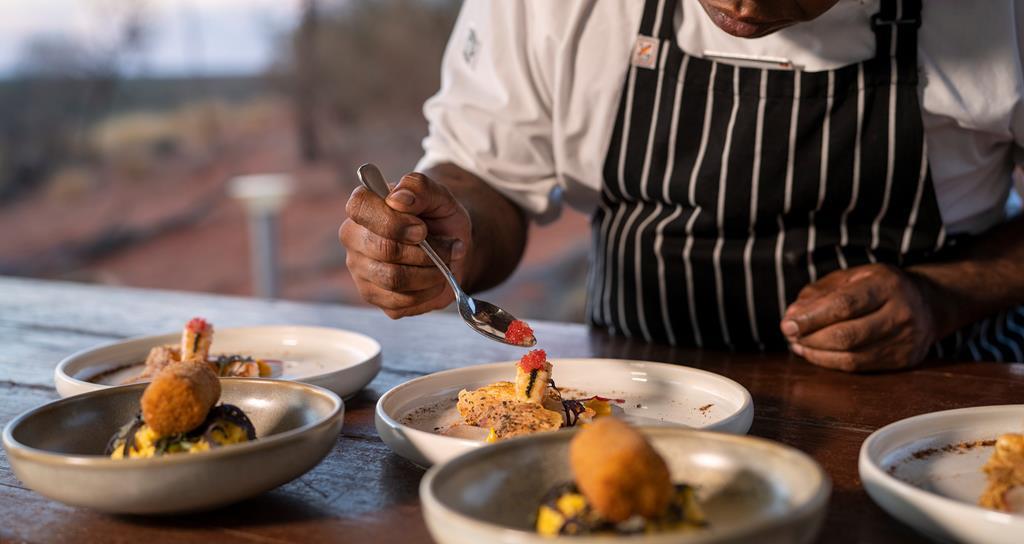 (Photo © Voyages Indigenous Tourism Australia)
The Southern Desert surrounding Uluru (aka Ayers Rock) is the setting for Tali Wiru (“beautiful dune” in Anangu), an open-air restaurant that offers intrepid travellers the chance to sample bush ingredients expertly cooked and served under the stars: from the welcoming, rumbling burst of a didgeridoo and a glass or two of champagne to a firepit finale with bush stories, cognac and hot chocolate to a four-course gourmet menu – bush spinach dumplings, lamb backstrap, chestnut velouté, local wagyu beef, all washed down with Penfolds wines. A truly magical experience.
Seven Glaciers, Alaska, USA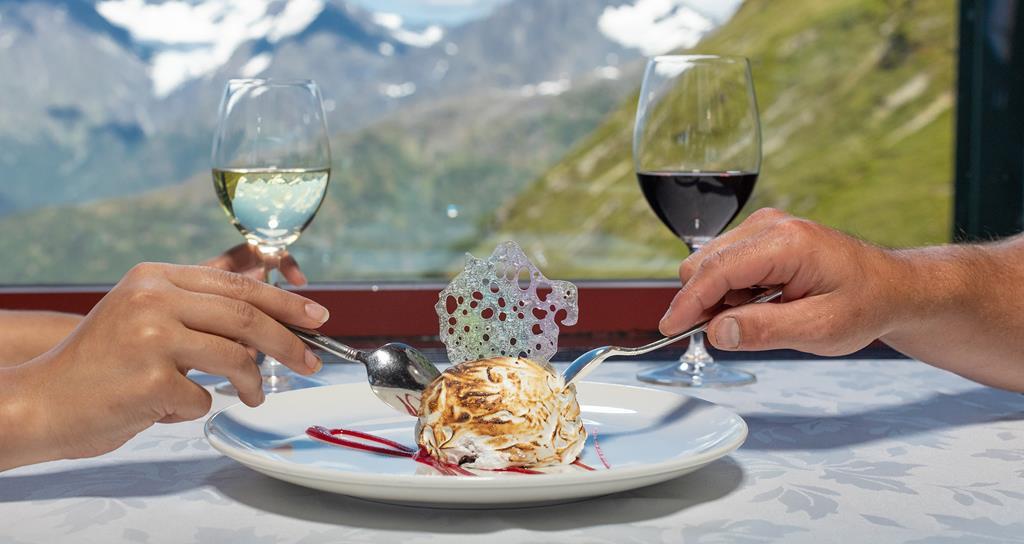 (Photo © Alyeska Resort)
So named because of the neighbouring icy peaks visible from its lofty location on the 700m summit of Mount Alyeska, Seven Glaciers offers a six-course gourmet dinner making full use of Alaska’s bounty from the waters and the wild: a rich and fragrant lobster bisque, perhaps, with scallops and paddlefish caviar; a salad of foraged greens; or a tranche of halibut with asparagus and herb oil sharpened with verjus. The wine list (one of the US’s top 100, according to Wine Enthusiast) is fantastic and well priced.
The Elephant Café, Livingstone, Zambia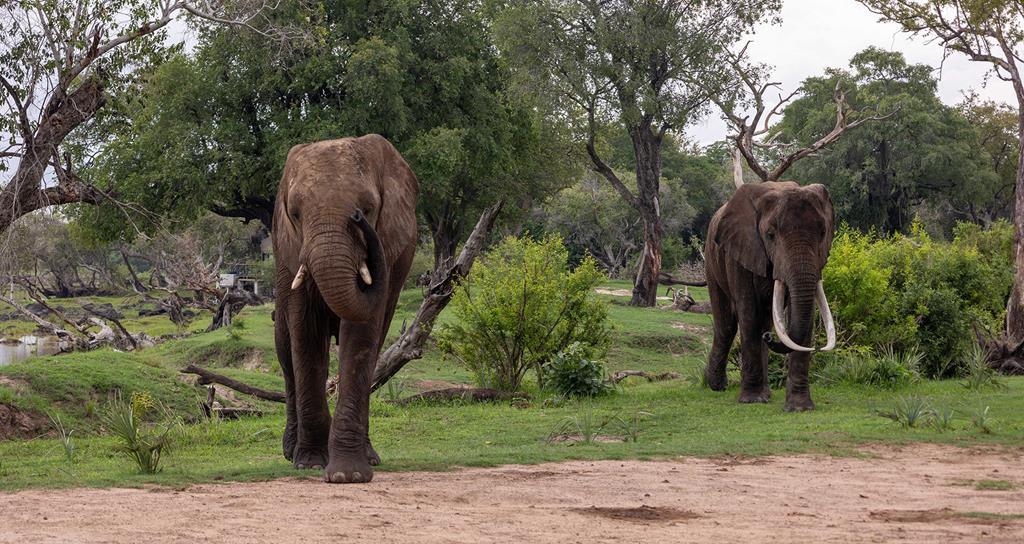 (Photo © The Elephant Café – Livingstone Zambia)
Just a few kilometres upstream from Victoria Falls, The Elephant Café isn’t just about the food, excellent though it is. Set on a wooden platform by the Zambezi river, the restaurant is part of a centre for rescued elephants, and diners are encouraged to meet them before lunch or dinner, which might kick off with a kir royale made with sindambi, a kind of hibiscus, followed by a fire-roasted pepper soup flavoured with wild masawa, a local fruit, then seared beef fillet with local leaves, rice and quinoa.
The Old Forge, Knoydart, Scotland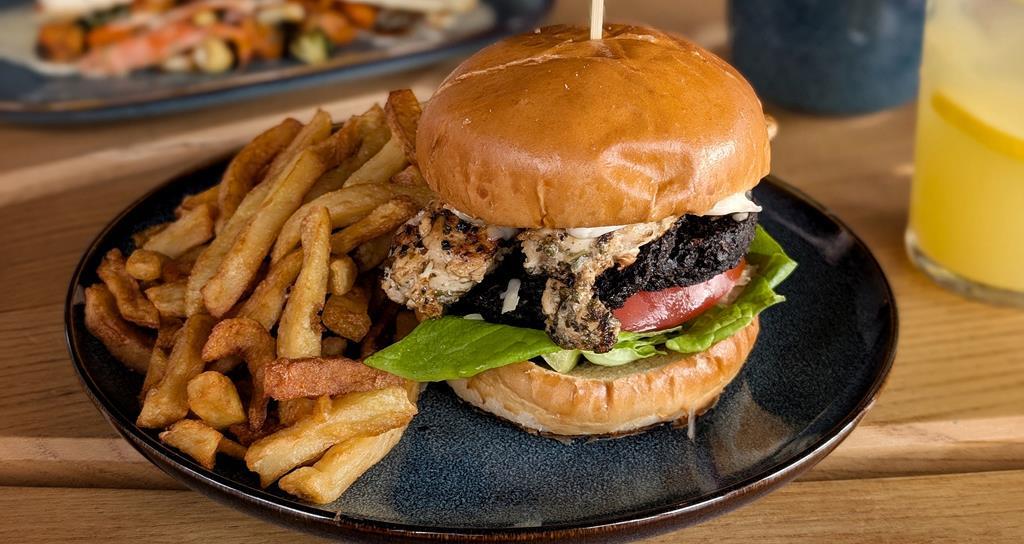 (Photo © The Old Forge)
A community-owned spot on the west coast of Scotland, this is the remotest pub in mainland Britain: patrons arrive after either a 29km hike through the Highlands or an 11km sea crossing. Beers on draught include ales from the nearby Knoydart Brewery (30 or so malt whiskies are on offer), and the restaurant serves stellar hearty fare, including Cullen skink, mussels steamed in wine and garlic, wild venison salad, and fillet of beef in a whisky-flamed green peppercorn sauce.
Tokuyamazushi, Shiga, Japan
On the shores of Lake Yogo, about 100 kilometres northeast of Kyoto, Tokuyamazushi offers a startlingly different version of kaiseki from anything in the West, or indeed, most of Japan. Chef Hiroaki Tokuyama is a master of fermented foods, and dinner at his simple, elegant restaurant features not just his signature speciality of funazushi – made from fish fermented in salt and rice – and fermented karasumi (similar to Mediterranean bottarga), but also wild game from the nearby mountains, which might include venison or even bear.
Rooms with Views
Dining with a side order of jaw-dropping vistas
Sierra Mar, Big Sur, USA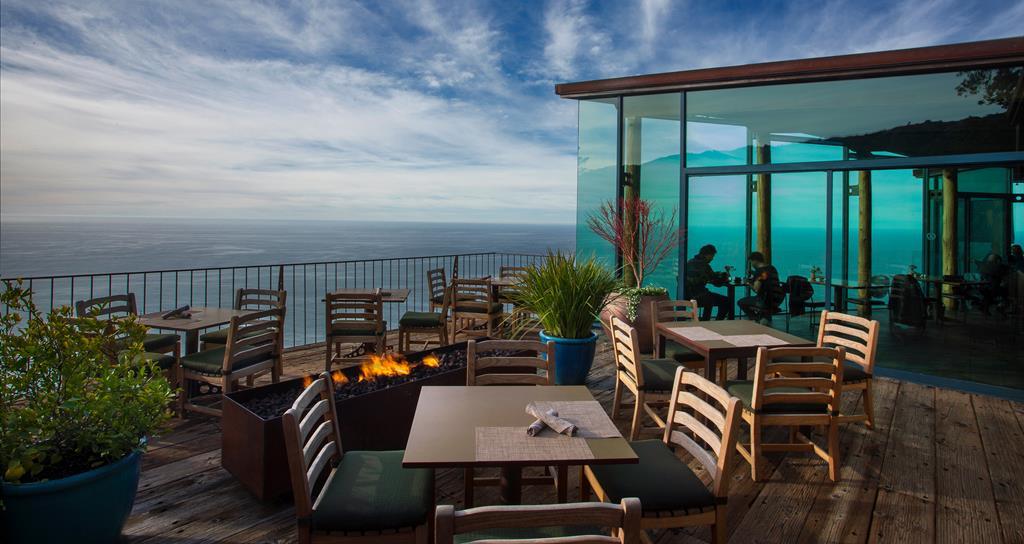 (Photo: Kodiak Greenwood)
The mountainous section of California’s Central Coast known as Big Sur attracts millions of visitors eager to behold the rugged beauty of its landscapes. A lucky few of them will make the journey to the clifftop Post Ranch Inn, with its stunning views over the Pacific Ocean, and to the hotel’s multi-award-winning restaurant, Sierra Mar. Executive chef Il Hoon Kang’s menu astutely blends the finest local produce, some of it from the restaurant’s own garden, with some distinctly Korean touches: celtuce (a thick-stemmed cultivar of lettuce) is fermented and served banchan-style with herbs, flowers, cured egg yolk, lentil crackers and a preserved citrus vinaigrette, while Pacific oysters are perked up with the fermented tang of kimchi. Chef Hoon’s $85 prix-fixe lunch menu, by contrast, takes its inspiration from the eastern Mediterranean, its farm-to-table menu dotted with feta, chermoula, hummus and za’atar. The restaurant itself is architecturally stunning, all warm wood and vast panes of plate glass, with a heated outdoor terrace; and it is a terrific place to try wines from the Santa Lucia Highlands, while the 3,200-bottle-strong list also includes a vast selection of burgundy, both white and red. The cellar at Sierra Mar was a recipient of Wine Spectator’s prestigious Grand Award in 2012 and has held it ever since.
Dewakan, Kuala Lumpur, Malaysia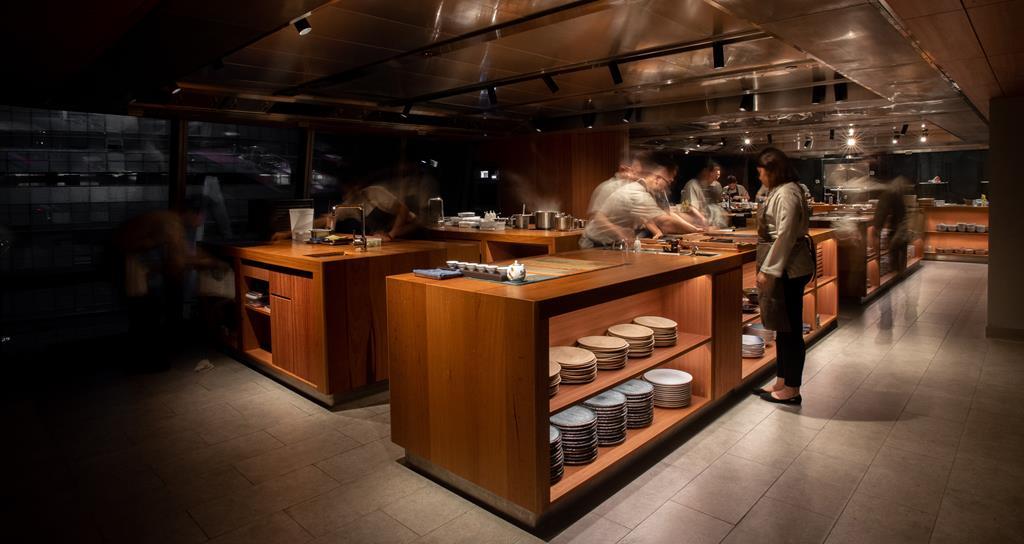 Dewakan
The 48th-floor dining room at Dewakan, chef Darren Teoh’s Michelin two-star restaurant in downtown KL, looks out at the Petronas Towers, the tallest twin skyscrapers in the world: book a 6pm table if you want to see the sun set behind them. Teoh’s dramatic plates are equally diverting: belinjau nuts are pounded into a cracker, then shaped and served with caviar; slipper lobster is slow-grilled over charcoal and brushed with a nutmeg glaze; asam gelugur, a local fruit, is candied and served with fermented rice ice and palm toddy.
Khufu's, Cairo, Egypt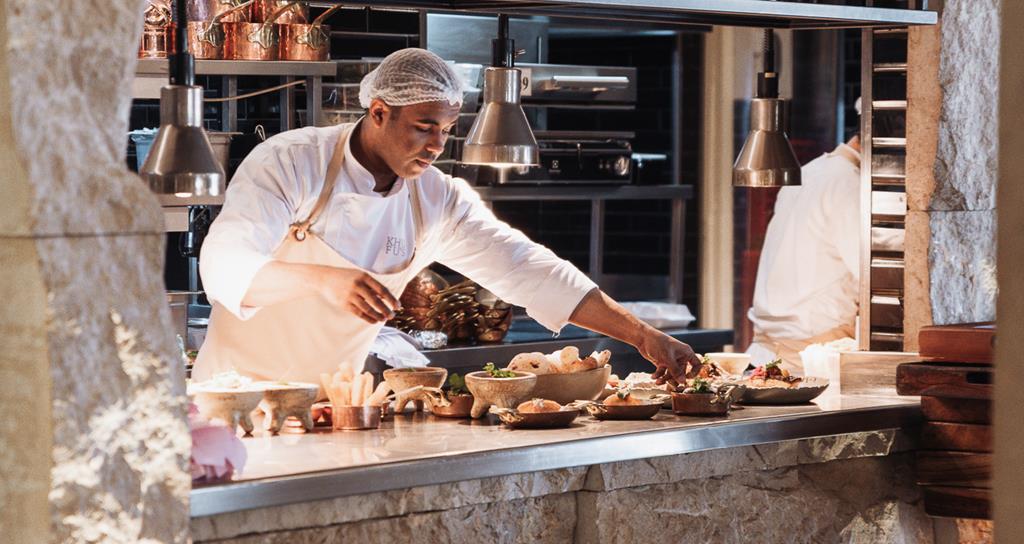 Khufu's
The view from the terrace at Khufu’s, widely acclaimed as the best restaurant in Egypt, might just be the world’s most breathtaking: the Great Pyramids of Giza rise unobstructed before you in all their ancient glory. Chef Mostafa Seif’s menu is a delight, smartly weaving the threads of Egyptian cuisine into a refined but soulful tapestry. Mulukhiyah, for instance, a verdant soup made from leafy greens, is paired with rabbit roulade, while butter-roasted king pigeon is stuffed with freekeh (smoked green wheat).
Dasheene, St. Lucia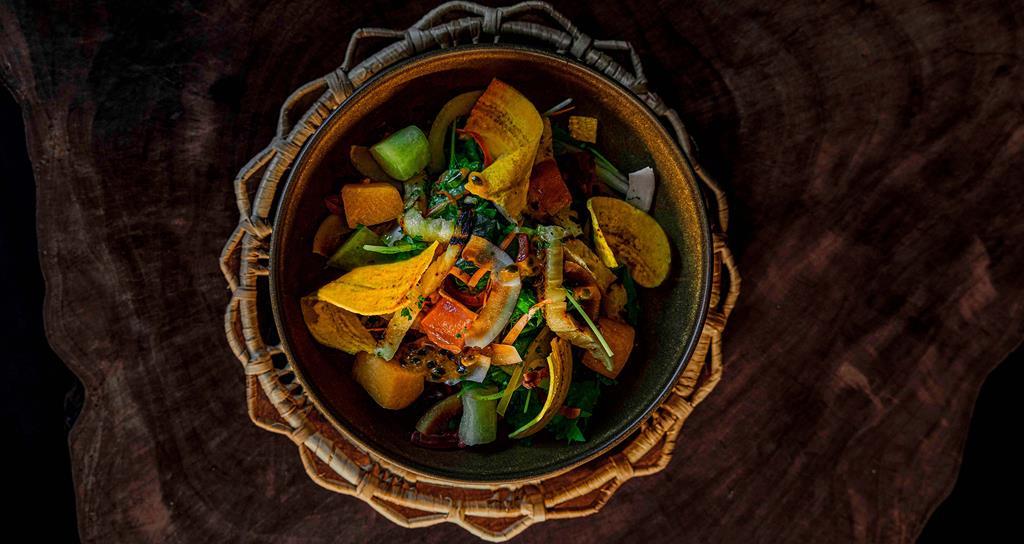 (Photo: Ernesto Roman)
Perched over 300 metres above the Caribbean with spectacular views of the Pitons – two dramatic volcanic spires – Dasheene (named after the local word for taro root, an island staple) offers diners an international menu peppered with chef Nigel Mitchel’s refined take on St Lucian cuisine: crisp accras (salt cod fritters) perhaps, with a fruity, hot calypso sauce; pepper pot soup made with the daily catch, callaloo, dasheen and fish stock; or sautéed shrimp with island peppers and breadfruit chips. Head to The Hideaway Rum Bar for a digestif.
Otto Geleng, Taormina, Sicily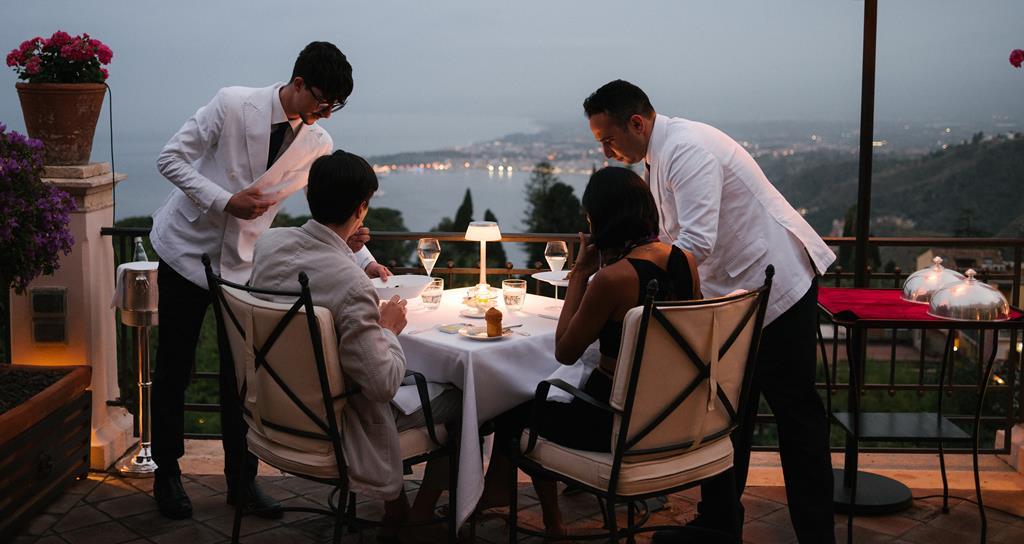 © Belmond
Taormina was on the cultural map long before The White Lotus: back in the day, DH Lawrence, Truman Capote and Audrey Hepburn all visited, staying at the venerable Grand Hotel Timeo. The hotel’s Michelin-starred restaurant is named for the German painter Otto Geleng, who captured the town’s beauty on canvas in the 19th century. Sicilian-born chef Roberto Toro cleverly both lightens and intensifies his native cuisine: with majestic Etna looming behind you, take a table on the terrace, gaze over the Mediterranean and feast on impeccably cooked seafood.
Fauna, Valle De Guadalupe, Mexico
After a hard day’s tasting in the Valle de Guadalupe, one of Latin America’s most exciting wine regions, there is no better place to enjoy stunning views across the valley than at Fauna, adjacent to the Bruma Wine Resort. Chef David Castro Hussong (ex-Eleven Madison Park) has won many plaudits for his pared-back, stylish Mexican cuisine: chochoyotes (corn dumplings) with rabbit and celeriac, perhaps, or lamb, braised then seared on the outdoor comal and pepped up with Oaxacan chilli. For a full taste of Hussong’s skills, order the “Fauna Feast”.
Superior Interiors
Dine in style at high-glamour restaurants designed to impress
Masala Zone, The Criterion, Piccadilly Circus London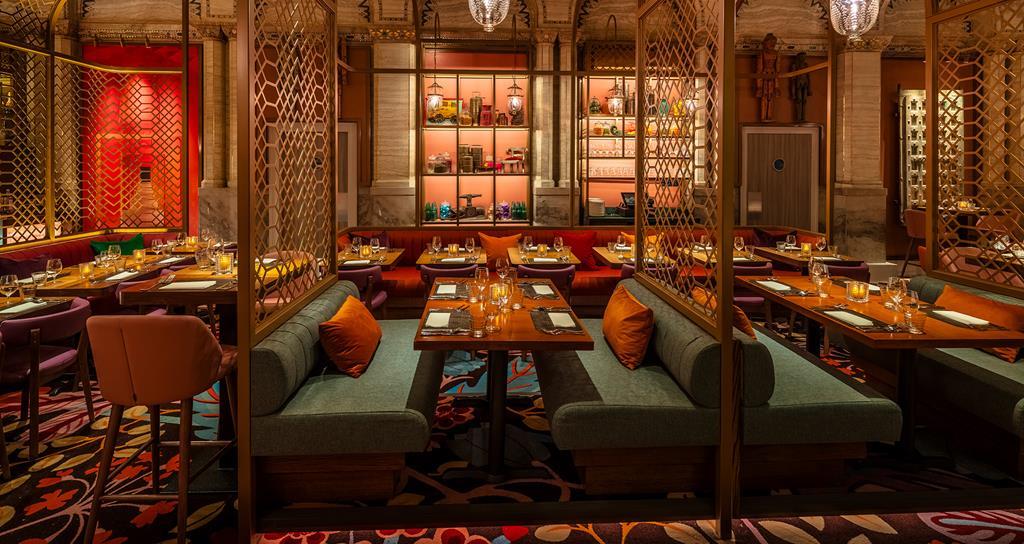 Masala Zone
On the evening of 17 November 1873, Piccadilly Circus welcomed a glittering newcomer into its midst. Designed by architect Thomas Verity, who had a hand in both the South Kensington Museum (now the V&A) and the Royal Albert Hall, The Criterion was an ornate, five-storey building with the grand, American-style Long Bar on the ground floor, complete with a lofty, neo-Byzantine mosaic ceiling and bejewelled marble walls. 153 years later, it is gleaming again, not just with Verity’s Grade II*-listed interiors, but with jali-inspired latticed screens, flamboyant Mughal carpeting and an exuberant pair of elephants atop brass stanchions. After decades of neglect, the grande dame of Piccadilly Circus has regained her lustre. It is now the jewel in the crown of the Masala Zone group of Indian restaurants, founded and run by the same trio as Chutney Mary and the Michelin-starred Amaya (Ranjit Mathrani, his wife Namita Panjabi, and her sister Camellia Panjabi), and the menu is as riotously colourful as the decor. Try onion-flower bhajia, its petals splayed, sweet and crisp; or a tangy, spicy Delhi jalebi chaat made with savoury tangles of batter; or lamb sliders in sinful, butter-smeared pao rolls; or Madras Chicken 65, scattered with fried curry leaves and red onion. Verity’s timeless mosaics seem to twinkle with approval.
Lucia, Los Angeles, USA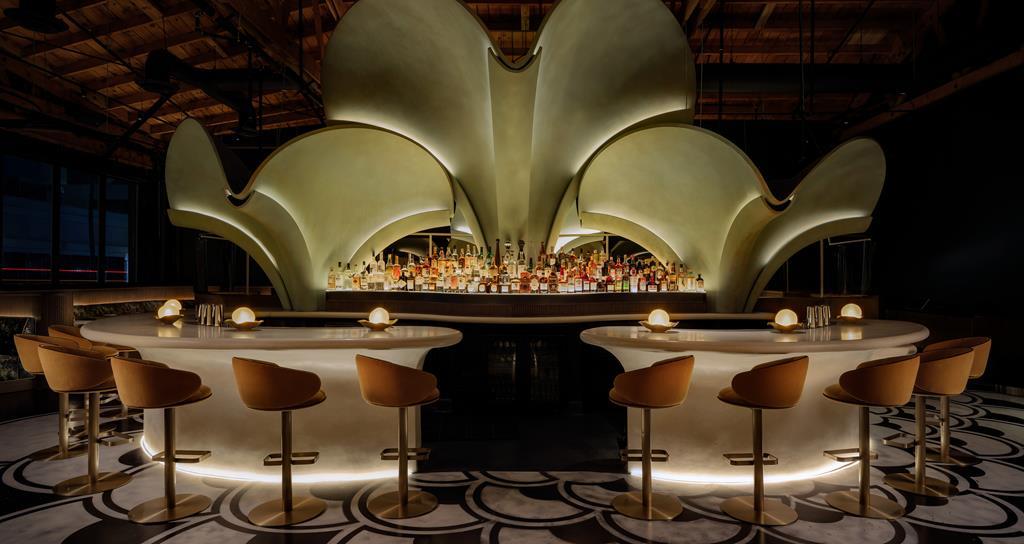 (Photo: Brandon Barré)
This eatery’s stunning interior is a swirl of seashell booths with plant-patterned upholstery and verdigris palms around a soaring central white terrazzo bar: mid-century glamour with a Caribbean feel, a sensibility reflected in the menu, which features jerk meats authentically smoked over Jamaican pimento wood. Escovitch of snapper is dressed with pineapple habanero sauce; smoked lamb ribs are glazed with thick, dark cassareep and citrus caramel; oxtail pepper pot has toasted cassava flour and butter beans for company. Lucia is a thoroughly exuberant night out.
Ossiano, Dubai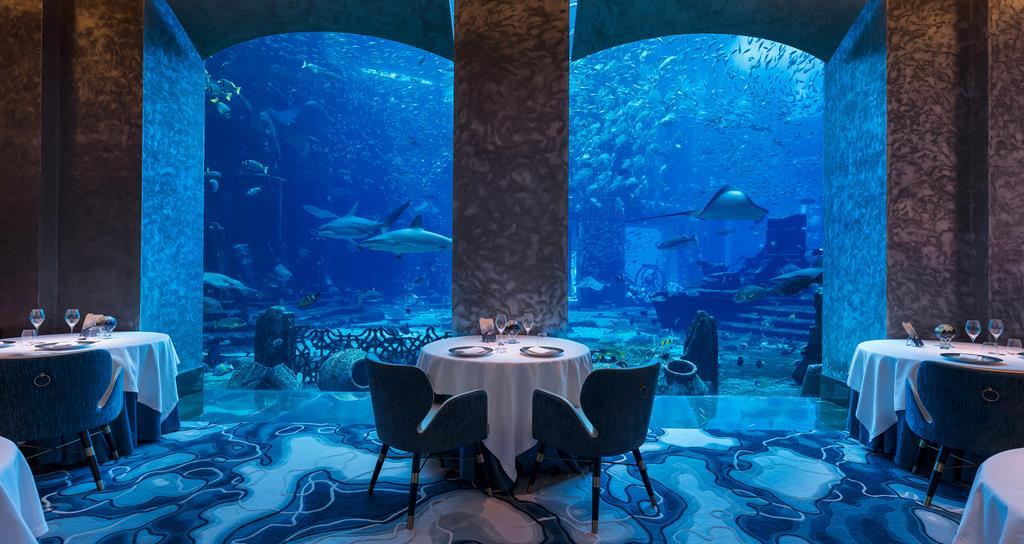 Ossiano
In contrast to many of the lofty restaurants in the City of Gold, at the Michelin-starred Ossiano (in Atlantis, The Palm), guests descend 10 metres down a grand staircase to take their seats in one of the world’s largest aquariums. The 10-course tasting menu is strong on luxury ingredients: Gillardeau oysters, perhaps, with grapes and verjus; Japanese bream with nashi pear, lemongrass and lime leaf; or citrus-poached lobster dressed with courgette flower and anointed with lobster bisque. Add in plenty of front-of-house “theatre”, and Ossiano is a unique and memorable experience.
Restaurant Lyst, Vejle, Denmark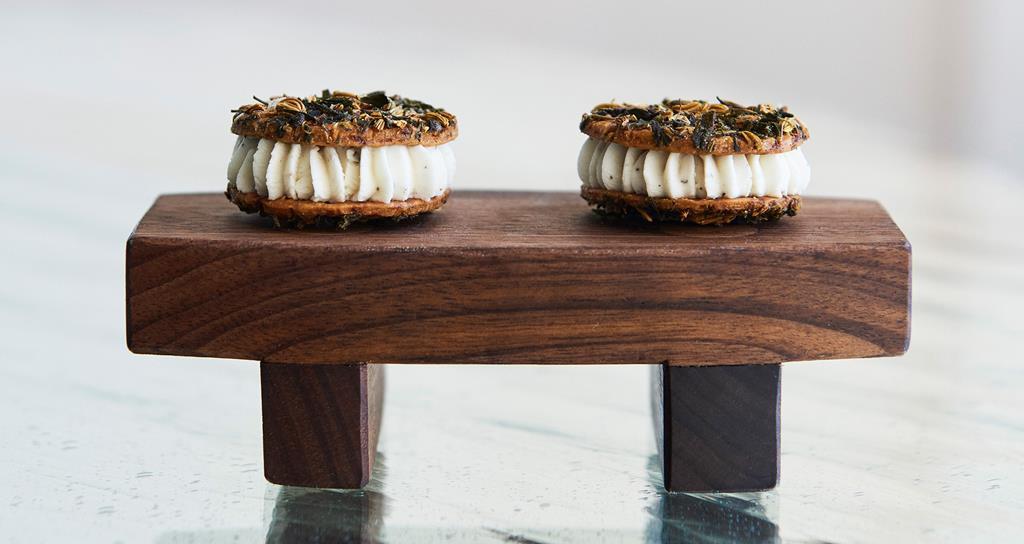 (Photo: Nicolaj Didriksen)
Artist (and now architect) Olafur Eliasson’s cathedral-like, brick-and-glass building standing directly on Vejle Fjord is home to Lyst, opened in 2019 and now one of Denmark’s most talked-about restaurants. English chef Daniel McBurnie’s 20-course menu makes much of local foragers, fishermen and farmers: everything is sourced within a 160km radius. There is a Japanese aesthetic in the kitchen: hiramasa (yellowtail amberjack), maybe, or chawanmushi, a savoury egg custard, as well as local smoked eel and venison, but the menu changes to accommodate whatever is available that day.
Maido, Lima, Peru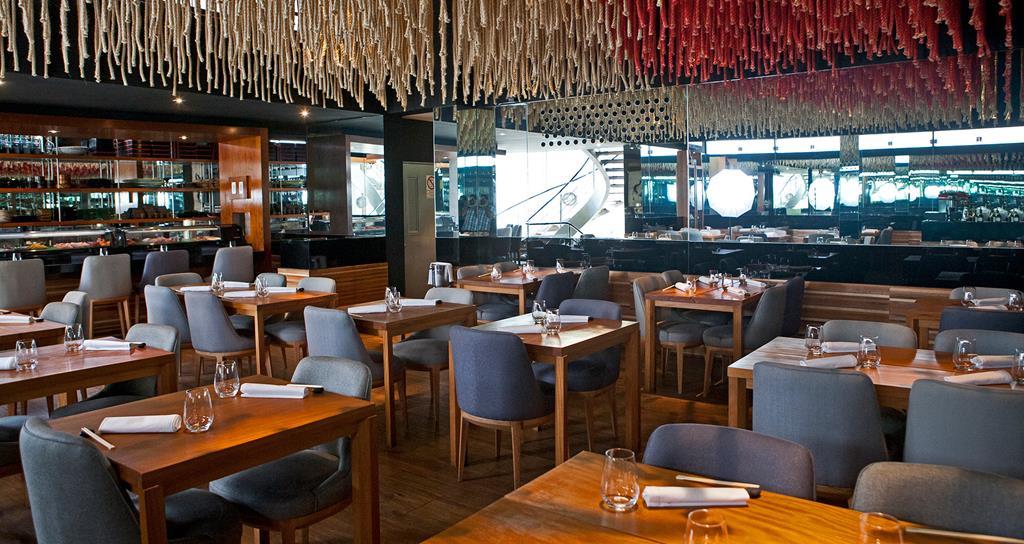 (Photo: José Cáceres)
The setting for chef Mitsuharu “Micha” Tsumura’s much-fêted Nikkei restaurant (the best in the world, according to San Pellegrino’s World’s 50 Best list 2025) could not be more picture perfect: a forest of hundreds of ropes hangs from the ceiling, all from fishing boats, some dyed red to represent the Japanese flag. Chef Tsumura’s cooking is both inventive and faultless, increasingly using indigenous ingredients: pork jowl and palm heart, for instance, or black “rocks” of potato and carbon, stuffed with Amazonian chorizo. A gourmet adventure like no other.
Óna, Hong Kong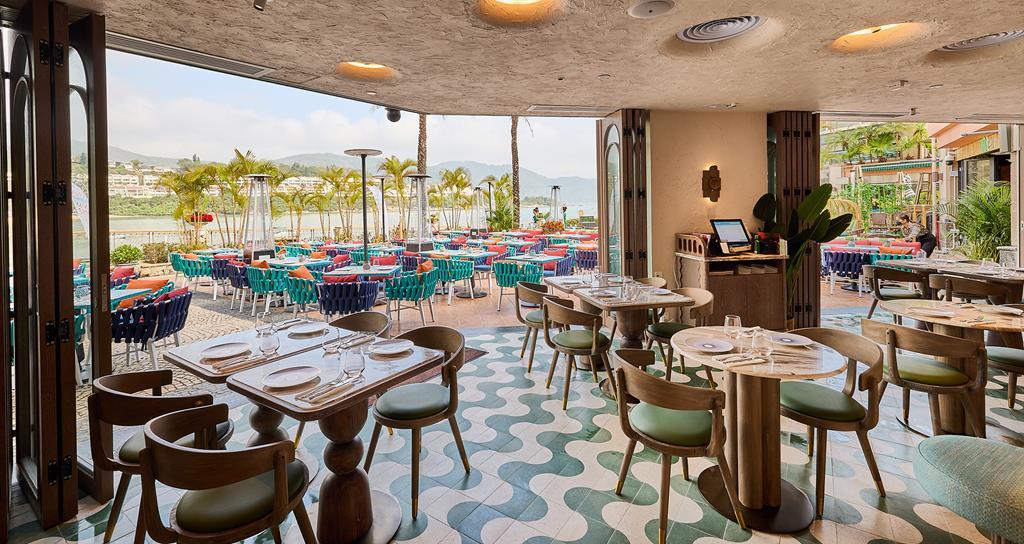 (Photo: Michael Perini)
With award-winning interiors designed by MAG studio, Óna is a bright and breezy Mediterranean bistro, its bare-wood furnishings hinting at bleached driftwood, its vibrant splashes of orange and gold recalling North Africa. The menu chimes perfectly with the decor, moving from Greek lamb with orzo and feta to Josper-grilled meshwi, pizzas, Lebanese mezze and shawarma, kataifi prawns with harissa, and fattoush with the tang of pomegranate molasses. Óna is a breath of fresh, Mediterranean air in sometimes stifling Hong Kong.
A Bite of History
Classic restaurants that have stood the test of time
Sobrino de Botín, Madrid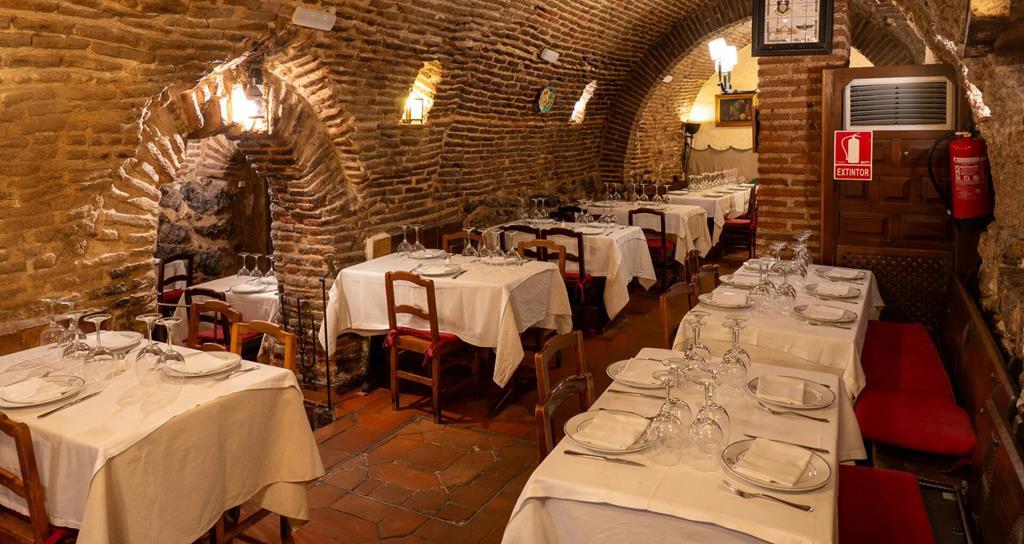 (Photo: Sobrino de Botín)
Keeping a restaurant going for more than a year or two is a hard enough challenge: when you have been open for 300 years, you might be permitted a quiet smile of satisfaction. Sobrino de Botín celebrated its tricentenary in 2025 and is recognised by Guinness World Records as the world’s oldest continuously operated restaurant. Founded by French cook Jean Botín and his Asturian wife, it is now run by the third generation of the González family, Antonio and José. The original wood-fired stove is still in use today, and it is the beating heart of Botín’s classic cocina madrileña. Start with jamón ibérico de bellota, the world’s finest ham, or callos a la madrileña, slow-cooked tripe and sausage, then order cochinillo (suckling pig) or cordero (lamb) roasted over holm oak in the ancient oven; there are prawns and langoustines from the plancha, too, and arroz con leche (rice pudding) to finish. And the setting is unimpeachably historic: four floors of vaulted brick arches and ceilings, blue-and-white tiles and gilt-framed canvases. Ernest Hemingway was a regular: in The Sun Also Rises, his protagonist Jake Barnes tells how: “we lunched upstairs at Botíns. It is one of the best restaurants in the world. We had roast young suckling pig ... I ate a very big meal and drank three bottles of rioja alta.” It is a place to be steeped in history, as well as in rioja.
Le Train Bleu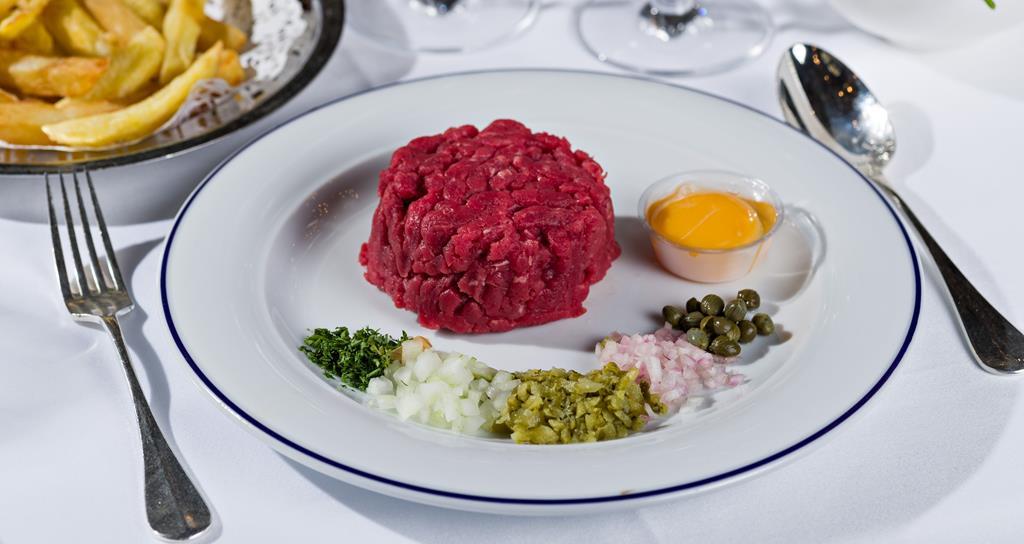 (Photo © Le Train Bleu)
The gourmet restaurant of the Gare de Lyon opened its doors in 1901, and its lavishly ornate Belle Époque decor remains, as do its eight-metre-high ceilings and grand double-revolution staircase. The sense of theatre is not just confined to the fixtures and fittings: much use is made of trolleys, and service is performed with a flourish: try the gigot d’agneau, sliced at the table and paired with consultant chef Michel Rostang’s superb gratin dauphinois. The chariot is pressed into service again for the crêpes suzette, flambéed in
Grand Marnier.
Keens Steakhouse, New York, USA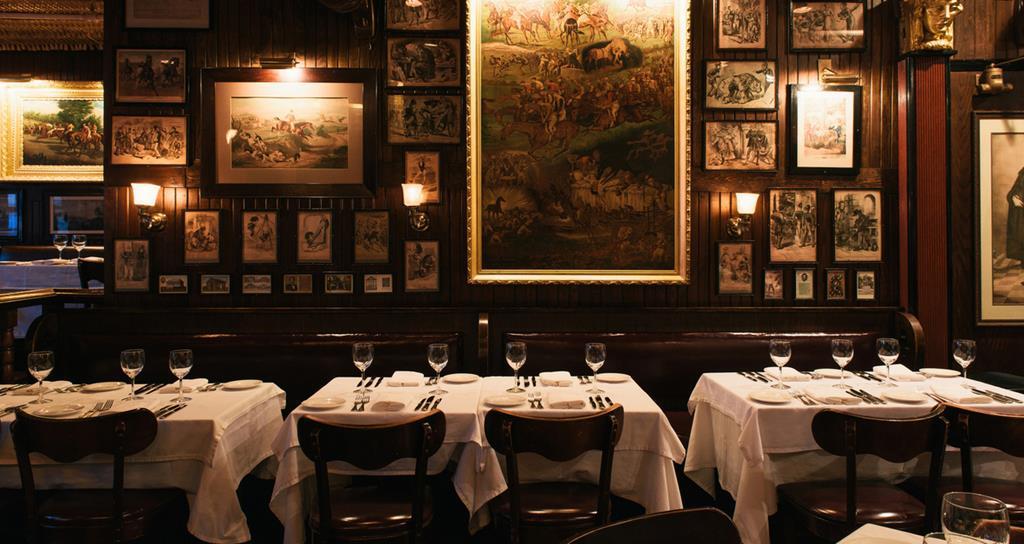 (Photo © Keens Steakhouse)
Albert Keen opened his eponymous restaurant, then called Keen’s English Chop House, in Midtown’s Herald Square theatre district in 1885: just 50 years later, it sold its millionth mutton chop. It is still Keens’ signature dish: the theatres are long gone, but Keens, and its remarkable collection of 50,000 clay pipes, survives. As well as the “legendary mutton chop”, the menu offers huge Maine lobsters, oysters (raw or Rockefeller) and porterhouse steaks for two or three, dry-aged on the premises. Keens is a slice of New York history.
St. Peterstiftskulinarium, Salzburg, Austria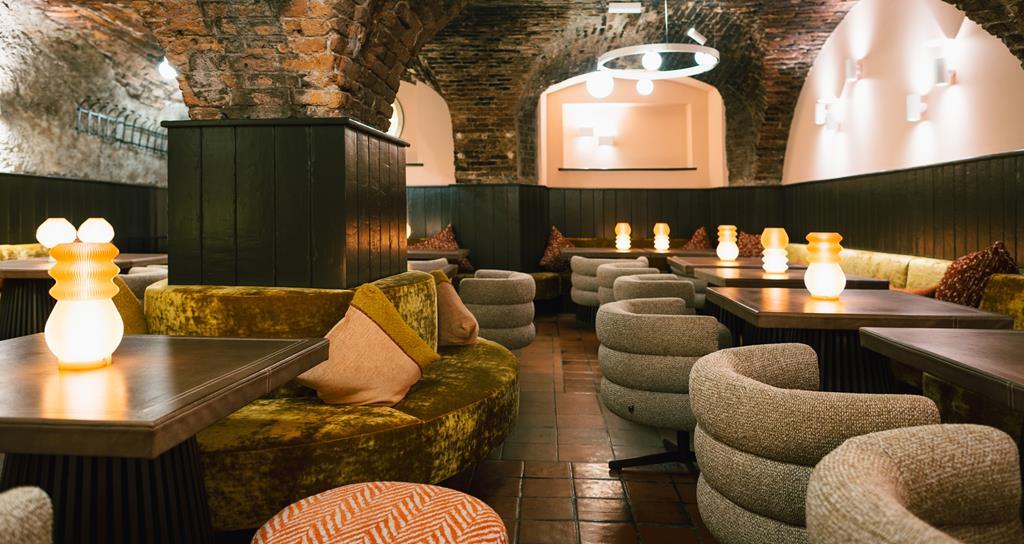 (Photo: Bianca Hochenauer)
This establishment has been serving diners since 803, making the other restaurants here seem almost arrivistes. Set in the heart of Salzburg’s historic centre, it’s quite possibly the oldest restaurant in the world, although it cannot claim, like Madrid’s Botín, to have been open continuously. The menu has plenty of Austrian heft – schnitzel, tafelspitz, apple strudel – but there are lighter touches (oysters, shrimp carpaccio), and bespoke menus can be arranged for parties in the clutch of atmospheric private rooms.
Rules, London, UK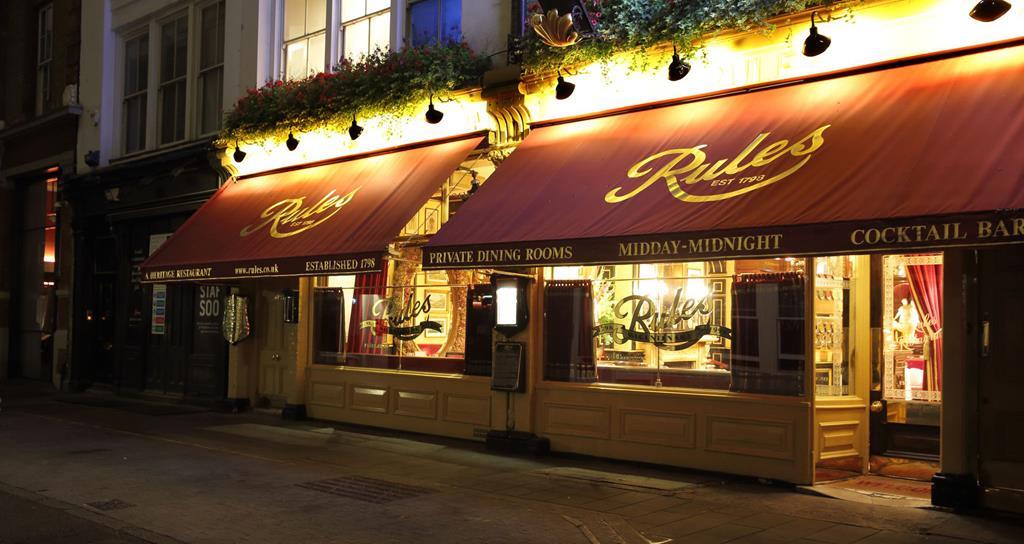 (Photo © Rules Restaurant)
A young, impoverished Charles Dickens would have seen this restaurant on his daily walk to the blacking factory; he was later a regular guest. Founded in 1798, it is reputed to be London’s oldest restaurant and still specialises in game, both furred and feathered. Pheasant and ham-hock terrine, potted shrimps, roast grouse (in season) with all the trimmings, with jam roly-poly or Cropwell Bishop Stilton to finish. Rules’ charmingly antiquated decor is the perfect setting to experience British food at its nostalgic best.
The White Horse Tavern, Newport, Rhode Island, USA
The White Horse Tavern dates back to 1673: more than a century later, it housed British troops during the American War of Independence. By the mid-20th century, it had become a shabby boarding house, but was rescued and restored to its original purpose in 1954. Oysters, clams and chowder feature strongly on the menu, as do comforting classics like confit duck with cassoulet beans; beef Wellington smothered in foie gras mousse and wrapped in puff pastry; and rigatoni with bolognese. Colonial charm oozes from its ancient walls.
Tall Orders
Dizzying dinners in some of the world's loftiest - and most iconic - buildings
Le Jules Verne, Paris, France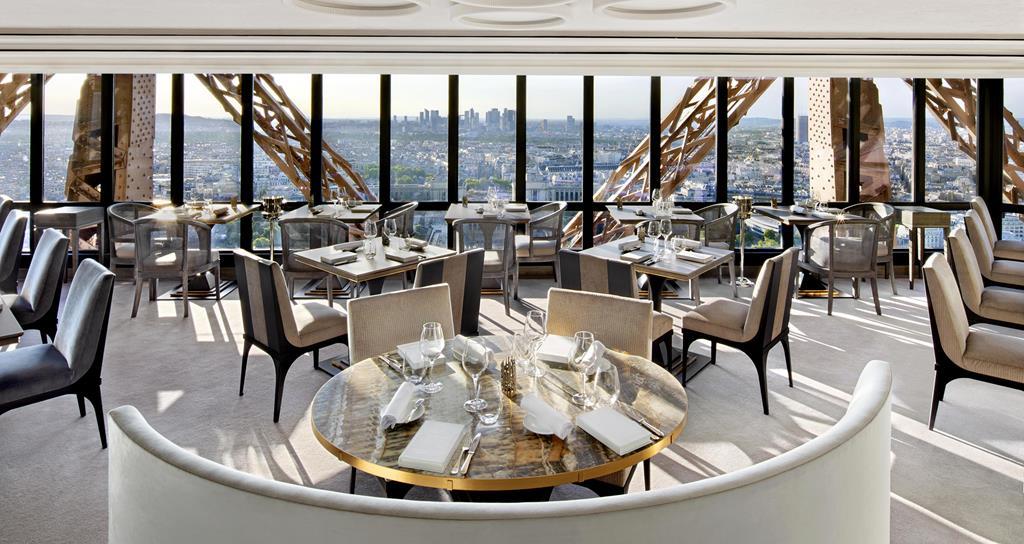 (Photo: Marie-Line Sina)
At 125 metres above the ground, Le Jules Verne, on the second floor of the Eiffel Tower, may not be the highest dining room in the world, but it does offer some of the best views across Paris. And the cuisine is just as elevated as its setting: the restaurant was awarded a second Michelin star in 2024, and the kitchen, helmed by chef and Meilleur Ouvrier de France Frédéric Anton, goes from strength to strength. His “Voyages Extraordinaires” tasting menu (given the restaurant’s name, what else would you call it?) takes diners on a journey from vanilla-scented lobster with green apple to ginger and lime-infused pineapple, via langoustine raviolo with parmesan cream and beetroot; turbot with beurre blanc, yuzu and oscietra caviar; and farmhouse chicken, the breast poached and the legs made into a confit. The wine list, as you might expect, is long, overwhelmingly French and illustrious. At lunch, the views across Paris are spectacular; after dark, as well as the lights across the city, 20,000 lights sparkle on la Dame de Fer (“the Iron Lady”) herself. For preference, if you can cope with the (literally) dizzying views, ask for a window table facing east over Les Invalides, the Louvre and Notre-Dame.
The Sun Dial Restaurant, Bar & View, Atlanta, USA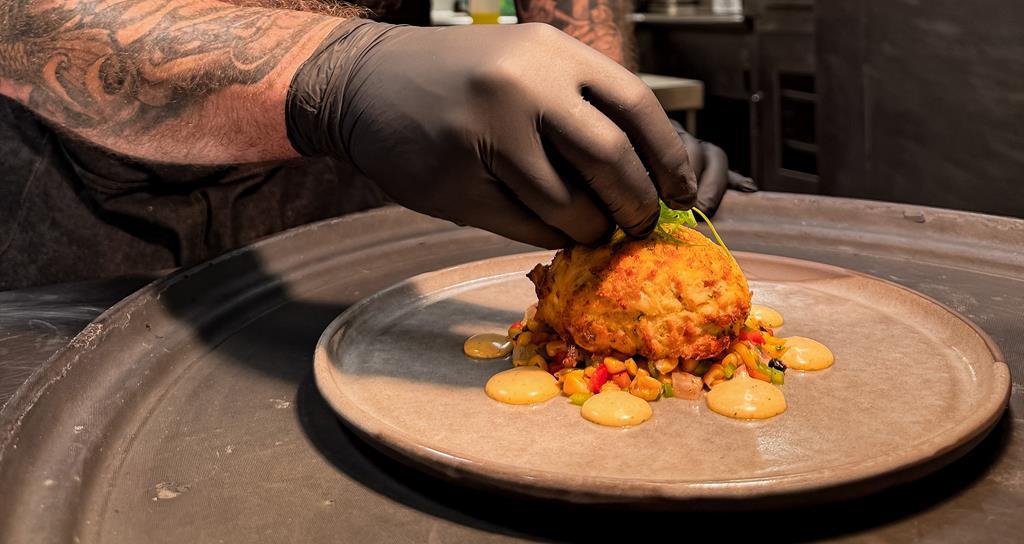 (Photo © Daniel Curran)
Occupying the top three floors of the Westin Peachtree Plaza Hotel, 220 metres above downtown Atlanta, this eatery boasts unmatched 360-degree views of the city. The menu in the restaurant is quintessentially modern American: jumbo lump crab cake with roasted corn relish and Creole aïoli; slow-braised beef short ribs with a mound of mash, roasted roots and sauce Bordelaise; 20oz dry-aged “cowboy ribeye” with cabernet butter. For the best views, make sure to book a window table.
Jin Xuan, Pudong, China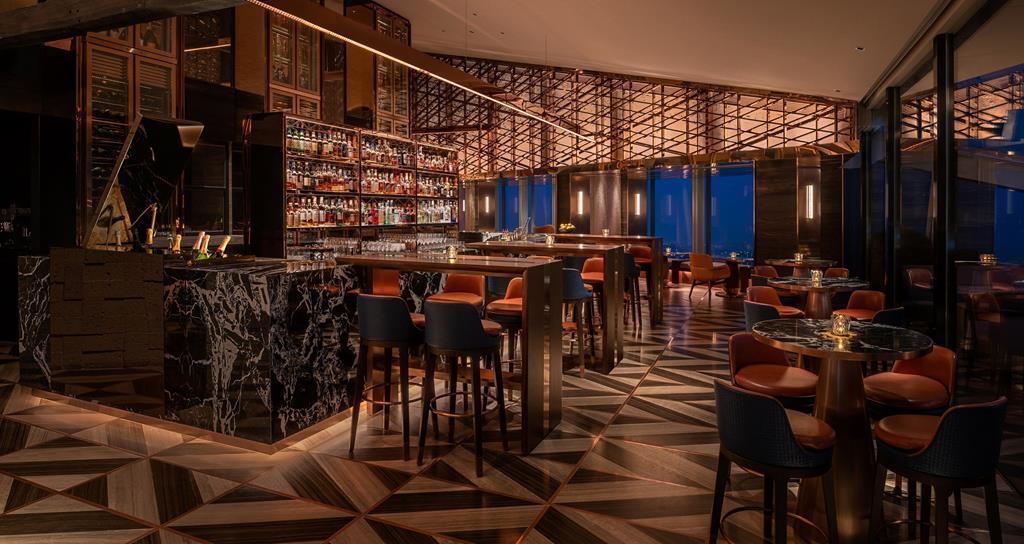 (Photo © Marriott International)
On the 53rd floor of The Ritz-Carlton, Michelin-starred Jin Xuan may not be the highest restaurant in Shanghai (or even in the same building: rooftop venue Flair is five floors higher), but it still has superlative views across the city, and a lovely Cantonese menu from chef Daniel Wong. Live fish, lobster and crab can be cooked in various ways, and there is much else on his menu to enjoy, from superb dim sum to lamb fillet deep fried with wild onion and garlic.
View & Dining The Sky, Tokyo, Japan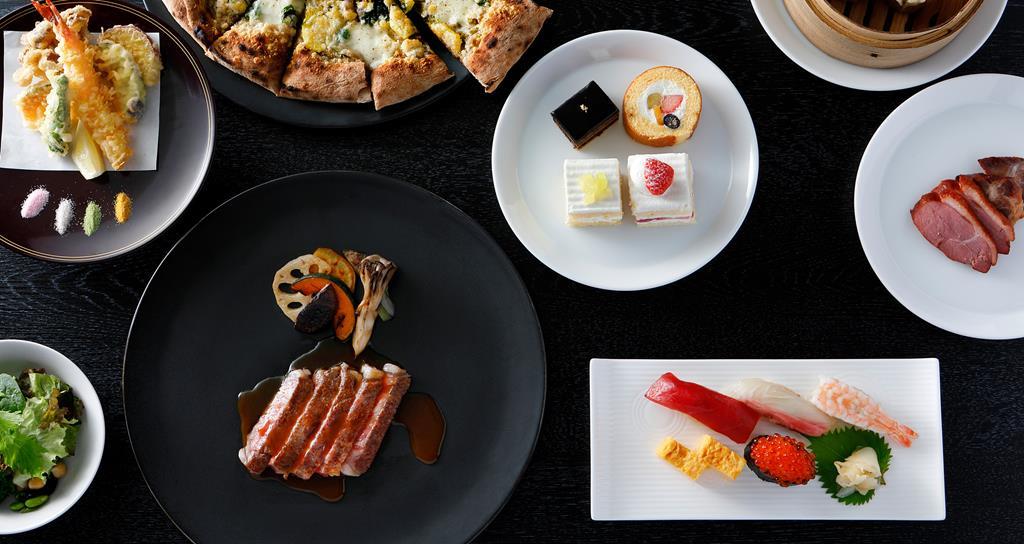 (Photo © Hotel New Otani)
The phrase “international buffet” might strike fear into a gourmet’s heart, but, in the elegant dining room on the 17th floor of the Hotel New Otani, View & Dining The Sky’s chefs show how it should be done. Tempura, teppanyaki and sushi are made to order, Peking duck expertly carved, while the dining room slowly rotates: for the faint of stomach, there are Western dishes, too – pizza, smoked salmon, roast US prime beef, Pierre Hermé macarons, gâteau opéra – and excellent drinks.
Sphere Tim Raue, Berlin, Germany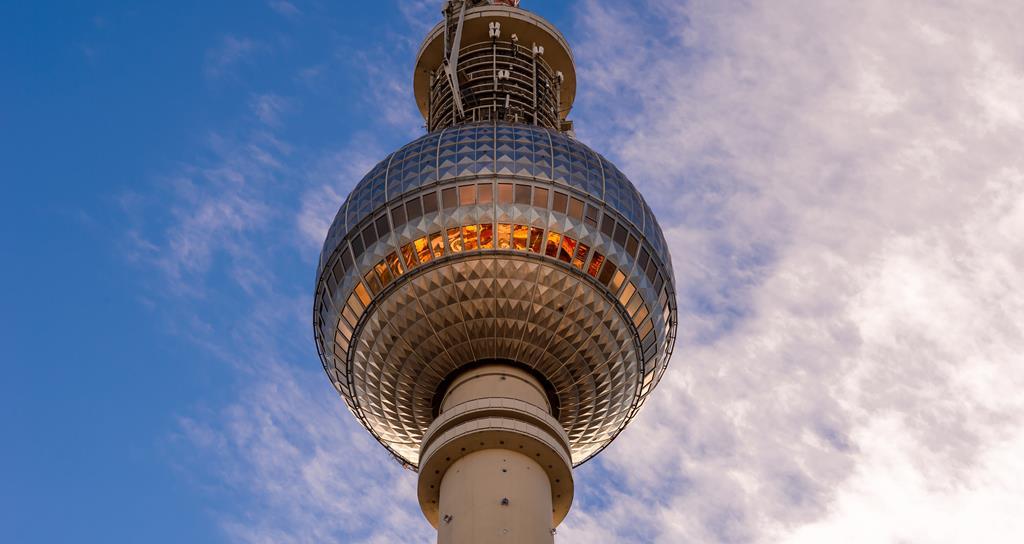 (Photo: Sphere Tim Raue)
Tim Raue up the tower: Berlin’s two-Michelin-starred chef/restaurateur and Chef’s Table star has opened a restaurant in the landmark Fernsehturm, the ex-GDR TV tower near Alexanderplatz. Some 207 metres above the ground, the dining room slowly revolves while diners enjoy the retro decor with dishes that also hark back to the 1970s: prawn cocktail, credited to department store KaDeWe, where Raue first tried it; a refined take on his grandmother’s slow-cooked pork knuckle; and a version of his Aunt Kathi’s cheesecake mousse.
Infinity by Mark Best, Sydney, Australia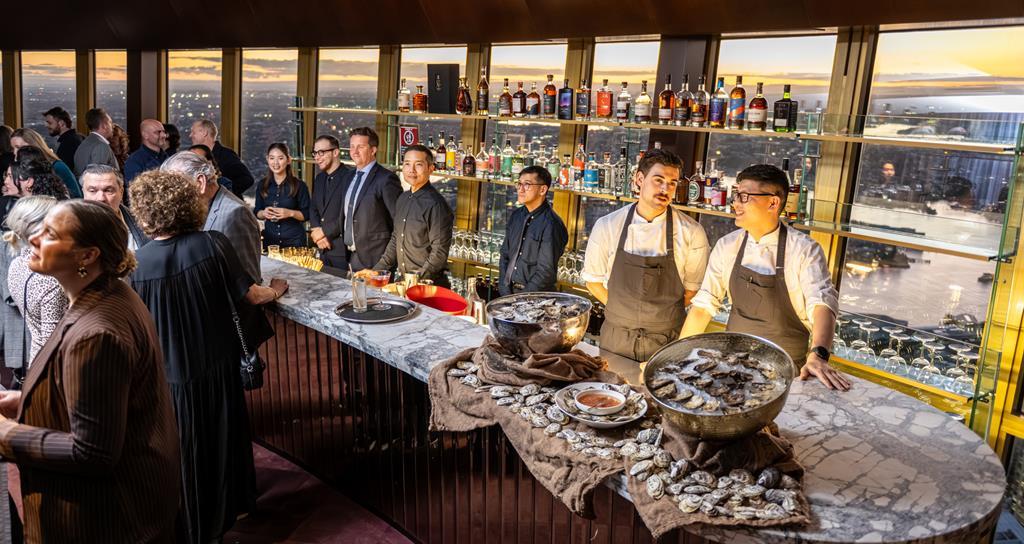 (Photo: Mark Best)
Star chef Mark Best’s menu is as elevated as his dining room, 81 floors above Sydney, with fine views to the north over the Opera House. Best is a past master at coaxing the very best from Australian ingredients: you might start the three-course à la carte menu with Abrolhos Islands scallops from the country’s west coast, partnered with parmesan gnocchi and a tangy, sweet-sour sauce; then maybe grilled Snowy River trout with horseradish; and profiteroles with coffee and lemon myrtle to finish.