Back to Wine’s Roots
More than 160 years ago, a tiny insect – phylloxera – upended the wine world by decimating European vineyards. In recent years, a growing number of winemakers have been resurrecting the grapes and traditions of ungrafted vines to get a taste of that lost history, but also to prepare for the future.

In a global industry as complex as wine, one finds brotherhoods, Bacchic societies and research circles dedicated to every niche imaginable. Usually, such gatherings don’t arouse much interest beyond a select group of winemakers, connoisseurs or scientists. So when a new association was quietly registered in 2022 in the principality of Monaco, dubbed the Francs de Pied (a French term for grapevines that are own-rooted, or planted without being grafted onto another rootstock), it was seemingly just another fraternity dedicated to an obscure viticultural practice, unlikely to make any waves. Yet a few years later, this esoteric organisation has decidedly struck a chord in the wine world.
Overnight, the Francs de Pied’s ranks swelled to more than 350 members, including internationally renowned producers from France’s Champagne Bollinger to Germany’s Egon Müller. Soon, the Francs de Pied were receiving invitations to present their wines to elite circles of collectors at exclusive venues like 67 Pall Mall in London and the Société des Bains de Mer in Monaco. Meanwhile, the association assembled a scientific committee of leading grapevine researchers and launched a candidacy that is steadily advancing towards recognition of ungrafted vine culture as Unesco Intangible Cultural Heritage. Today, the collective even has royal backing – HSH Prince Albert II of Monaco is their président d’honneur. So what is the allure of ungrafted vines and the wines they produce? What could a red öküzgözü wine from Turkey, a white assyrtiko from centenarian vines on Santorini and a blanc de noirs champagne from a walled franc de pied vineyard all offer? Extreme rarity? Yes, but also something more – the chance to turn back the hands of time and taste the very roots of wine.
The accidental introduction of phylloxera from North America into Europe was a turning point in history – a biological disaster that ended 11,000 years of continuous propagation and evolution across Eurasia of the grapevine species Vitis vinifera since its domestication. In 1863, a vineyard in the southern Rhône perished abruptly, the roots rotted by an unknown disease. Scientists soon discovered the culprit – a tiny yellow aphid that feeds on vine roots. They dubbed it Phylloxera vastatrix – “the devastator”. For Olivier Yobrégat, a researcher at the French Vine and Wine Institute, the name is no hyperbole: “Phylloxera is a killing machine,” he declares. Within 50 years, it had decimated most of the world’s vineyards. An American and French entomologist duo finally rescued the industry, discovering that Vitis vinifera could be safely grown if grafted onto rootstocks from phylloxera-resistant North American vines.
Wine was saved, but it never tasted the same again. Today, a few dozen grape varieties account for half the globe’s vineyards, but before phylloxera, thousands of varieties were cultivated, all descendants of those first vines domesticated in Western Asia and the Caucasus. Early vignerons discovered that a shoot cut from a vine would grow new roots if planted in soil. Cuttings from a single vine could thus yield an entire vineyard, and it’s thanks to this ease of propagation that Vitis vinifera travelled so far, adapting along the way to a multitude of climates. “Every variety has particular genetics and its own adaptations to different soils,” explains Yobrégat. “But knowledge of these things was lost with the global adoption of grafting in viticulture.”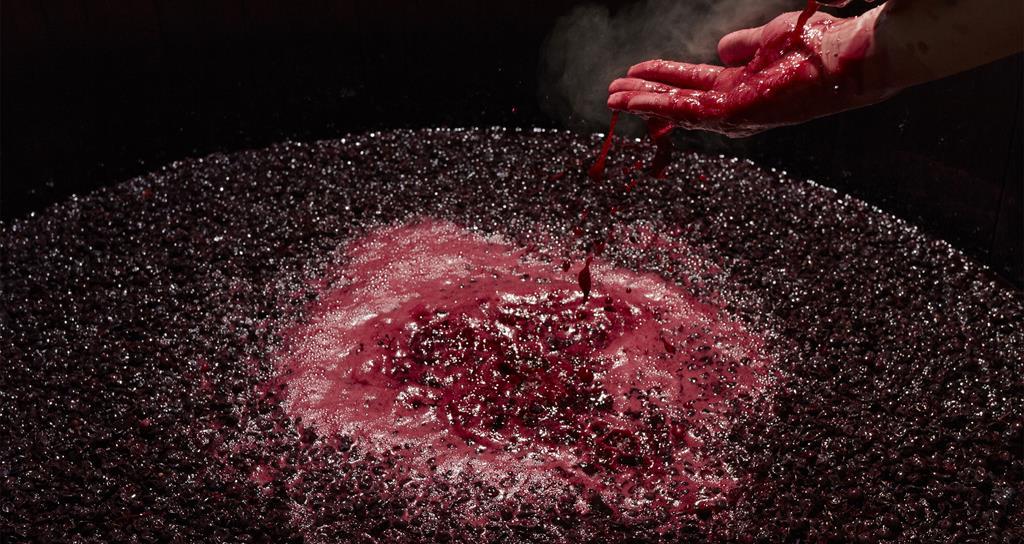
In the rush to replant vineyards, winemakers abandoned a multitude of historic grapes – and the techniques of cultivating grapevines franc de pied. Without the savoir-faire to propagate vines themselves, winemakers became dependent on nurseries providing them with selected clones of chardonnay, merlot etc, pre-grafted onto a hybrid rootstock, as the only way to plant a vineyard. Today, less than one per cent of the world’s vines are ungrafted. But that may be changing.
With interest exploding over heirloom varieties in gastronomy and wine, oenophiles are increasingly keen to experience distinctive flavours of rare bottlings around the world. That same curiosity seems to be driving growing numbers of winemakers to revive neglected parcels of extremely old vines and to diversify their young vineyards with historic grape varieties planted on their own roots. Such investments are not without risk, but as Loïc Pasquet, president of the Francs de Pied, explains, “For winemakers, the chance to create a great franc de pied wine … it’s the holy grail.”
Nothing embodies that sacred, secret aura of ungrafted viticulture like an ancient parcel of pre-phylloxera vines. In Spain, the most extensive plantings of centenarian tempranillo aren’t in Rioja but southwest of it, in Toro – phylloxera-free thanks to the region’s sandy soils. In 2008, luxury group Moët Hennessy acquired Numanthia, a 150ha estate boasting ungrafted vineyards planted 120 to 200 years ago. Today, they yield one of Spain’s most exquisite tempranillos – Termanthia, a serial 100-point wine. The grenache grape is also beloved in Spain, but some of the world’s oldest vineyards are in Australia’s still phylloxera-free Barossa Valley, first planted in the 1840s. Here, Château Tanunda celebrates this heritage of “ancestor vines” by producing rare cuvées of ungrafted 100-year-old shiraz, 150-year-old semillon and grenache planted in 1858.
In 2020, Pasquet travelled to Naxos, birthplace of the Greek wine god Dionysus, to join the oenologue Panos Zamboulis and his son Spyros in rehabilitating an exceptional abandoned vineyard – 1.5 hectares of ungrafted potamissi (a rare indigenous white grape), over 200 years old. In 2021, they produced their first circa 1,000 bottles of a divine, golden, saline wine. Christened “Tetradrachm de Liber Pater”, it hadn’t even been tasted by critics before they were selling at over €700 a bottle. “Making a wine like this isn’t about chasing scores,” says Spyros. “It’s about trying to encapsulate in the bottle a terroir and human stories.”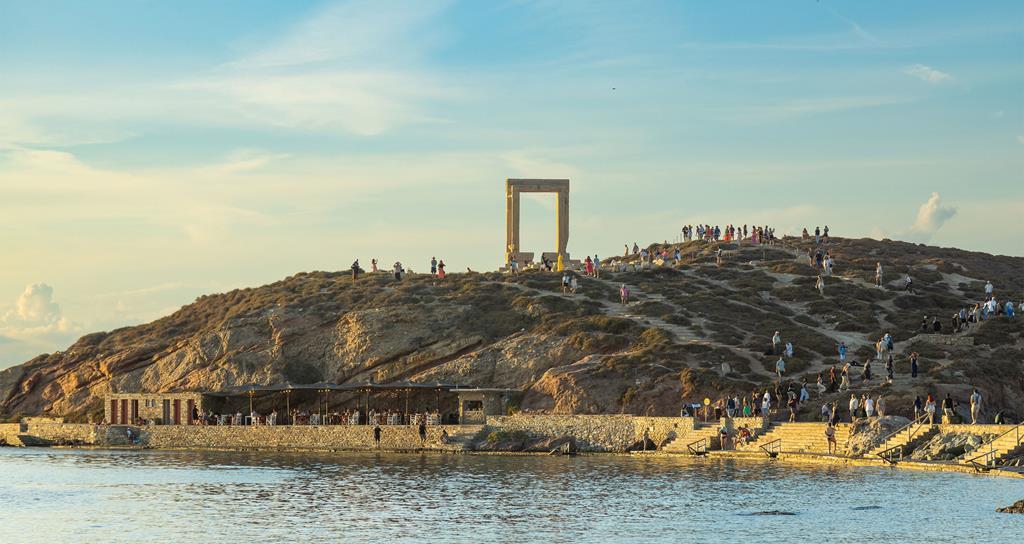
Like living viticultural museums, such vineyards offer lessons for winemakers on the conditions required for ungrafted viticulture. “In soils with less than two to three per cent of clay,” notes Yobrégat, “phylloxera are unable to dig galleries to reach the roots.” Which explains why franc de pied vines thrive in the sandy soils of Toro, the volcanic soils of Etna and the slate soils of the Mosel. Yet in a region like Champagne, only in a walled vineyard like Champagne Bollinger’s Clos Croix Rouge can ungrafted vines survive. Bollinger’s historic clos are time capsules where new vignerons can learn how pinot noir was cultivated two centuries ago, using ancient techniques such as provignage, a vine-layering method by which ungrafted vines are multiplied by simply bending and burying a long shoot. This savoir-faire, says CEO Charles-Armand de Belenet, is what allows Bollinger to recreate “the flavour of the first champagnes”.
It’s a flavour of remarkable purity, intensity and complexity. And ungrafted vines actually are more complex, as they’re usually propagated by “massal selection”, using cuttings selected from a diverse set of exceptional old vines. Unlike clonal selection, massal selection promotes genetic diversity, offering enhanced disease resistance and tolerance to climate variability – and greater complexity. In Chile’s Maipo Valley, Marco Pérez-Ramírez says the beauty of his family’s critically acclaimed wine, Piedra Sagrada, is rooted in how its massal selection of ungrafted cabernet sauvignon expresses its multiplex terroir. “Our vineyard is like an orchestra, in which each vine is a different instrument,” says Pérez-Ramírez. “It’s this incredible diversity, each vine interpreting the soil differently, that makes the wine so exceptional.”
Before he ventured to Naxos, Loïc Pasquet was already renowned for his bid to rediscover the flavour of another pre-phylloxera wine – the Bordeaux of the famous 1855 classification. In 2004, he founded his estate, Liber Pater, in Graves – the birthplace of Bordeaux. During a recent visit to his winery, Pasquet drew a pipette of dark wine from an amphora and released it into a glass. Redolent of cherries, black fruit and chocolate, with fine, powdery tannins … the hallmarks of a great wine. “That is the history of Bordeaux,” he smiled. “No one has tasted this for 200 years!” The wine is 100 per cent mancin – a grape nearly extinct today, yet which figured prominently in the blends of many 1855 grand crus.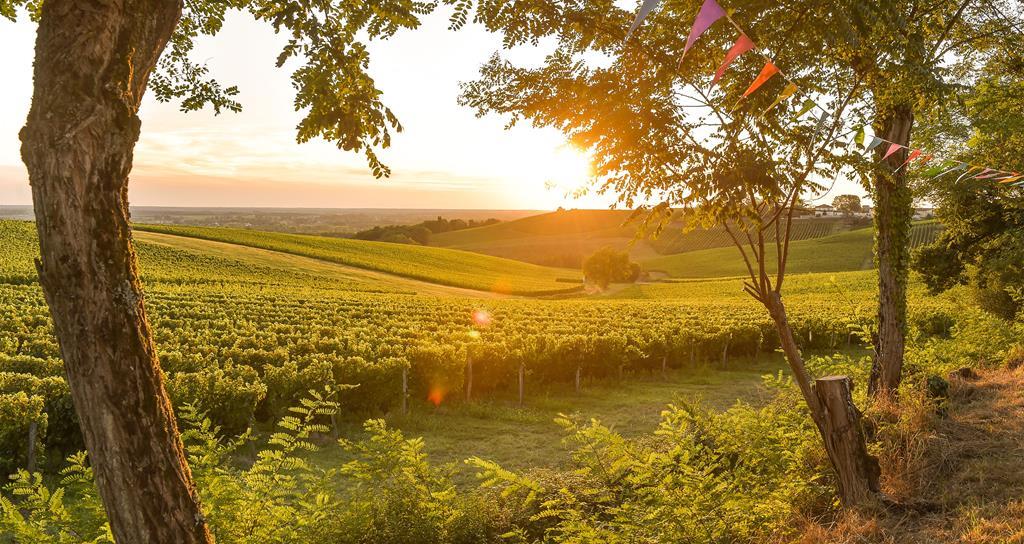
For some 20 years, Pasquet has studied and cultivated 14 historic grapes of Bordeaux, from saint-macaire to pardotte to carménère, experimenting to find on which soil types they originally flourished (cold gravel for mancin, clayey gravel for castets, deep gravel for cabernet sauvignon) and planting them franc de pied at extremely high density and without training wires. The controversy his anti-establishment methods have generated in conservative Bordeaux has only boosted demand, and with only around 500 bottles annually of his flagship cuvée, an utterly fascinating, sapid, inimitable wine, Liber Pater has become the most expensive wine in France. Yet Pasquet’s motivations run deeper than money. “When we replant vines franc de pied on the terroir where the grapes were born, we’re reconnecting with 11,000 years of human history,” he says.
Since Pasquet founded the Francs de Pied association in 2022, that message of rebirth and human connection has united winemakers from Argentina to Azerbaijan. Fittingly, the group chose to hold its annual gathering for 2025 in a powerful symbol of renewal – the Château de Chambord, itself a new member. It turns out the caretakers of Francis I’s Renaissance masterpiece decided to resurrect the château’s lost vineyards in 2015 – and planted them franc de pied.
On a chilly November morning, winemakers, sommeliers, scientists, journalists and deep-pocketed oenophiles descended on Chambord for a day of press conferences, debates, scientific presentations, wine tastings, dining and, by night’s end, singing and revelry. Yet besides the evening’s black-tie event for the association’s benefactors, the day’s highlight was the official launch of the Francs de Pied label, a project the association hopes will further titillate curiosity for ungrafted vines among wine lovers. Winemakers will be able to feature the labels on their bottles after a DNA test of their vines. The test will confirm that the vines are indeed ungrafted, but will also advance research by the association’s scientific committee – Olivier Yobrégat and Dr José Vouillamoz, renowned experts on grape genetics.
Why are franc de pied producers in Washington, Chile, Beaujolais and Spain all reporting that their ungrafted vines are adapting better to climate change than grafted clones, showing improved transpiration and cooling abilities, and yielding grapes with greater phenolic ripeness sans excessive alcohol? “A great deal of research still needs to be done,” says Vouillamoz. “And all this data we’re going to gather will help us to recover our understanding of grapevines around the world – knowledge lost due to phylloxera.”
Once a cul-de-sac of history, today, franc de pied viticulture may offer keys to a new beginning for wine. “For me, franc de pied viticulture is a form of resurrection,” says Thibault Liger-Belair, the owner of a magnificent pre-phylloxera vineyard in Beaujolais, and proud member of the Francs de Pied. “It’s a different vision of winemaking, with one eye on our collective past and the other fixed straight towards the future.” »
Image credits: George Vdokakis, Getty Images
The Great Vine Renaissance
What would wine taste like if the vineyards of Europe had never been decimated in the 19th century? Today, more and more producers are seeking to turn back history by reviving rare, pre-phylloxera parcels or daring to plant ungrafted vines without resistant hybrid rootstock, all to create cuvées that take us back to the roots of wine. Here are 12 from around the planet.
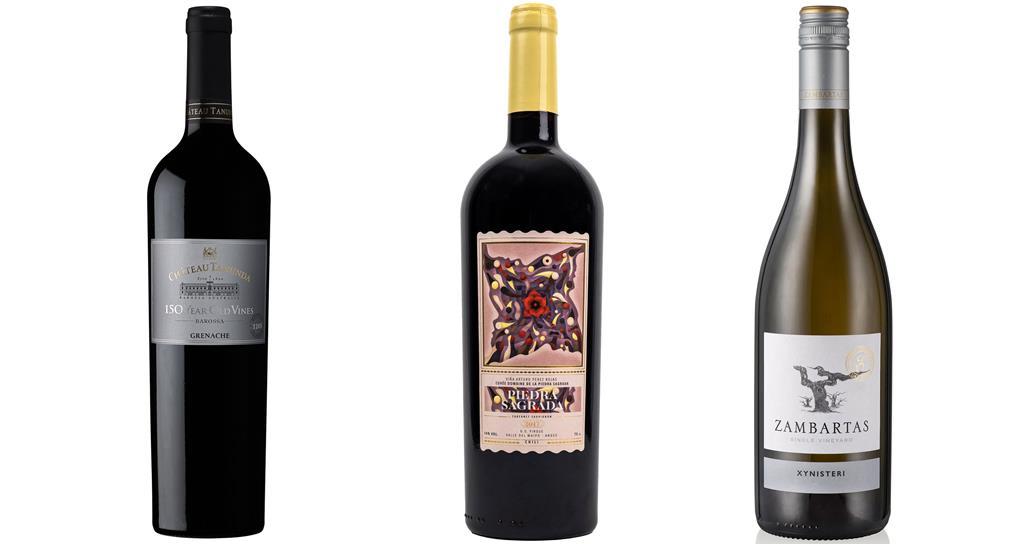
Château Tanunda, 150 Year Old Vines, Grenache 2022
Barossa Valley, Australia
Australia may be the quintessential New World wine producer, yet it’s home to some of the oldest vineyards of Old World grape varieties on the planet. In the Barossa Valley alone grow more than 200 hectares of vines aged a century or more – hardy, dry-farmed, ungrafted vines that have survived decades of drought, floods and fire. The Geber family of Château Tanunda are the custodians of century-old shiraz, semillon and riesling vineyards, and one of the oldest grenache vineyards in the world, planted in 1858. Château Tanunda’s “150 Year Old Vines Grenache” is the fruit of those ancient, ungrafted bush vines – a crimson wine redolent of red fruits, praline and herb gardens, the 2022 vintage of which captivated Andrew Caillard MW: “Pure and ethereal … Fresh strawberry, red cherry, peppery flavours, fine slinky textures, lovely inky density and underlying roasted walnut nuance. Builds up crunchy and grippy at the finish. Lovely presence, vigour and flow. Very expressive and individual … 96 points.”
Piedra Sagrada, Cabernet Sauvignon 2017
Maipo Valley, Chile
The only major wine-producing country never touched by phylloxera, Chile boasts thousands of hectares of old-vine European grape varieties. While bulk-wine producers plant grafted clones to boost their yields, many quality-minded estates have capitalised on this heritage of pre-phylloxera genetics. Foremost among them is Piedra Sagrada in Pirque, a 3.8ha estate with a geologically complex terroir planted by the late agronomist Arturo Pérez Rojas using a diverse selection of ungrafted cabernet sauvignon vines. Hailed as Chile’s rising star, Piedra Sagrada received its first accolades from Tim Atkin MW in 2025. “Why wasn’t I aware of the Pérez family’s legendary wine?” he wrote in his 2025 Chile Special Report, praising vintages like Piedra Sagrada’s 2017: “This is a brilliant varietal cabernet sauvignon … Aged in new French oak, it’s graceful, polished and refined, with sculpted tannins, pinot noir- like grace, a balsamic top note and a palate of tobacco leaf, red berries and sweet spices … 97 points.”
Zambartas Wineries, Single Vineyard Xynisteri 2023
Limasson, Cyprus
Cyprus, an island nation that escaped phylloxera, ranks among the world’s rare wine regions whose vineyards are almost entirely ungrafted. Its famous sweet Commandaria (the world’s oldest continually produced wine) is made with sun-dried grapes from just two of its many ancient varieties – xynisteri and mavro. Longtime champions of this viticultural heritage, the Zambartas family were the first winemakers to believe that xynisteri could also make refined dry whites if grown at higher altitudes. From an ungrafted vineyard planted at 900 metres in the Troodos mountains, they created the cuvée the grape geneticist José Vouillamoz heralded as the first single-vineyard wine to reveal “the huge potential of this grape variety”. Tasting the 2023 Single Vineyard Xynisteri for JancisRobinson.com, Caroline Gilby MW agreed: “High-toned with a strong streak of lime and something blossomy, too. No aggressive oak but real structure. Serious stuff! … I dread to think how I dismissed Xynisteri in the old days. 17.5/20.”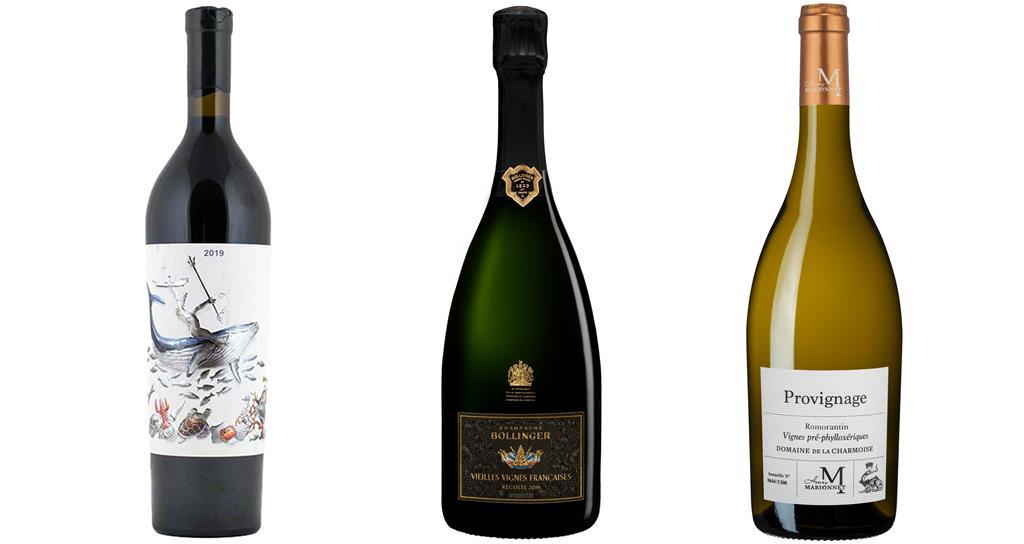
Liber Pater, Liber Pater 2019
Bordeaux, France
As Vinum magazine put it, “The most expensive wine in France is ungrafted and a rarity … An outstanding free spirit.” A wine that rejects the rules of modern Bordeaux to resurrect Bordeaux as it might have been in 1855, Liber Pater is the flagship wine of Loïc Pasquet. This impassioned and brilliant vigneron has revived an ancient terroir in the Graves region, planting 14 historic grapes (cabernet sauvignon and petit verdot, but also castets, tarnay, saint macaire, mancin …) franc de pied (own-rooted), at ultra-high density, using traditional methods brought to Bordeaux by the Romans. The 2019 vintage, aged in amphora, yielded barely 1,000 bottles. Jeff Leve of The Wine Cellar Insider lauded the exquisite balance in volume, roundness and purity of fruit. “Flowers, cherries and plums resonate along with earthy, spicy nuances. There is nothing between you and the fruit. Soft, fresh, lively and nuanced … a truly unique tasting experience. The only issue is finding a bottle … 95 points.”
Champagne Bollinger, Vieilles Vignes Françaises 2016
Champagne, France
For years, the walls around Champagne Bollinger’s vineyard parcels known as Clos Chaudes Terres and Clos St Jacques have shielded 12.5 hectares of ungrafted pinot noir from the scourge of phylloxera. A third ungrafted plot, Clos Croix Rouge, recently lost, was less fortunate. Why take the risk? For the rare chance, says Bollinger’s CEO Charles-Armand de Belenet, to “rediscover the flavour of the first champagnes”. For champagne expert Richard Juhlin, it’s “a grand experience every time I encounter a new vintage of ungrafted Bollinger Vieilles Vignes Françaises”. The newly released 2016, he writes, is no exception, boasting an orchestra of aromas. “Honeysuckle, honey, milk chocolate, oak, caramel, nougat, blackberry, ripe yellow peach, apricot and Moroccan leather constitute the most important components of the aromatic symphony. The incredibly concentrated taste plays on exactly the same theme, but has also been gifted with a new element of fig, sweet lemon pie and exotic fruits ... Another giant is born … 97-98 points.”
Domaine de la Charmoise, Provignage 2020
Touraine, France
What is the oldest vineyard in France? A sure contender is a 0.36ha parcel of romorantin vines in the Loire Valley, planted sometime between 1820 and 1840. Today cultivated by the Domaine de la Charmoise, it yields the cuvée Provignage, named after the ancient technique used to propagate ungrafted vines – potentially indefinitely. “When you drink this wine,” muses owner Jean-Sébastien Marionnet, “you’re tasting vines planted by vignerons who lived under Napoleon.” Endowed with tremendous ageing capacity, this golden wine is austere and brooding with intense acidity in its youth. After five years, it begins to reveal richness and regal stature. After 10 come honey, acacia flowers and even riesling-like petrol notes. Tasting the 2020 vintage, Wine Spectator’s Kristen Bieler enthused, “A structured, firm white, offering warm apple and salted sour apple taffy flavours, with salt-edged acidity and a distinctive burnt caramel note … With a fresh, salty finish of good length, this white is built to last … 93 points.”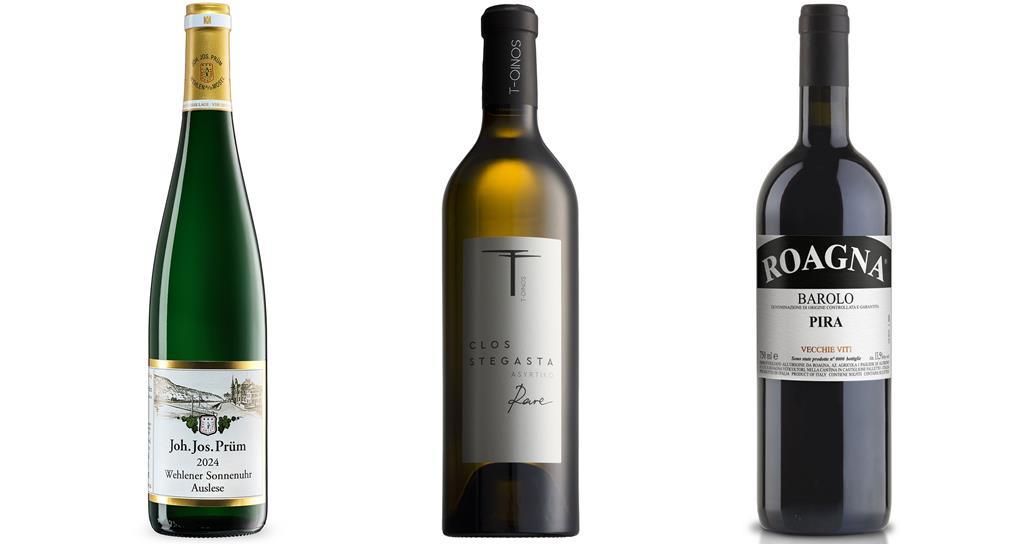
Weingut Joh. Jos. Prüm, Wehlener Sonnenuhr Riesling Auslese Goldkapsel Mosel 2024
Middle Mosel, Germany
Germany’s Middle Mosel is famed for its mythic rieslings. It’s also one of the only places in mainland Europe that escaped the phylloxera louse, thanks to its inhospitable steep slopes of extremely drained slate soils. The region’s most legendary vineyards, such as the Wehlener Sonnenuhr, are thus almost entirely ungrafted. Joh. Jos. Prüm, a revered estate founded in 1911 by Johann Josef Prüm, cultivates around nine hectares of this breathtaking site nearly entirely planted to old, ungrafted riesling vines, drawing fruit of unparalleled aromatic intensity from these mineral-rich Devonian slate soils. The coveted, ultra-ripe reserve auslese bottlings they produce here – Wehlener Sonnenuhr Riesling Auslese Goldkapsel Mosel – are benchmark wines for this style. For Anne Krebiehl MW of Vinous, the 2024 vintage “is alive with citrus foliage, zest and the sweetest fruit aromas. Its tanginess tingles on the nose and continues right on the palate ... The 2024 is superbly fine, stony, linear and, of course, delicious … 97 points.”
T-Oinos, Clos Stegasta Asyrtiko Rare 2023
Tinos, Greece
Tinos, a tiny island in the Cyclades archipelago, encapsulates the shifting fortunes of Greece’s 6,000-year wine history, once producing wines for the Vatican, only to see its vines uprooted for grain and livestock in the 20th century. In a bid to revive viticulture here, the entrepreneur Alexandre Avatangelos founded T-Oinos in 2002, planting a windswept granite circus at 460 metres above sea level with ungrafted assyrtiko vines, using cuttings from ancient vines on Santorini. Today, critic James Suckling hails T-Oinos as “a new benchmark for all wines from Greece”. He recently tasted its 2023 Clos Stegasta Asyrtiko Rare, from a single parcel of the estate’s best vines, farmed organically, vinified with native yeasts in amphora and oak. “The flavours are spicy, with lightly cooked pears, white flowers like honeysuckle and hints of lemons, white pepper, salt and cloves. The acidity excels in the endless finish. A unique white. There’s no other assyrtiko like this ... 98 points.”
Roagna, Barolo Pira Vecchie Viti 2019
Barolo, Italy
Nebbiolo is one of Italy’s most ancient and esteemed red grapes. In Piedmont, it creates the legendary wines of Barolo. One master of this difficult variety is Luca Roagna. His recipe is simple: organic farming, natural yeasts, patient barrel ageing, limited sulphur and very old vines. The older the vines, the deeper the roots plunge through different stratifications of his region’s marine, sedimentary soils. For Roagna, the tremendous complexity of his Barolo Pira Vecchie Viti (from a 1.5ha plot planted in 1937 – not with clones, but a naturally heterogeneous population of nebbiolo vines, almost entirely ungrafted) stems from a diversity of vines interpreting multiple layers of soil. Tasting the 2019 Barolo Pira Vecchie Viti, Antonio Galloni of Vinous called it “one of the most profoundly riveting, beautiful wines I have ever tasted here ... Hard candy, rose petals, mint, orange peel and kirsch all race across the palate. The 2019 is just dazzling … 99 points.”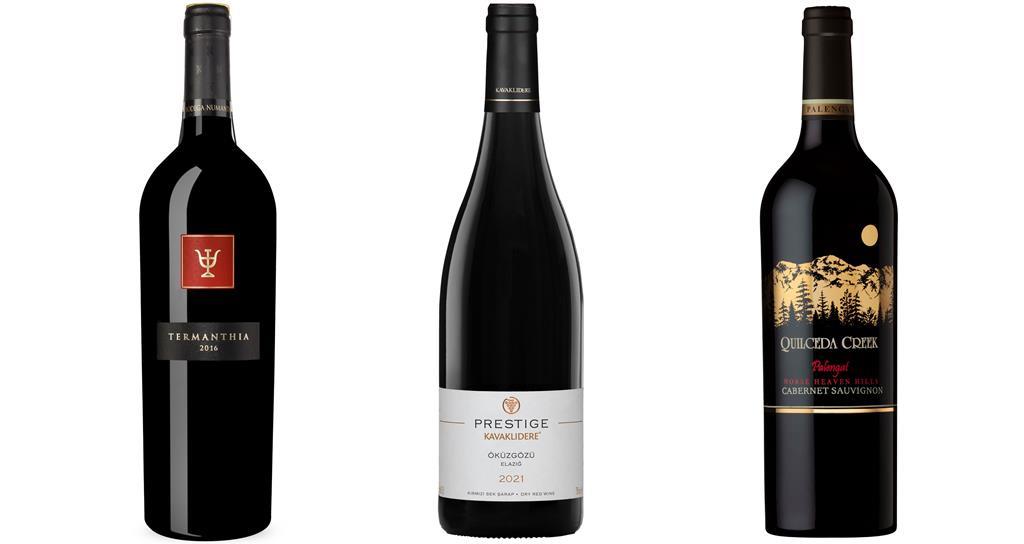
Bodega Numanthia, Termanthia 2016
Toro, Spain
If tempranillo is Spain’s most emblematic variety, the estate that has preserved the country’s oldest plantings calls it by the local name – tinta de Toro. Bodega Numanthia in the Toro region, founded by the Eguren family and now owned by LVMH, cultivates a 4.8ha vineyard of dry-farmed, ungrafted bush vines more than 120 years old to create the cuvée Termanthia – a wine of finesse, purity and power that encapsulates the remarkable resistance of old vines to drought and climate change. When Robert Parker’s Wine Advocate scored the 2004 Termanthia 100 points for its nose of pencil lead, violets and blackberry, and its seamless palate, it declared, “If you have a soul, sell it to the devil for a few bottles of this extraordinary liquid.” More recently, tasting the 2016 vintage, James Suckling marvelled at the capacity of these gnarled, ungrafted vines to create a wine with such a profound sense of place: “You can taste the earth of Toro … 97 points.”
Kavaklıdere, Prestige Öküzgözü 2021
Anatolia, Turkey
As a region in the shadow of Mount Ararat – the presumed birthplace of viticulture – eastern Anatolia in Turkey was home to some of the world’s first domesticated grapevines. Recently, its historic grapes have finally begun to gain recognition globally, thanks to estates like Kavaklıdere. As Turkey’s leading producer, founded in 1929, Kavaklıdere cultivates hundreds of hectares of international varieties. But several years ago, the estate contacted the globetrotting wine consultant Stéphane Derenoncourt, known for his sensitivity for indigenous grapes and their native soils, about a project to revive Turkey’s 6,000-year-old wine culture. Soon, Derenoncourt discovered that ungrafted ancestral grapes like the red öküzgözü or “bull’s eye” can be veritable “translators of terroir”. The judges at the 2024 Decanter World Wine Awards agreed, bestowing Kavaklıdere’s 2021 Prestige Öküzgözü gold, praising its “deeply concentrated black and red cherry fruit woven neatly into the well-defined oak structure with an enriching spicy tea note and harmoniously long finish … 95 points.”
Quilceda Creek, “Palengat” Cabernet Sauvignon 2022
Washington, United States
Though phylloxera is a calamity of American origin, until recently, it hadn’t spread to Washington’s Columbia Valley. The volcanic and sandy soil is ideal for grapevines, but less hospitable for the dreaded aphid. As such, own-rooted vines have always been part of Washington growers’ identity. Recent sightings of the pest in southeast Washington are unlikely to change that for winemakers like Quilceda Creek’s Mark Kaigas, who believes own-rooted vines are healthier, have better transpiration and cooling abilities, and produce purer grapes than grafted. It’s hard to argue with the maker of wines like the 2022 Palengat Cabernet Sauvignon, from the 100 per cent ungrafted Mach One Vineyard. The Wine Palate’s Lisa Perrotti-Brown MW lauded a wine that “erupts from the glass with powerful scents of crème de cassis, liquorice, coffee beans and preserved plums, leading to hints of mint tea, cedar and dusty soil. The full-bodied palate is built like a brick house… with epic length and depth… 100 points.”
Bottle images courtesy of the wineries