The Second Age of Elegance
In 1925, a new aesthetic infused with abstraction, geometry and innovative materials transformed jewellery – and much else – forever. A hundred years on, Art Deco continues to inspire both the great maisons and a generation of independent designers.

There may have been no more important year for jewellery in the 20th century than 1925. A watershed moment in the decorative arts, the “Exposition Internationale des Arts Décoratifs et Industriels Modernes” exhibition in Paris, which gave its name to the Art Deco movement, put into motion aesthetic advancements and creative inspirations without which the past 100 years of jewellery-making would be hard to imagine.
The past year has showcased the power of Art Deco like never before in museum exhibitions and new collections by designers across the globe. It’s also provided an opportunity to reflect on the movement – and why it continues to inspire so many creators in so many ways.
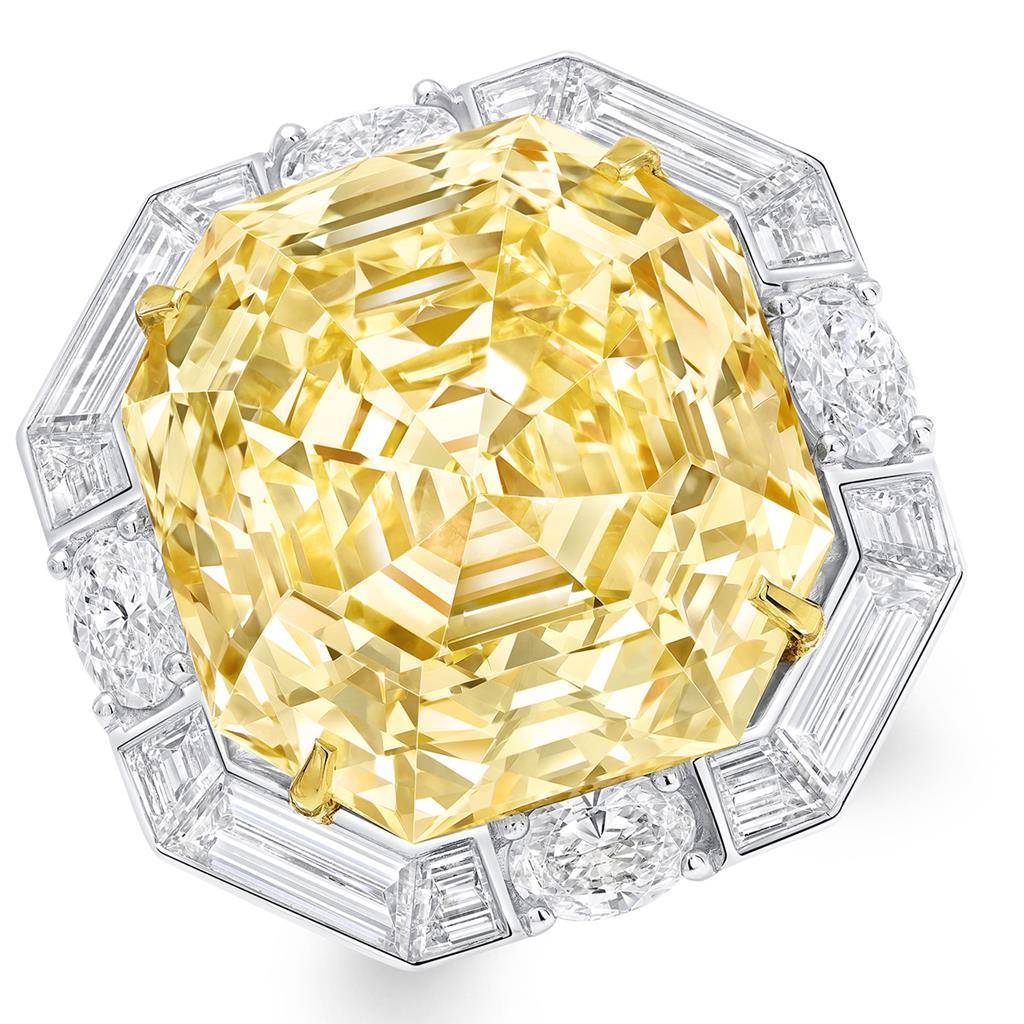 A Deco-inspired Graff ring centred by a Fancy Yellow diamond trimmed with white diamonds
Cartier opened its spring season at London’s Victoria and Albert Museum with a show that, while dedicated to the maison’s rich history, placed Art Deco at its core – from Islamic-inspired motifs to the exuberant Tutti Frutti style. The exhibition travels to Melbourne later this year, as 2026 promises to continue the global rediscovery of the period’s creativity and craftsmanship.
In September, Tokyo joined the celebrations with Timeless Art Deco with Van Cleef & Arpels High Jewellery at the Tokyo Metropolitan Teien Art Museum, a masterpiece of Art Deco architecture in its own right. Built as the private residence of Prince Asaka Yasuhiko in 1933, the mansion reflects the prince’s admiration for the movement after a stay in France, during which he fell in love with the movement’s aesthetic.
And in October, Paris, the birthplace of Art Deco, unveiled 1925–2025: One Hundred Years of Art Deco at the Musée des Arts Décoratifs. Running until 26 April, the exhibition gathers nearly 1,000 works, including sculptural furniture, precious jewellery, objets d’art, drawings, posters and clothes that invite visitors on a journey to the heart of the Roaring Twenties’ creativity and contradictions – and the timeless appeal of its style.
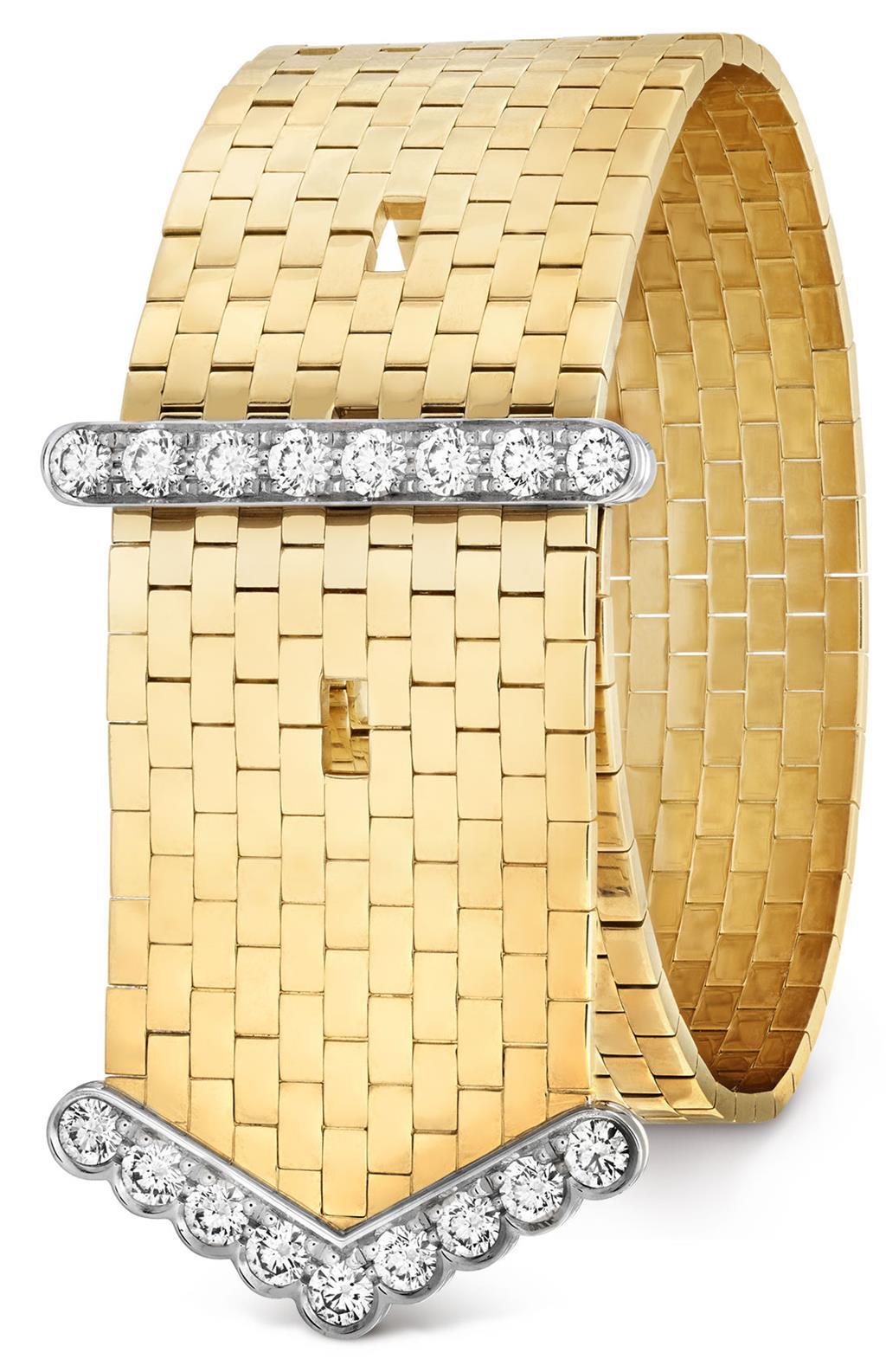 Van Cleef & Arpels’ yellow-gold and diamond Ludo bracelet, originally designed in 1934
“Art Deco was born as a way to regenerate French decorative arts and adapt them to modern life,” explains Mathieu Rousset-Perrier, curator of the Middle Ages, Renaissance and jewellery collections at the Musée des Arts Décoratifs. Yet this transition to modernity was built on a remarkable blend of aesthetic references, both ancient and contemporary, as artisans experimented with new materials and techniques.
Unlike earlier movements, the historical reference points evoked in Art Deco drew from a broad range of geographical and cultural sources, from Africa to Asia, including China, Japan and India, says Rousset-Perrier. The movement’s vocabulary also borrowed from 18th-century French decorative arts – baskets of flowers were a recurring motif – and revived traditional techniques such as shagreen and straw marquetry. “Artists experimented with rankaku (eggshell inlays popularised by Jean Dunand), lacquerware and even exotic artefacts known as apprêts,” he notes, “embedding them into modern designs.” At the same time, they looked forward, drawing inspiration from the avant-garde – the vivid colours of Fauvism, the theatrical sets of the Ballets Russes and the geometric abstractions of Cubism.
Planned as early as 1908 and postponed by the First World War, the exhibition finally opened in Paris on 28 April 1925 with a sense of collective jubilation. Twelve monumental gates led visitors into a sprawling fair that stretched from the Esplanade des Invalides to the banks of the Seine, filling the space between the Petit and Grand Palais with pavilions from around the world. The event celebrated modernity itself – a bold fusion of art, craft and industry – and marked France’s assertion of leadership in design and luxury. Its exuberance mirrored the cultural mood of the 1920s: the Jazz Age, the flapper, the syncopated rhythm of social liberation captured in The Great Gatsby – F Scott Fitzgerald’s masterpiece (which also turned 100 in 2025). The exhibition embodied a world eager to forget the trauma of war and to reinvent beauty for a new century.
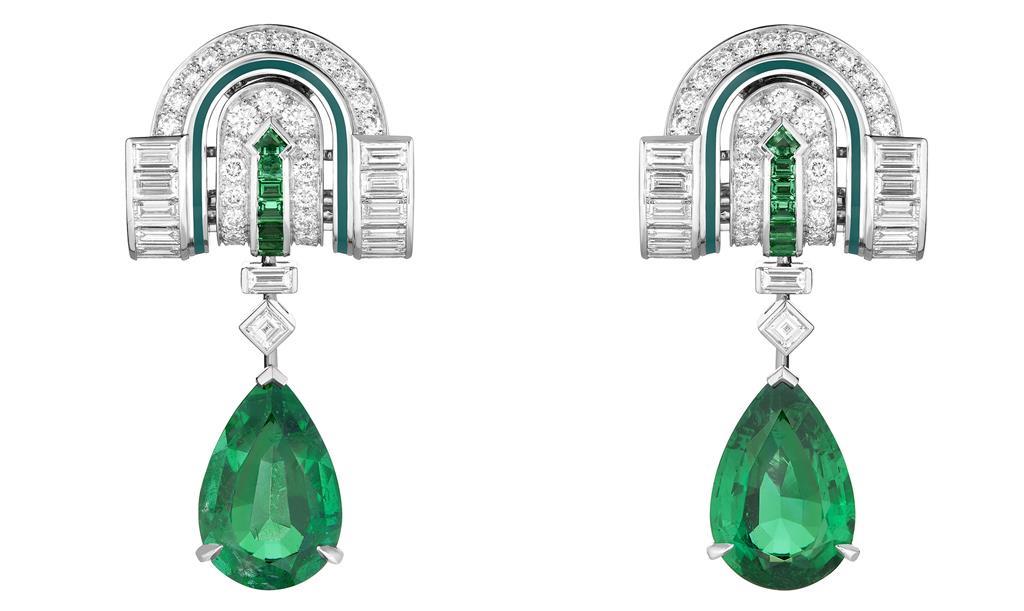 Boucheron’s white-gold Green Garden pendant earrings, with emeralds, diamonds and lacquer
In jewellery, the new codes of beauty were a heady synthesis of diverse influences – Cubism, Islamic architecture, African art, Bauhaus, the Ballets Russes and Japonisme – all distilled into geometric lines and patterns. Designers juxtaposed the bold primary colours of emeralds and rubies with the stark contrast of white diamonds and black onyx, framing these compositions in newly fashionable white metals such as platinum and white gold. The effect was strikingly modern, a sharp departure from the warm yellow gold of the past or the easily tarnished silver of previous decades. These were jewels conceived to embody permanence and progress, creations that, a century later, continue to gleam with relevance, as confirmed by the record prices they command at auction today.
Just consider Van Cleef & Arpels’ 1929 tie necklace, which, in 2024, sold at Sotheby’s New York for $3.6 million, nearly three times its high estimate. The piece epitomised the maison’s mastery of Art Deco design, sleek geometry, playful inventiveness and the technical finesse that transformed a masculine accessory, the cravat, into a thoroughly feminine and architectural jewel. Its spectacular result at auction was not only a testament to its rarity but also to the enduring allure of the period’s vision of progress and elegance, one that still resonates with modern collectors as the style remains truly timeless.
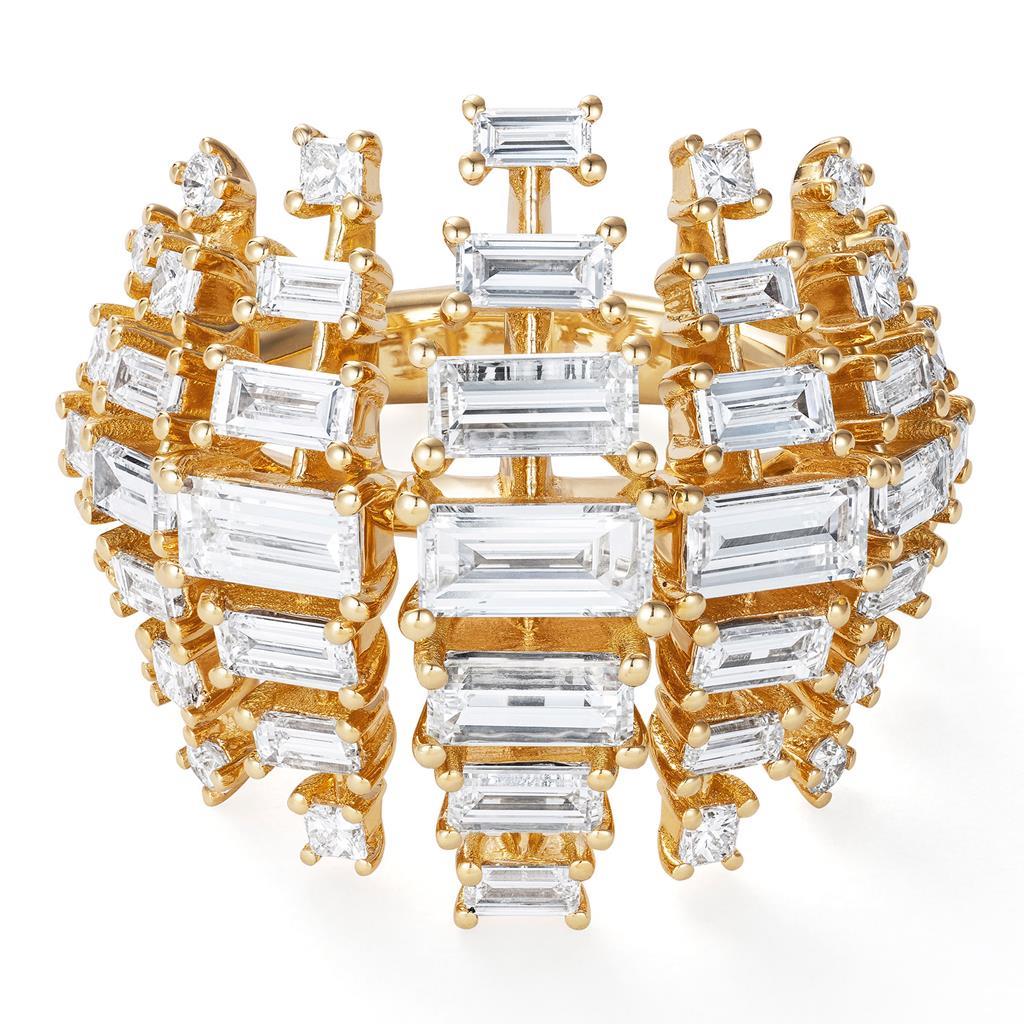 The Vertigo ring, a striking creation featuring yellow gold and baguette-cut diamonds by Brazilian jeweller Fernando Jorge
“It was a period of high creativity,” says Alexandrine Maviel-Sonet, exhibitions director at Van Cleef & Arpels. “The maison created many iconic pieces during the Art Deco era. It had a strong identity already in 1925, and with the international exhibition held in Paris, the maison won the grand prize for jewellery, which included the 1924 Entwined Flowers, Red and White Roses bracelet. Some of our most patented innovations also date from this time: the Minaudière vanity case, the prong-free Mystery Set technique, and the Cadenas watch.” Some of these treasures are part of the Tokyo exhibition of 250 archival pieces, including recent acquisitions as well as 60 documents.
But Art Deco jewellery is not confined to museum vitrines; it continues to inspire contemporary designers. Its influence runs through the creations of Cartier, which keeps reinterpreting its beloved Tutti Frutti style, as well as through the work of Graff, which focuses on maximising the beauty of stones through geometric settings. At Harry Winston, a brand that emerged at the height of the Art Deco era, this style is woven into its DNA. The designs feature a perfectly calibrated interplay of shapes, colours and materials, bringing to life jewels that embrace the body like a second skin.
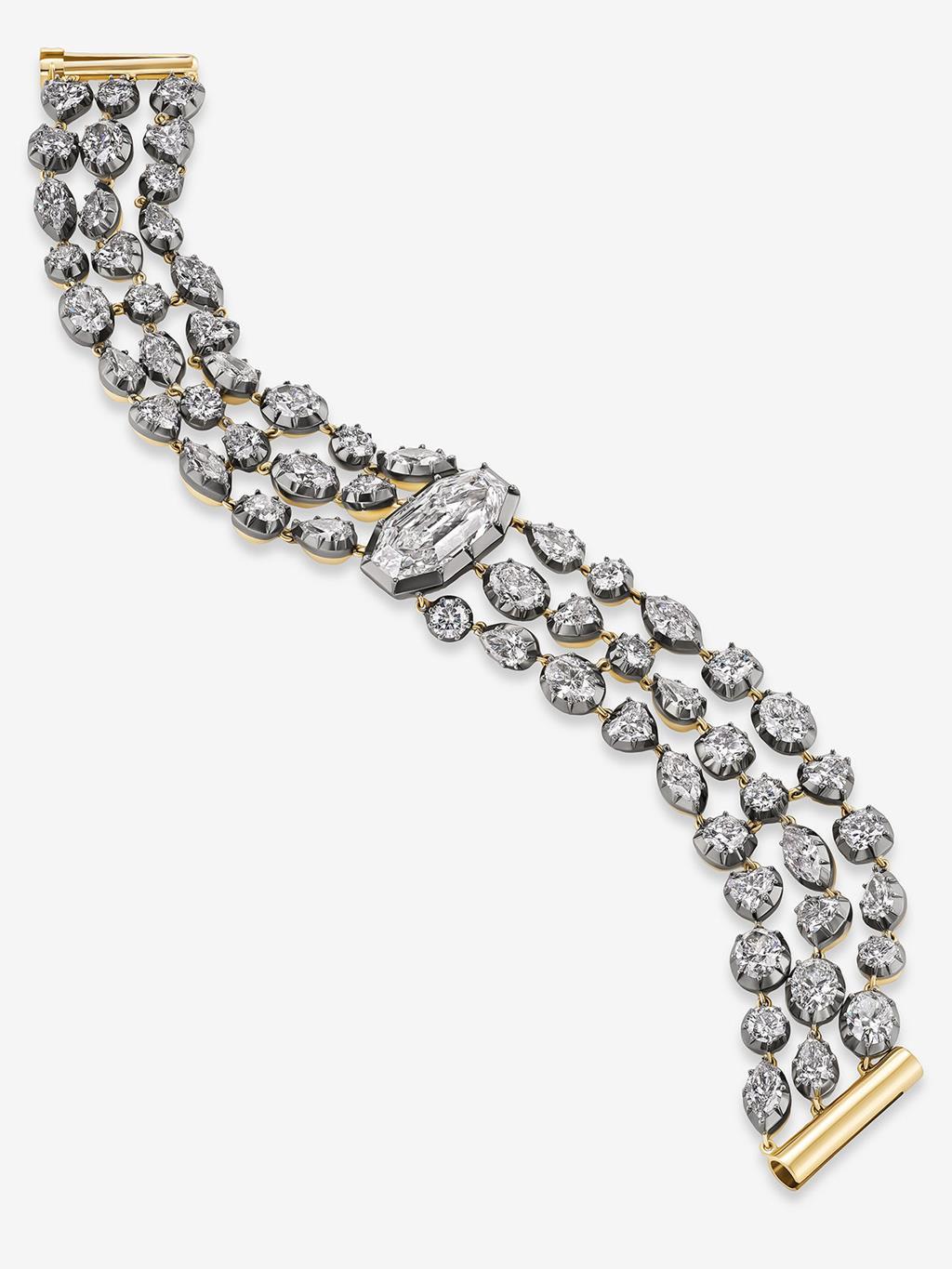 Mayfair-based designer Jessica McCormack brings together blackened white gold, yellow gold and a swirl of diamonds in her 1774 bracelet
For collectors drawn to the period’s distinctive style, British jeweller Pragnell offers an extensive selection of genuine Art Deco pieces within its vintage collections. The influence of the era doesn’t end with its historic offerings: echoes of Art Deco design continue to appear across the brand’s contemporary jewellery, where geometric motifs and refined structural details subtly inform modern creations.
Chopard, too, has drawn on the ebullient energy of the Roaring Twenties. Its recent collection, created around the Insofu emerald, a gem the maison acquired in the rough directly from the Kagem mine in Zambia, channels the vitality and opulence of The Great Gatsby. “I encouraged my workshops to explore every creative avenue inspired by that particular joy of life, energising and contagious, encapsulated in the exuberant effervescence of the early 20th century,” says Caroline Scheufele of the inspiration rooted in Fitzgerald’s fictional character.
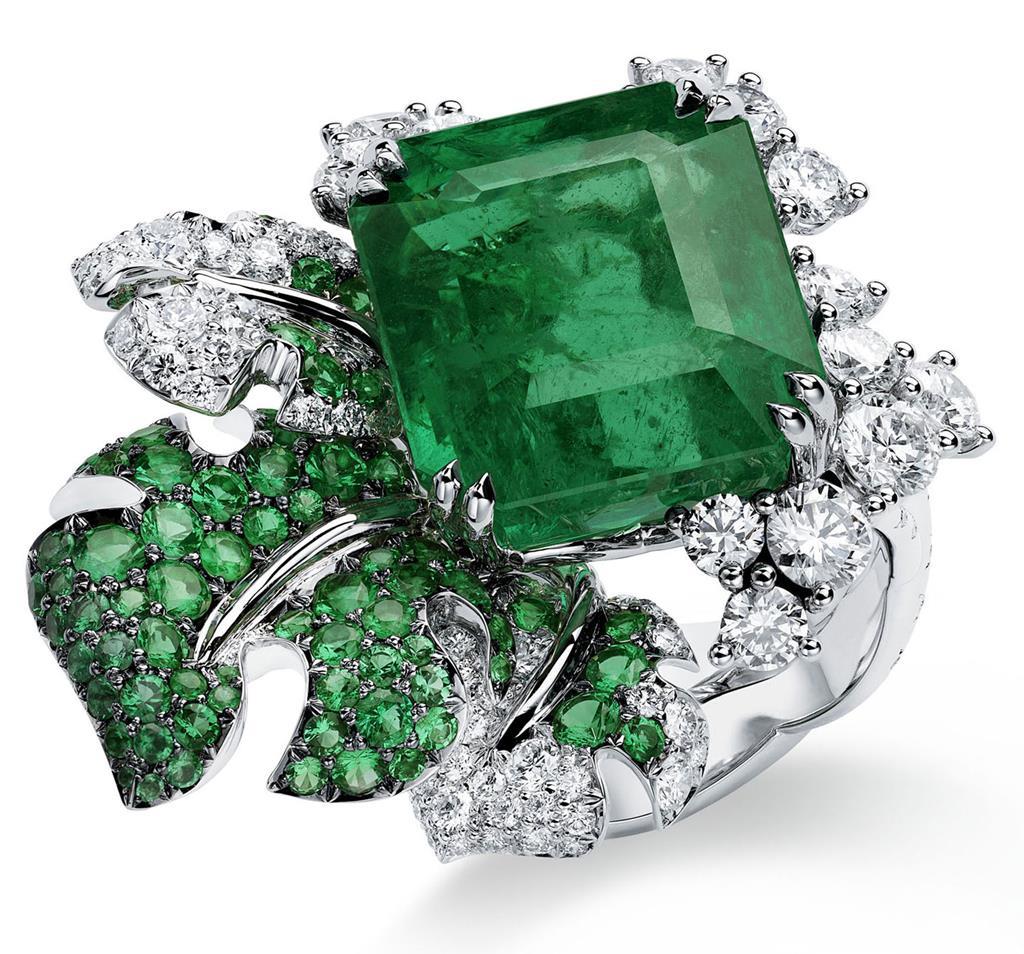 Chopard’s white-gold and platinum ring set with emeralds, from the Insofu collection
“Art Deco is a theme I continually reinterpret in my high-jewellery collections, as it is one of the cornerstones of our maison,” adds Claire Choisne, creative director of Boucheron. “Frédéric Boucheron’s son, Louis, was a visionary who anticipated this shift. The maison’s archives from the 1920s are filled with striking architectural designs that feel as contemporary today as they did a century ago.”
In 2021, Boucheron dedicated an entire Histoire de Style collection – its annual high-jewellery series inspired by archival themes – to Art Deco. Tie necklaces, ribbon bracelets and tassel sautoirs from the period’s repertoire were elevated by Boucheron’s savoir-faire and a modern multiwear approach. And Art Deco continues to be an aesthetic reference point in the use of rock crystal and innovative materials that span anything from pebbles to aerogel. “At Boucheron, we see Art Deco as a turning point where craftsmanship met modernism,” says Choisne. “It was an era that embraced innovation: new materials like onyx and lacquer appeared alongside diamonds and emeralds; bold lines replaced the ornate curves of previous periods; and modular, transformable pieces became popular, reflecting the pace of modern life.”
Choisne also notes that Art Deco was not only an aesthetic revolution but a social one. “It marked a new way for women to express themselves through style,” she says. “It emerged in the 1920s, a time of immense social change, when women were breaking free from the constraints of the past and embracing modernity, freedom and individuality.”
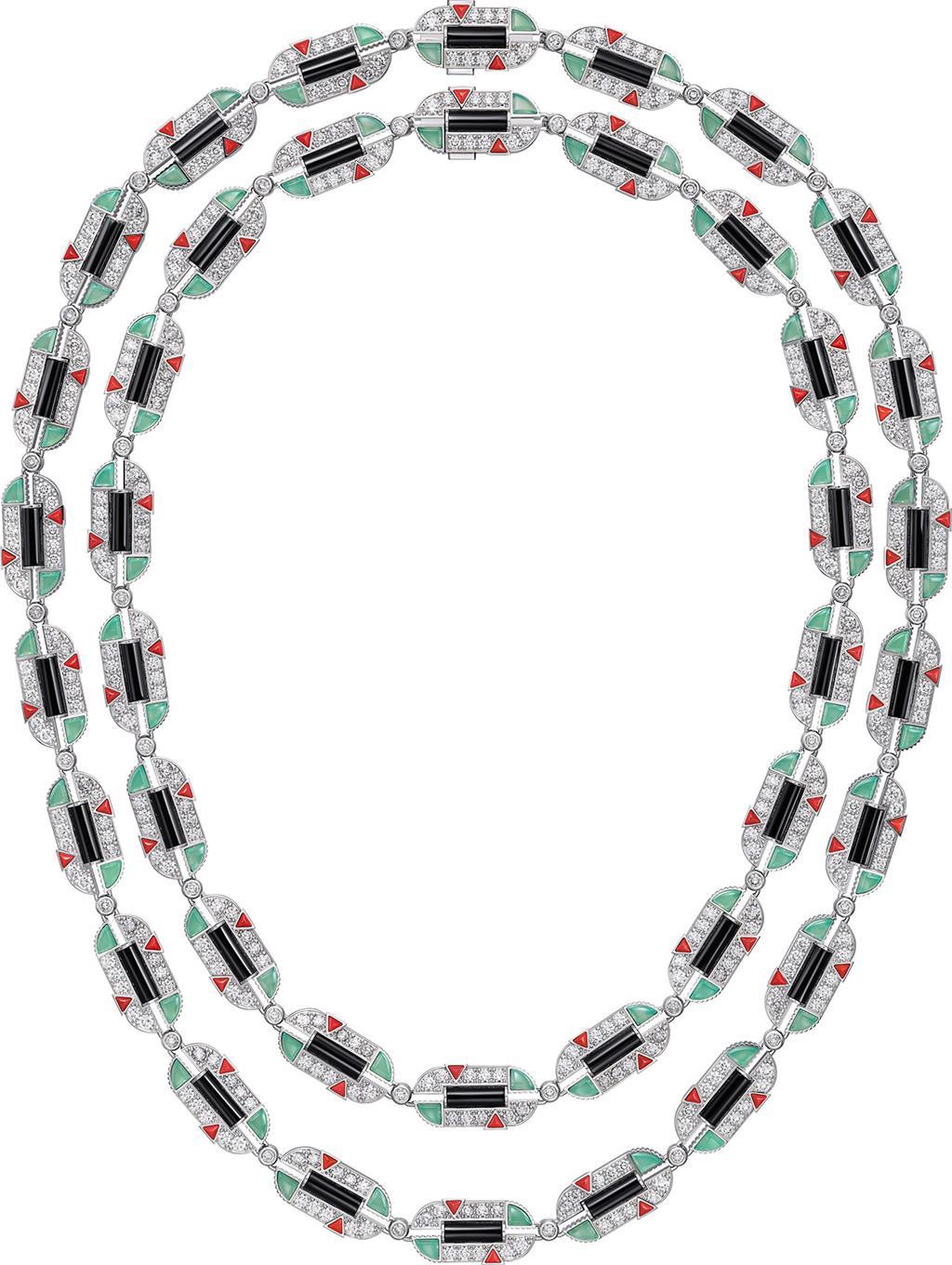 Cartier’s white-gold Géométrie & Contrastes necklace – a chrysoprase, onyx, coral and diamond showstopper that transforms into two separate pieces
That spirit continues to inspire a new generation of designers such as Jessica McCormack, whose aesthetic fuses vintage soul with modern irreverence, and who has recently taken the United States by storm; London-based Brazilian jeweller Fernando Jorge, who intriguingly pairs rare native woods with vibrant gemstones set in geometric forms; and Nikos Koulis, the rising star of Greek jewellery, whose bold architectural pieces reinterpret the movement’s graphic purity.
“My appreciation for Art Deco’s clean geometry is reflected not only in my jewellery, but also in my stores, my homes and my personal style. I dislike heavy motifs, busy forms and overly ornate aesthetics. For this reason, Art Deco is intrinsic to my creative signature,” says Koulis, who cites the movement as a constant reference point. “It’s the geometry that makes it truly special, the inherent harmony between form and feeling, and the striking, dynamic energy that still feels utterly modern.”
Header photo © Harry Winston, photos courtesy the jewellery houses