The House Always Wins
Villas designed by prominent – and promising – architects are transforming luxe hospitality, triggering a trend for private stays in modern masterpieces.

What is it that people look for in a rental? Is location important above all else? Or do the amenities on offer play a greater role? What about the architectural credentials of the property itself? Over the last two decades, contemporary builds have become an unlikely draw in the rarefied world of high-end holiday homes. Although still a niche interest for many, architect-designed retreats are tapping into the relentless aesthetic upgrade of the modern era, with the visual “demands” of social media ensuring an uplift in the quality and scope of the backdrop to our lives.
Online superficiality is one factor at play. Another is the sheer breadth of architectural expression available in a holiday house. When you’re designing for a short, impactful stay – and not the challenges and practicalities of day-to-day life – a house can become a more adventurous, dynamic space. The architecture itself even becomes an integral part of the experience of being away from home. This approach defines three of the most visible proponents of the architectural retreat: Japan’s Not A Hotel, the Spanish Solo Houses venture and Living Architecture in the UK. All provide different approaches, as well as a distinct curatorial style.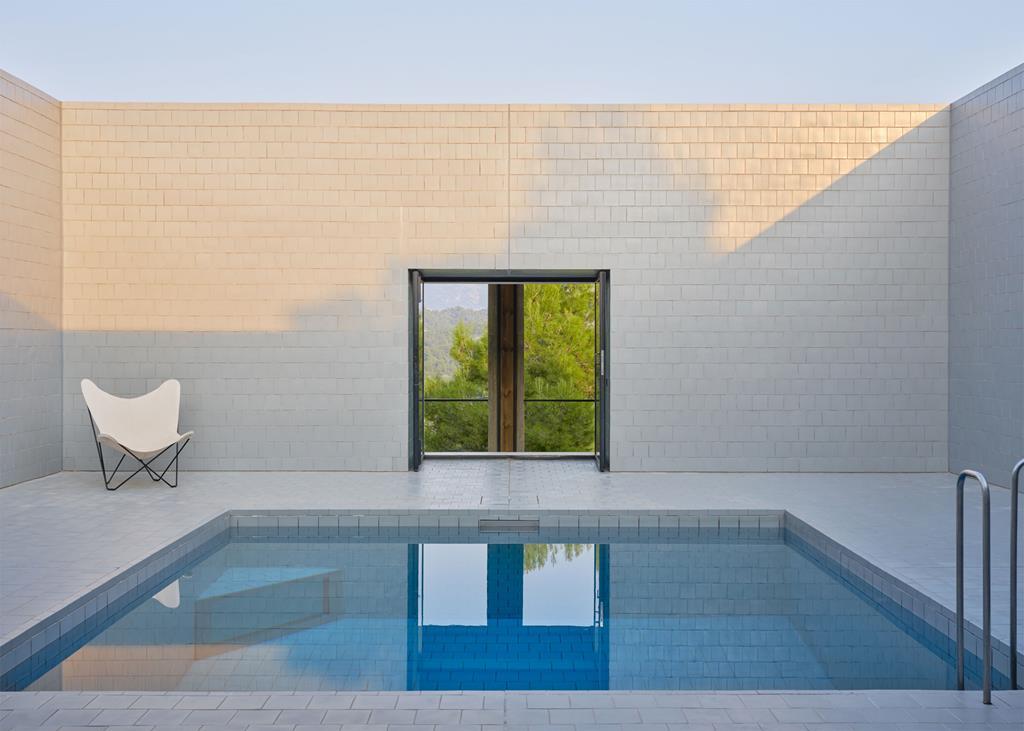 Solo Pezo von Ellrichshausen (photo: Renee Kemps)
Living Architecture was founded by the writer and philosopher Alain de Botton in 2006, building on his book of the same year, The Architecture of Happiness. A long-term enthusiast and patron of contemporary architecture, de Botton’s book was a celebration of big-M Modernism, of innovation and of the positive mental outlook engendered by well-designed spaces.
Living Architecture’s slogan is “holidays in modern architecture”. And indeed, from its very first project – the Balancing Barn in Suffolk, designed by avant-garde Dutch firm MVRDV and unveiled in October 2010 – the company has pushed the boundaries to create what it calls “thought-provoking domestic houses”. Despite working with some of the world’s most prominent architects, Living Architecture’s properties have remained at a modest scale. Nevertheless, they display high levels of formal invention, visual drama and artistic intent. From the Balancing Barn’s dramatic cantilever, or the playful roofscape and internal configuration of Jarmund/Vigsnæs Architects’ Dune House, also in Suffolk, to the solemn otherworldliness of NORD’s Shingle House in Dungeness, a Living Architecture project is intended to inspire as well as refresh.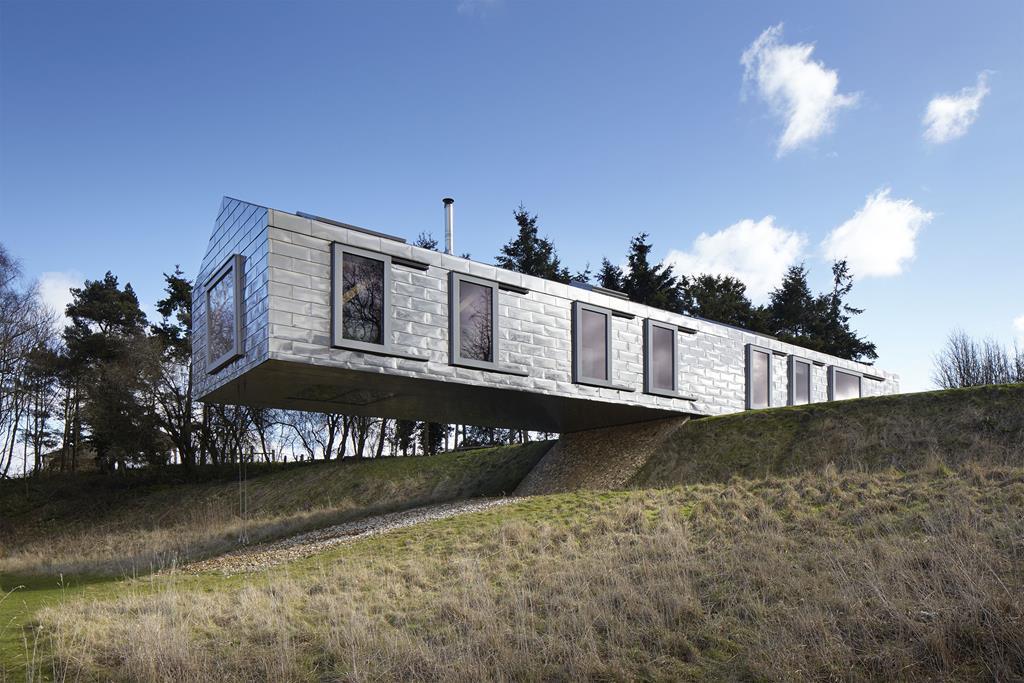 Balancing Barn (photo: Living Architecture)
More recent Living Architecture projects include John Pawson’s fabulously spartan Life House in Wales – a modern take on the minimal, monastic retreat – and the Secular Retreat, the only permanent UK work by Swiss master Peter Zumthor, who also designed all the furniture and fittings in this private hilltop retreat in South Devon. Living Architecture is as much about the holistic experience of day-to-day life in a different environment as it is about the physical spaces, hence its focus on art and furniture as well as design. In A House for Essex, perhaps the most playful property in its portfolio, artist Grayson Perry teamed up with UK practice FAT to create a building that is also a narrative, an exploration of a fictional life through craft, colour, form and design.
Whereas Living Architecture’s ethos is intended as a short-term sybaritic snack for the senses, Not A Hotel gives you keys to the kingdom. The Japanese company was set up by Shinji Hamauzu to combine traditional hospitality with a real-estate agency, along with a side order of high-end architectural design and interiors. Not A Hotel’s model is fractional ownership, selling shares in spectacularly designed and curated homes as well as offering a bespoke concierge service that assists with travel and logistics. In addition to the allotted time in their chosen home, buyers also get access to nights at other properties in the Not A Hotel portfolio.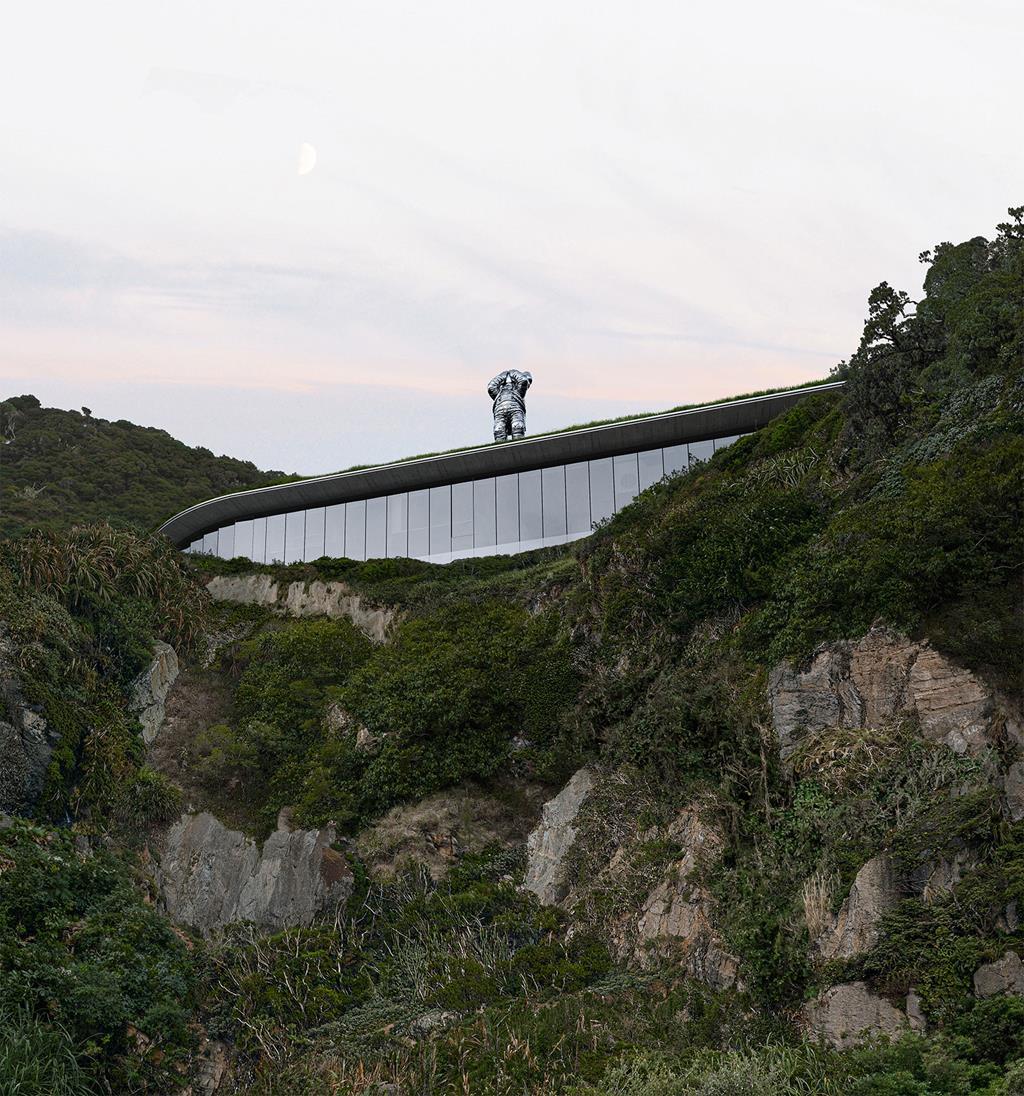 The Nigo House, Tokyo (photo: Not A Hotel)
Architects include Aizawa Yosuke, Sou Fujimoto, Suppose Design Office and Masamichi Katayama, as well as Western architects Snøhetta and Bjarke Ingels of BIG. Currently under development is a house overseen by Japanese streetwear entrepreneur, musician and designer Nigo, working in collaboration with the artist KAWS. Embedded within a hillside overlooking Tokyo Bay, the Nigo House splices Insta-friendly views inside and out, with splashes of esoteric art and design both old and new. From the underground car park to the capsule-style bedroom, a traditional tea room with ocean views and a bespoke listening space with a custom-built sound system, to a scattering of auction-worthy modernist furniture from the likes of Jean Prouvé and Pierre Jeanneret, every facet of the structure has been guided right down to the last detail.
Not A Hotel emphasises curation in order to elevate the déclassé image of the timeshare into the realm of fractional ownership, most commonly used for assets like superyachts and private jets. A more modest take on cultural assemblage is represented by the Paradis Apartment in Ostend, Belgium. A compact two-bedroom apartment in a 1960s block, the space offers North Sea views from a sweep of curved windows in the sitting room. Intended by founders Albane Paret and Micha Pycke as part gallery, part showroom, but all experience, the Paradis Apartment is furnished with pieces for sale, from art to furniture. Works by Muller Van Severen, Sofie Steegen and Atelier Thomas Serruys are artfully placed throughout the minimalist interior, as well as permanent pieces that form part of the decor. A strong architectural approach is the perfect backdrop to such interiors, honed as if they were art installations or museum displays, with not a book or picture out of place.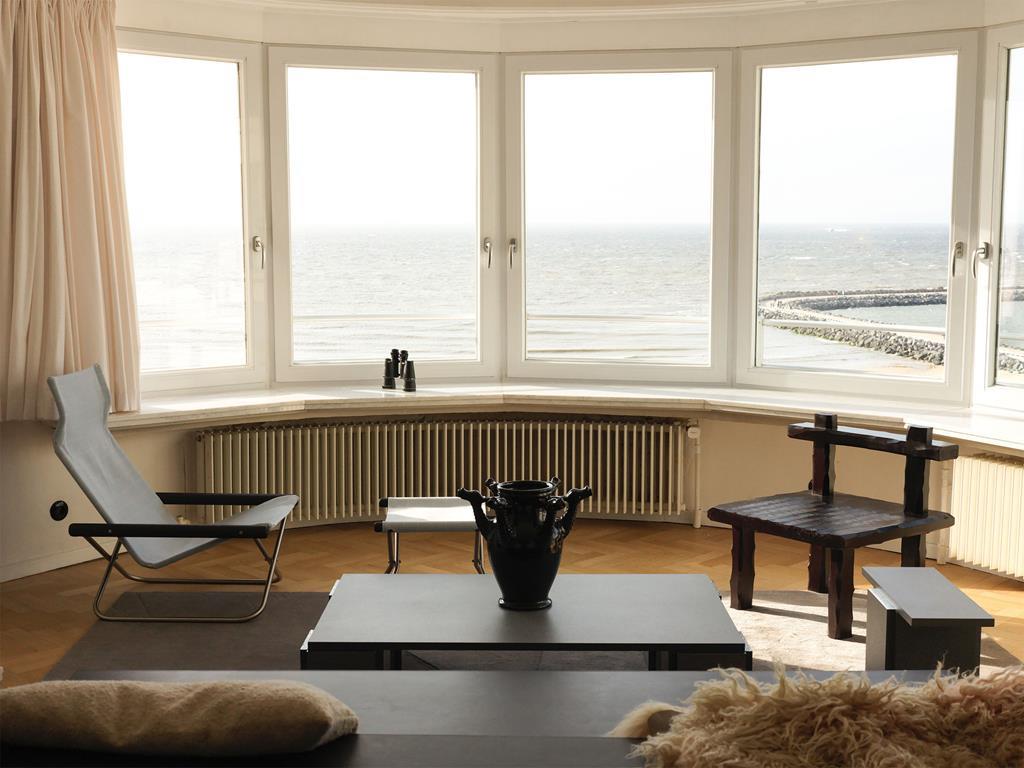 Paradis Apartment (photo: Micha Pycke)
In contrast, many just want a spatial experience that’s defiantly different from their everyday lives. Occasionally, you’ll find such a gem by digging around on the copious listings of the many holiday-house and cottage portals scattered around the internet, yet, more often than not, interesting architecture is uncovered only by chance. Specialist letting agents are starting to offer curated groupings, such as the “Art, Design and Architecture Holidays” collection at Welcome Beyond.
From Iceland to Australia, from artful European lofts to Mexican beach houses and modernist marvels in LA, Welcome Beyond will help you narrow your choices down through design. A similar service is offered by HolidayArchitecture, a portal based in Germany. Other agencies, like Host Unusual, cater for more esoteric homes, delving into the weird and wonderful with a focus on small-scale, remote retreats, ranging from modernist cabins and converted shipping containers to tiny houses. Even Airbnb offers a “Design” category, although the properties are often self-selected and include more curios than classics.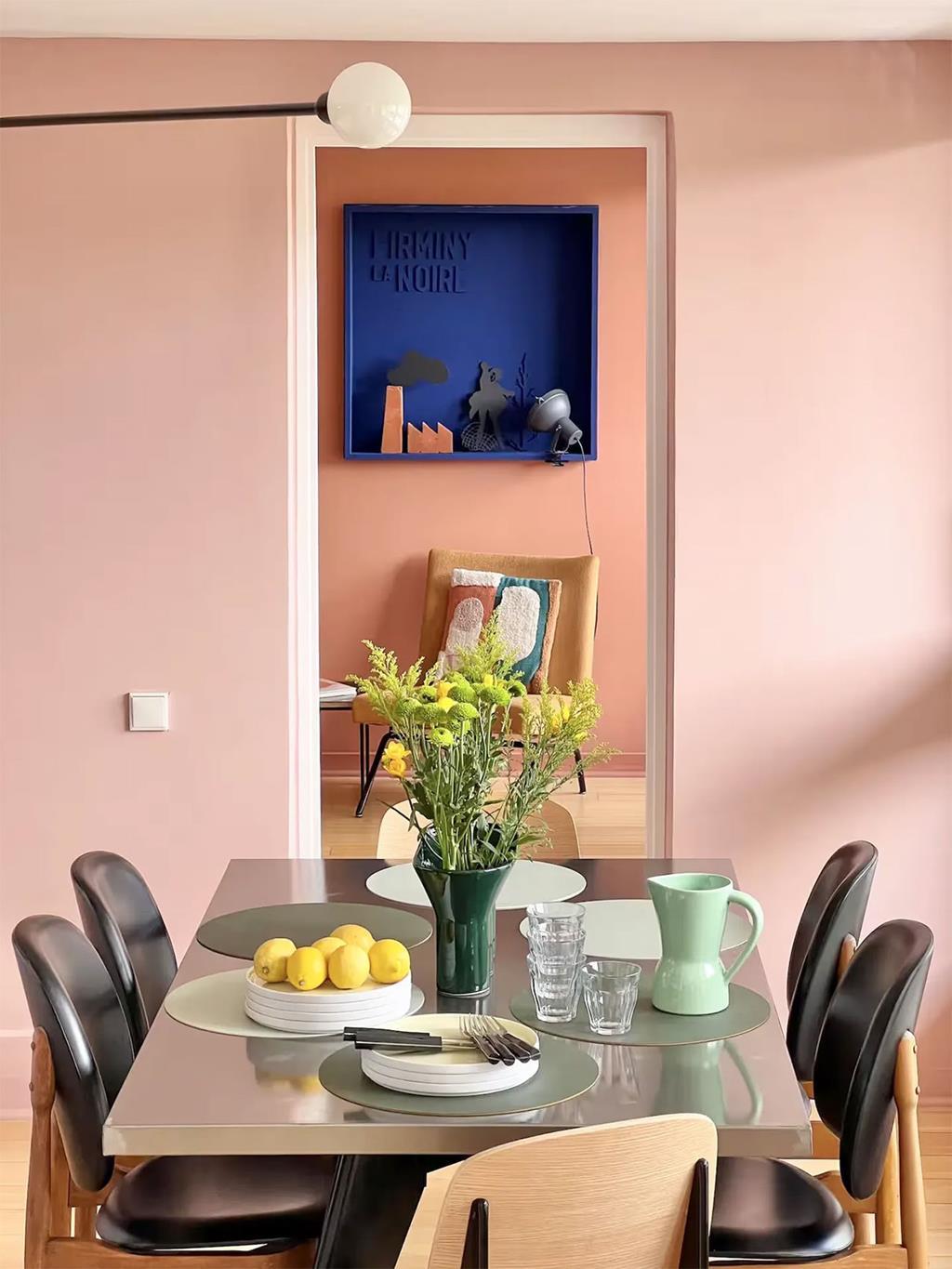 Unité d’Habitation (photo: Modernist Estates)
For lovers of more prosaic modern structures, consider the very personal selection of destinations offered through Modernist Estates. If you’ve ever wanted to spend the night in Le Corbusier’s seminal Unité d’Habitation apartment block in Firminy, France, or a tin church in Scotland, this is the place to go. Founder Stefi Orazi combines her vast knowledge of the period and love of both modernist classics and unusual architecture to curate her choices.
In comparison, the likes of Not A Hotel and Living Architecture have set the bar extraordinarily high by designing, building, maintaining and promoting cutting-edge architecture. All this is achieved while servicing a constant stream of new residents, all of whom want to experience the rigour, perfection and novelty of a top-architect-designed house.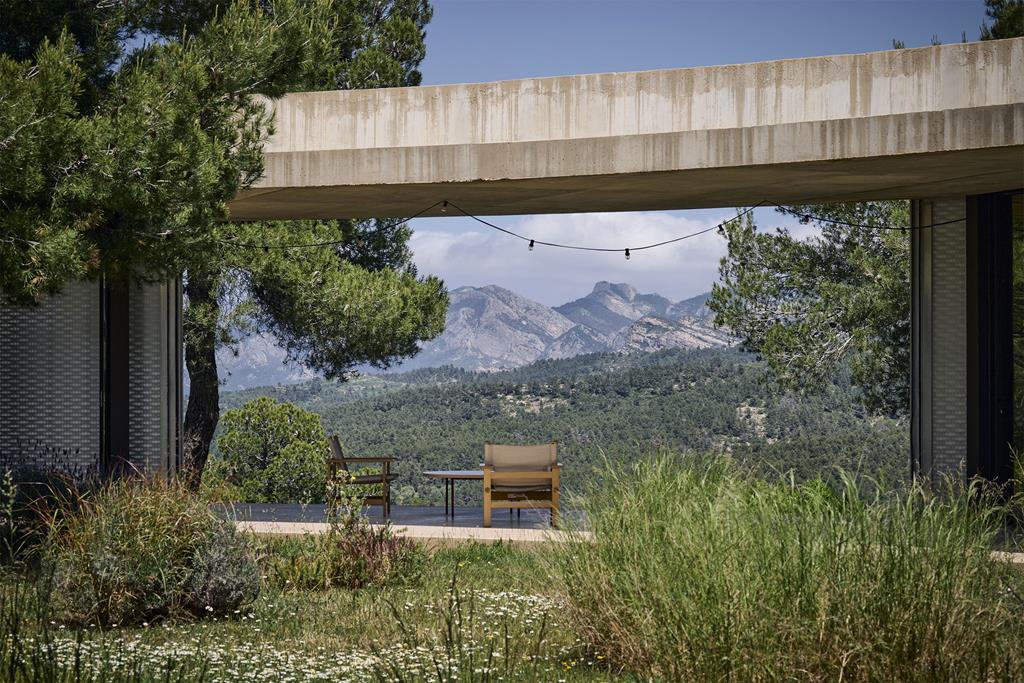 Solo Office (photo: Solo Houses)
Another venture hoping to capture the thrilling fusion of spirit, space and place is Solo Houses, established in 2010 by gallerists Eva Albarrán and Christian Bourdais and based close to the national park of Puertos de Tortosa-Beceite in Matarraña, southwest of Barcelona. Just two houses have been completed, with others in the works, a circular structure by Belgian studio Office KGDVS, founded by Kersten Geers and David Van Severen, and the meticulous concrete geometry of Pezo von Ellrichshausen’s square structure, complete with a swimming pool in its central courtyard. A sculpture park on the grounds opened this past summer, and future houses include designs by Rintala Eggertsson, Tatiana Bilbao, Bijoy Jain and Barozzi Veiga, as well as a proposal for a Solo Hotel by Chilean architect Smiljan Radic.
In some respects, these high-end architectural retreats are a hangover from the golden era of starchitecture and “iconic” buildings, when big-name architecture and bold forms were seen as a quick-fix panacea for urban regeneration. In the decades that followed, ambitions and budgets might have been tempered, but the idea that untethered architectural expression represented both a high cultural bar and a balm for the soul has persisted.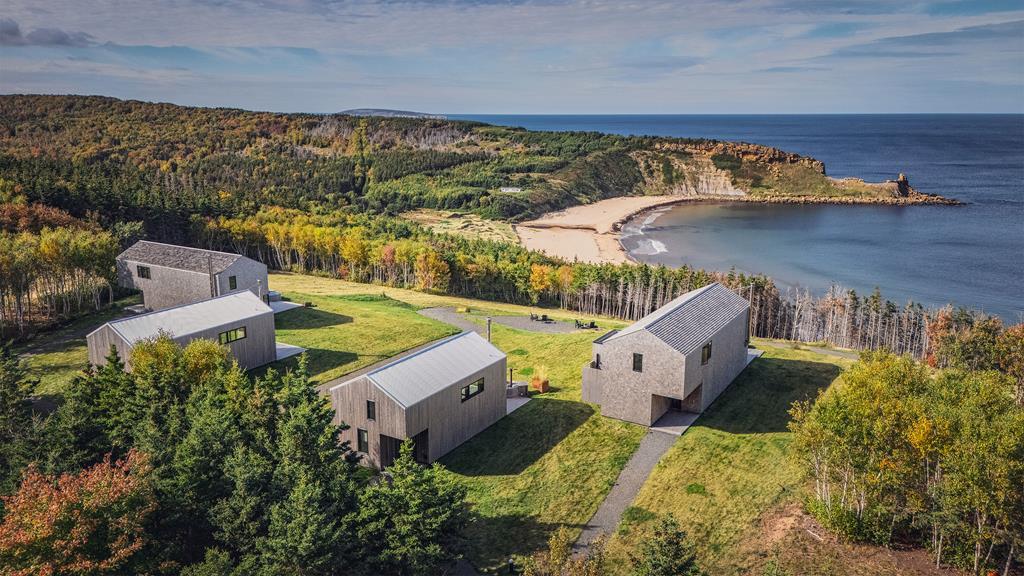 Ridge on the Chimney (photo: Ridge on the Chimney)
Yet not all architecture for rent need follow the high ascetic benchmark established by the “retreat modernism” of Pawson and Zumthor. More often, it’s about creating a sanctuary within a landscape, allowing the architecture to enhance immersion without overpowering the experience. On the coast of Nova Scotia lies Ridge on the Chimney, a collection of four holiday cottages designed by MacKay-Lyons Sweetapple Architects. Available as individual properties or as an ensemble, the four pitched-roof structures are rooted in local vernacular style, pared back to a contemporary minimalism without eschewing mod cons like hot tubs, barbecues and generous living spaces. Billed as a place for extended family gatherings or even the discovery of ad hoc community spirit, the architecture is very much in the service of place.
On the other side of the Atlantic lies Vassvika, a carefully assembled collection of seven modest traditional cabins on a peninsula near Bergen. Four of these cabins have now been carefully restored and upgraded, providing sleeping and dining facilities. Accessible only by foot and by boat, Vassvika is an architectural retreat with a difference, one that eschews bright lights, structural gymnastics and starchitect credentials in favour of total submersion in the landscape. The project was initiated and overseen by Todd Saunders, an award-winning Canadian architect who has made his life and career in Norway.
Architecture for rent is a trend that shows no sign of abating. Yet while the flagship projects command the eyes of the architectural press and the relentless gaze of social media, there’s also much to be said for thinking small, slow and off the grid.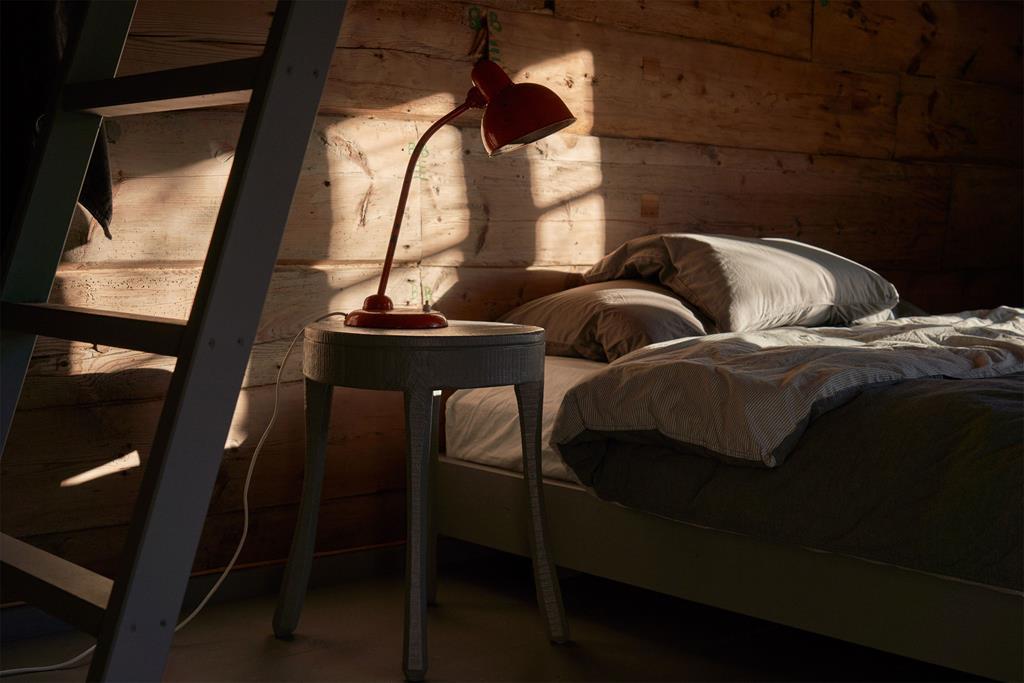 Vassvika (photo: Bent René Synnevåg)