Launching Dreams
An abiding love of art and all things beauty drives the remarkable designs of the Reymond Langton Design studio, from a colossal, 134m gigayacht to an onboard dining room that channels the grandeur of Versailles.

Two summers ago, Pascale Reymond was walking towards the beach in her hometown of Dinard, near Saint-Malo, when the horizon was suddenly obscured by a massive yacht, a rare sight on the quiet coast of Brittany. Reymond quickly realised that it wasn’t just any yacht: it was the 98.4m superyacht known as Aviva – a vessel that Reymond herself had designed.
The moment was made even sweeter when a replica of the historical 19th-century cutter Le Renard sailed directly in front of Aviva, offering an elegant vignette of maritime history that seemed almost personal for Reymond, one of the co-founders of the Reymond Langton Design studio.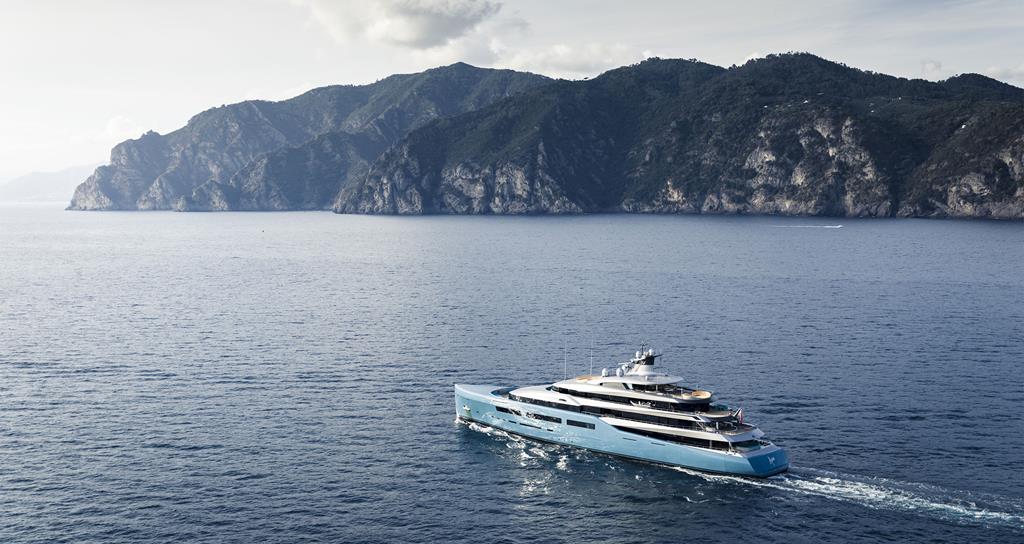 Aviva (Image: Abeking & Rasmussen)
The most notable difference between old and new, as with so many old and new buildings, can be reduced to a single word: glass – and lots of it. The studio’s designs are increasingly making a feature of the material, as with 80m Artefact, with her myriad windows of frameless geometric glass that run along the midsection. A collaboration between Reymond Langton Design and yacht builder Nobiskrug, the vessel incorporates 750 square metres of glass in the superstructure and hull, a feature that not only brings in light and creates space but also improves sightlines because, as it turns out, for passengers who suffer motion sickness, being able to see the horizon helps focus the mind.
Another of Reymond’s projects was perhaps the most celebrated yacht of 2024. Made by German shipbuilder Lürssen Yachts, the 122m Kismet stole the scene at the annual Monaco Yacht Show with her long, leaping jaguar bow and interiors created by Reymond and her team.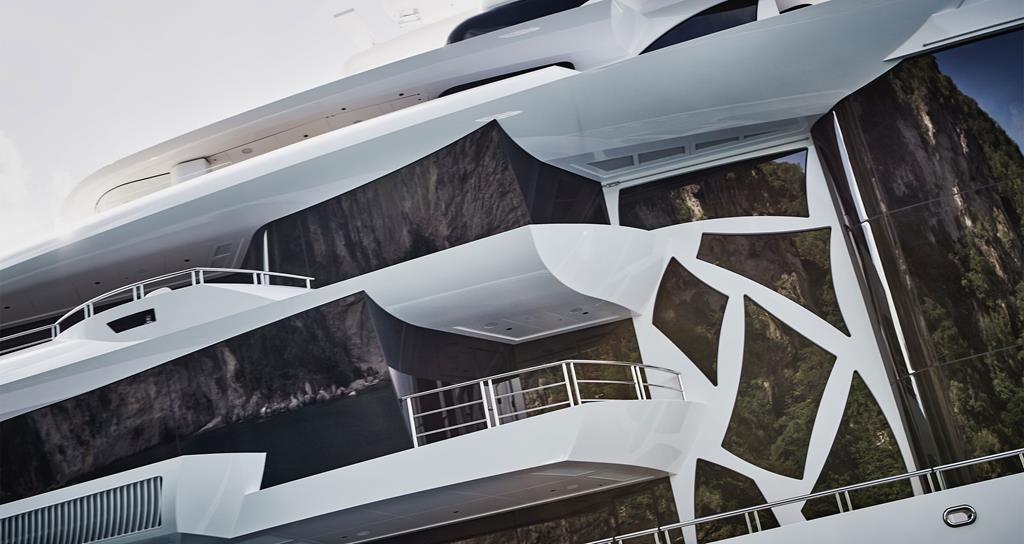 Artefact (© Francisco Martinez)
“This is the third time we’ve worked with this owner and Lürssen,” says Reymond. “He has become more influential and gained more wealth since the first boat. He’s also been exposed to new worlds, so we had to grow with him. We had to raise the bar.”
Despite the history with both owner and shipyard, securing this contract was no fait accompli. The firm won the job with a design based on the owner’s extraordinary brief: he had enjoyed dinner with President Macron in the Palace of Versailles and wanted to recreate the dining room, or at least elements of it, on Kismet.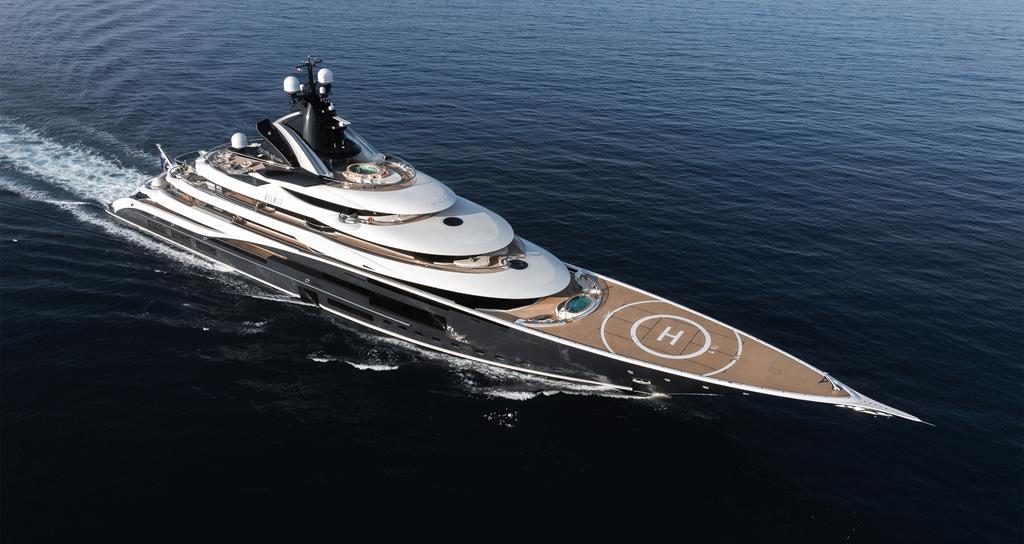 Kismet (Image: Blue iProd)
Reymond understandably refuses to name a favourite yacht, but she’s very willing to point to favourite aspects of each of them. “They are all my children,” she says, “but we enjoyed the process of designing Serene. She is our biggest yacht so far. Working with our first Italian yard, Fincantieri, we loved the food, the lifestyle; it was like a big family.”
She won the contract off the back of a few renderings of the first Aviva and Kismet yachts, without actually having a finished project to show the owner, gaining the nickname “Gigagirl” in the process (gigayachts are generally over 91 metres long; Serene sits at 134 metres).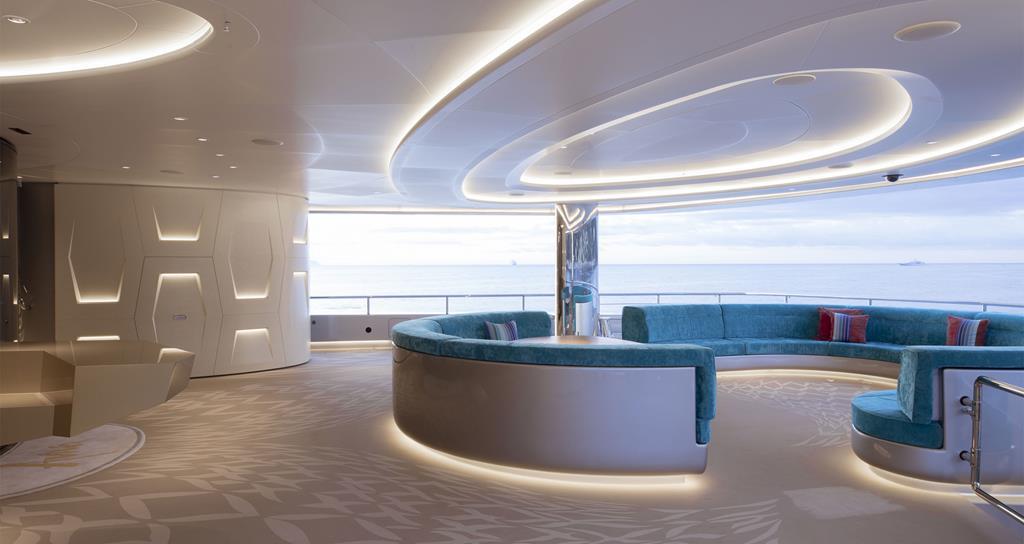 Aviva (Image: Abeking & Rasmussen)
The studio’s stellar reputation was a long time in the making: Reymond Langton Design was founded in London in 2001 by Pascale Reymond and Andrew Langton, each bringing over ten years of complementary experience in the superyacht industry to create a firm that combines interior design and exterior styling. The partnership transcended work, and days before lockdown hit in 2020, they made their personal relationship official. She wore Christian Dior, fetched by her betrothed just 24 hours before the event, having just touched down from a few days with clients on their yacht in the Exumas.
The firm has now expanded to 12 people in its studio on the outskirts of Bath, England, bringing together designers who specialise in yachts and interiors as well as cars and transport to create a broad base of knowledge to apply across all its projects. Currently, the studio is working on two residential properties and six yacht projects, with completion due later this year for the terrestrial builds and the latter rolling out from 2026.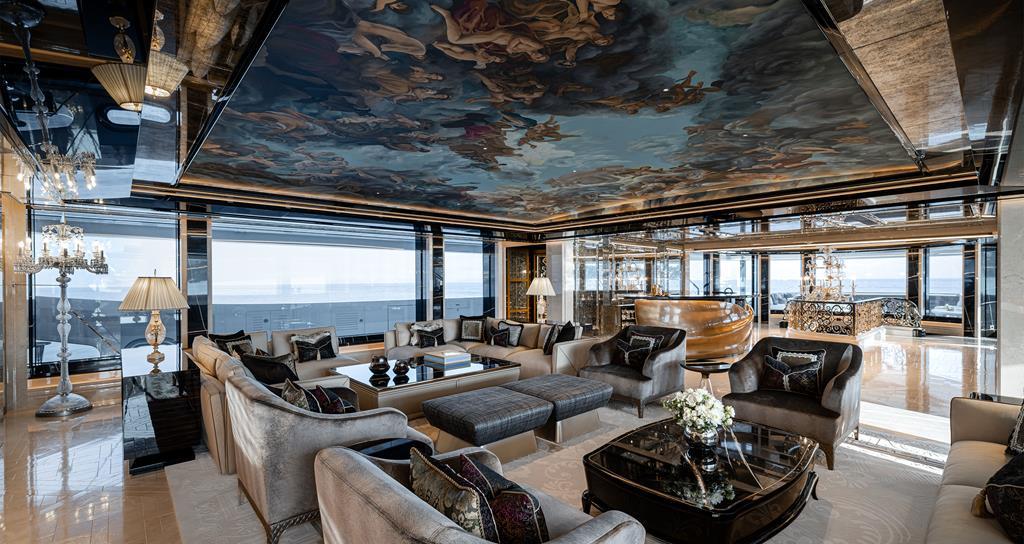 Kismet (Image: Blue iProd)
Increasingly, the design process strikes a balance between outside-the-box dreams and owner education. “We’ve run out of wood and marble,” Reymond explains. “The special woods – sycamore and teak – forget it. The client selects a unique cut within a piece, and you end up throwing two-thirds of it away, so now, more than ever before, we need to educate the client to go with nature. But when you have so much money, you want the best.”
She’s also conscious of yachts being more than just showpiece holiday vessels. “As a designer, you don’t want to design a yacht that’s just for one holiday a year,” she says. “You want them to enjoy it as a home. You want them to be so in love with the lifestyle that it becomes their home.” Reymond is uniquely qualified to understand the full spectrum of design, with a master’s degree in art history from La Sorbonne in Paris and another degree in interior design in London. She also managed to qualify as an archaeologist, worked as an antiques dealer and spent time in the film industry. Not a bad résumé when you’re in the business of creating dreams.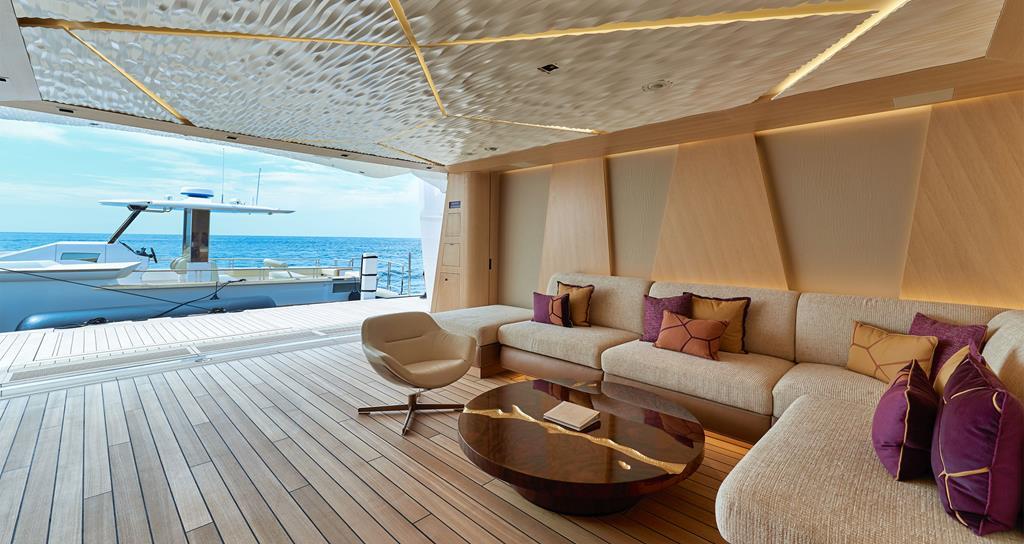 Artefact (© Francisco Martinez)
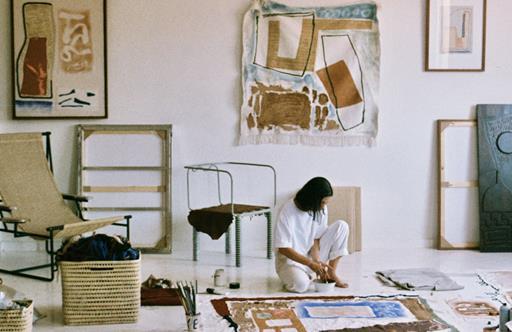
A true multihyphenate, she is a lover and collector of art – as well as being an artist herself, working primarily in oils. Her paintings hang on the walls of many superyachts and private homes, Bill Gates’s among them.
Always looking to the future, she is a passionate advocate for the industry. “We need people to build yachts because it brings so much work to the creatives, the artists and the artisans,” she says. “We have a responsibility to make people spend money to create jobs and aspirations for the younger generation. This is the duty of people who have money: to distribute it in different ways, by charity or feeding it into the machine. Being on a superyacht is a great luxury for people, and faced with such financial inequality in the world, the challenge is to justify it.”