Brit Fizz
England’s emerging winemakers boast the pedigree and patience to rival the best of the best.

Jérôme Moisan might look like a typical Frenchman. You will often find him au Stade de France sporting a beret and screaming “Allez les Bleus!” at the French rugby team. But Moisan has picked up a peculiar passion since moving to Kent, which will baffle his fellow countrymen: English wine. In fact, he might have the best private collection in the country, including a few bottles of the legendary 1992 Blanc de Blancs – the first-ever vintage from Nyetimber.
This is the Sussex estate planted with pinot noir, chardonnay and pinot meunier by an American couple in 1988, now owned by Dutch billionaire Eric Heerema. “I love the story of Stuart and Sandy Moss. Their first wine is in the same bracket as the Penfolds Grange 1951 and Stag’s Leap 1973 in how they put their country’s wine on the world stage,” Moisan explains. I was lucky enough to try the 1992 a few years ago at the launch for Moisan’s business, Pelegrims, which makes skincare products from the leftovers of viticulture. It was one of the best sparkling wines I have ever tasted. Moisan describes it as “like glorious mature Meursault with lively bubbles remaining”.
Moisan is not alone. Other wine lovers are beginning to appreciate just how well the best English fizz can age. Dominic Buckwell runs an organisation called Libération Tardive to promote the joy of wines aged for ten years or more. In April 2025, he put on a tasting of older vintages from three producers and invited experts such as Jancis Robinson. All the wines impressed, including the first-ever vintage from Hattingley Valley Wines in Hampshire. This 2010 made by Emma Rice was just the “ordinary cuvée”, but 15 years later, it was opulent, redolent of bruised apples with a backbone of acidity zinging through it. Buckwell comments that “the tasting demonstrated the English sparkling classic method deserves a seat at the global table of fine wine”.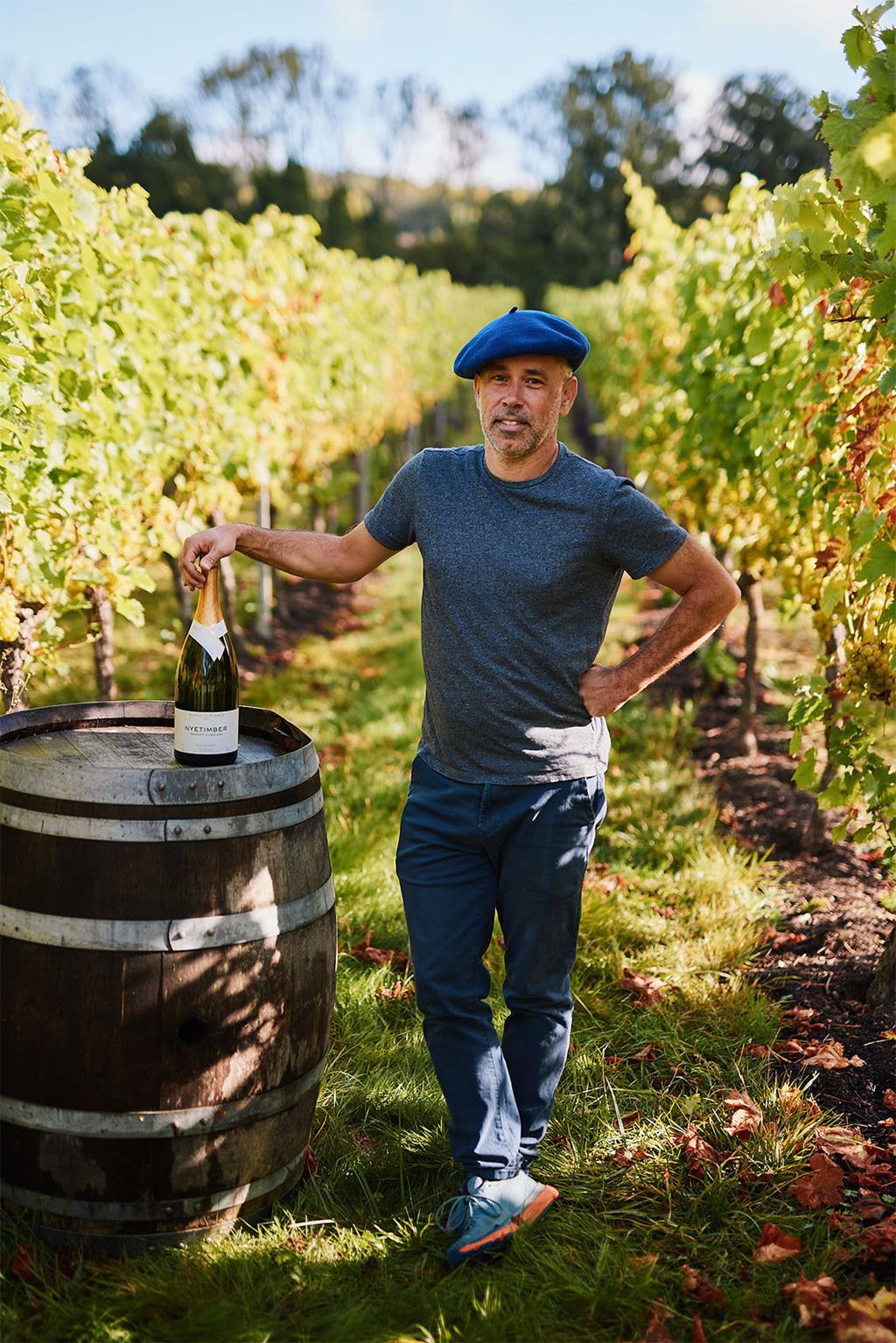 Jérôme Moisan
The other wines on show that night were from Gusbourne in Kent and Breaky Bottom from Sussex. Rebecca Palmer, buyer for one of London’s oldest wine merchants, Corney & Barrow, describes the latter as “the Salon of England, all that acidity on chalk”. It’s a tiny vineyard, located about 20 kilometres from the city of Brighton, but it feels completely cut off from civilisation. Here, Peter Hall has been making still wines since the 1970s but switched to sparkling in the 1990s. He has some chardonnay and pinot noir, but he also has a much-maligned hybrid called seyval blanc, which somehow Hall turns into something sublime. They do need long lees ageing before they reveal their true colours. Rebecca Palmer says, “Peter makes a few hundred cases, sometimes less, and sits on it until it’s the right time to disgorge. He’s not driven by money.”
Palmer describes her discovery of English wines in the mid-2000s as a “lightbulb moment” and thinks standards have improved hugely, especially in the past ten years. “Every year at the trade tasting, you could see quality coming up. It’s obviously only going in one direction. You can see why big champagne houses have invested here,” she continues, referring to Taittinger and Pommery’s English enterprises. She puts the improvement down to the growing maturity in vines, understanding of terroir, better winemaking – especially thanks to Plumpton College, England’s answer to Roseworthy or Montpellier – and longer lees ageing. Climate change also helps, too, of course.
English wine now has a high-quality history stretching back more than 30 years. Jérôme Moisan says: “If you can get your hands on an English sparkling wine from the 2000s, you won’t regret it. With a bit of work, you can still find some 2000, 2003 and 2009 from Ridgeview, Gusbourne or Nyetimber.” The hospitality industry is beginning to take notice. Luxury boutique hotels like The Pig, a small chain in southern England, or Boys Hall in Kent, specialise in English wine, with older bottles available. Rebecca Palmer
Vincenzo Arnese, director of wine at Raffles London at The OWO, says, “We’ve made a conscious effort to collect and showcase older vintages.” He continues: “There’s growing awareness that well-made English sparkling wines, particularly vintage expressions, can age gracefully, developing depth, finesse and beautifully nuanced autolytic character over time.”
In June 2025, for English Wine Week, Soho restaurant 10 Greek Street put on a festival of aged English wine. According to director of operations Will Clarke, it was so successful that they extended it for a month. Standouts included “Langham Classic Cuvée 2014 from magnum and Nyetimber Classic Cuvée 2005. Truffle-y, still very fresh, hugely impressive.” He explains why they age so well: “English sparkling wines are defined by their fresh acidity, but that doesn’t automatically mean they will age well. The fruit has to be top-notch, and the winemaking equally so. It’s a trinity that I think these wines have in abundance.”
The producer I know the best is Gusbourne. I’ve been lucky enough to try many older vintages, which have largely been outstanding. For Palmer, other “first growths” include Wiston and Sugrue South Downs, made by former Wiston winemaker Dermot Sugrue. Like Breaky Bottom, Sugrue’s best wines really repay patience. His The Trouble With Dreams 2009 in magnum won “Best in Show” at the Decanter World Wine Awards in 2025. Palmer says: “You can see certain areas and terroirs emerging. A handful have that special quality, tangible star quality. These are epic wines that stop you in your tracks like great champagne does.” Vincenzo Arnese
“We’re seeing a greater focus on prestige cuvées and single-vineyard expressions,” Vincenzo Arnese says. The best are genuinely world-class. This year, the London Wine Fair put on a “Battle of the Bubbles” pitting the finest from Champagne, including Krug, Dom Pérignon, Comtes de Champagne, Pol Roger Winston Churchill, Bollinger RD and Dom Ruinart, against the best of the rest of the world in a blind tasting. Judges included champagne experts, Masters of Wine and me. Unbelievably, against such competition, the top two places were taken by Sussex and Kent, respectively: Nyetimber 1086 2010 closely followed by Gusbourne 51 Degrees North 2016. A clear sign that England can take champagne head-on.
England’s reputation as a serious sparkling-wine producer is beginning to spread. Arnese says: “On a recent trip to northern Italy, I even found some English sparkling wines at my local enoteca. The owners were not only aware of them but spoke very highly of the quality.” Other wine-producing countries, such as Switzerland and Austria, also like English fizz. Oliver Fischer, a sparkling-wine retailer in Austria, praises the “precision, clear fruit, varietal character and, above all, the long lees storage like in the old days in Champagne…”
The biggest export market is Norway, where the state monopoly buys a lot of English sparkling wine. Aleksander Iversen, buyer and sommelier at Brasserie Coucou in Oslo, explains: “Norwegian wine consumers are generally very quality-conscious, thanks in large part to the role of the Vinmonopolet and Norway’s price philosophy regarding alcohol. Although English wine has been available in Norway for over ten years, it is still perceived as new and exciting.” It’s also big in the rest of Scandinavia, Taiwan and Japan. Mie Akai from importer Mottox, which works with English producers including Hattingley Valley, says: “Among professionals like top sommeliers in Tokyo, it is becoming well known that England produces excellent wines.” 
America, too, is slowly coming around to what they call “Brit Fizz”. American importer Jacqueline Quantrell explains, “The potential is absolutely enormous, and we’re just at the beginning. Think about how craft beer exploded in the US, or how Japanese whisky went from unknown to cult status. English sparkling wine is having that same moment right now.” She first tried English wine four years ago in London and was so smitten that she set up a company, JCJ Importing, bringing these exotic wines, like those by Hattingley Valley and Greyfriars, from Surrey to the US. When she first gives people a taste, “the initial reaction is always the same: ‘England makes wine?’ followed by curiosity, and finally, pure amazement. The resistance melts away the moment they taste these beautiful, sophisticated wines.”
Sarah Phillips McCartan, a wine educator based in Florida, agrees: “I poured Wiston at a recent Wine Talks Miami event, which is attended solely by wine professionals. I’ve never seen a wine run out faster at one of these events. Everyone wanted to try it, and then go back for a second glass.”
What about the French? Moisan says that with climate change, his old friends now appreciate the steely joys of a Kent or Sussex sparkler when they come to visit. Wine writer Josh Dell went one step further and put on an event in Paris in June 2025 called “Brit Pop”, featuring the best of English food and wine, which was a triumph. English wine in France? It might sound insane, but it’s happening. Christian Seely, managing director of French AXA Millésimes, which owns Pichon Longueville Baron in Bordeaux, has secured a listing at Paris’s grandest hotel, the Four Seasons Hotel George V, for his Coates & Seely Hampshire sparkler. Allez les blancs!
The Wine List
Ten superlative bottles that prove English sparkling wine has truly come of age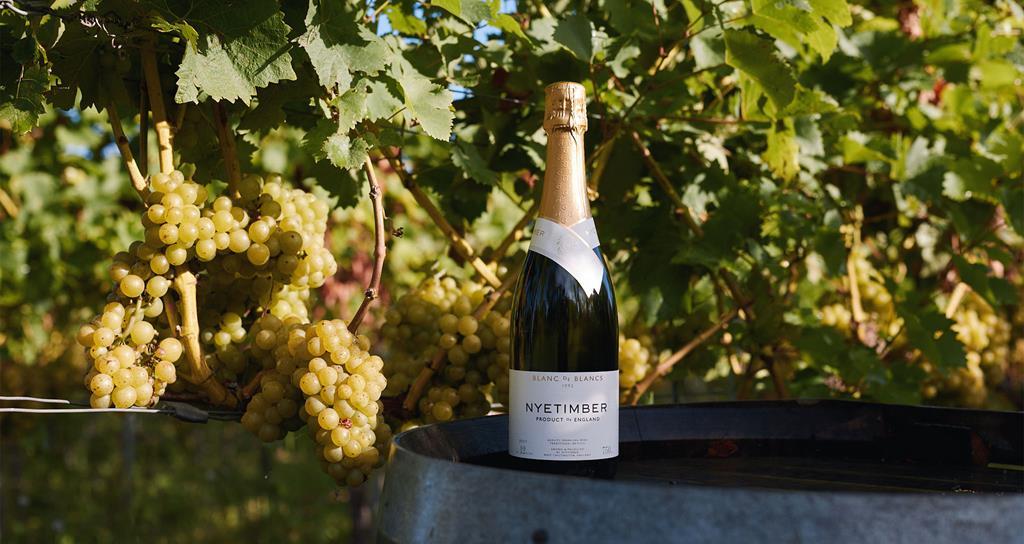
Nyetimber Tillington Single Vineyard, 2014
A single-vineyard wine from England’s most famous producer, this is just going to get better.
Gusbourne Fifty One Degrees North, 2016
This prestige cuvée demonstrates how English sparkling wine can compete with the best from Champagne.
Hundred Hills Signature Rosé, 2018
Now here’s a pink with character. It’s a deep orange-red and explodes with autumn fruit.
Black Chalk Inversion, 2020
There’s a thrilling purity of fruit in this long-awaited upmarket wine from the vaunted Hampshire producer.
Wiston Blanc de Blancs, 2018
Always one of England’s finest wines, this all-chardonnay expression is simply sensational in the 2018 vintage.
Breaky Bottom Cuvée Koizumi Yakumo, 2010
100 per cent seyval blanc from maverick Peter Hall; no other country is making wine like this.
Hoffmann & Rathbone Classic Cuvée, 2014
From a tiny Sussex estate, I love how opulent this wine has become – like an almond croissant.
Langham Pinot Meunier, 2018
An English take on the wilder end of grower champagne from an organic producer in Dorset.
Hambledon Classic Cuvée Brut, NV
England’s oldest commercial wine estate, founded in 1952, is in great form at the moment; exemplary fizz.
Sugrue South Downs Cuvée Boz, 2015
Along with the Wiston, they share a winemaker; this shows why chardonnay is England’s calling card.
Photography by Aron Klein