Capital Gains
London’s dynamic culinary landscape is only getting more influential and exciting – as these latest openings prove.

There are few better places from which to plan a foodie tour of London than 22 Bishopsgate, a skyscraper towering over the financial centre of the Square Mile. Look west, and the Thames winds through central London like a silvery ribbon, inviting hungry exploration of Mayfair, Soho and Covent Garden.
Do a half turn and you’re at eye level with the glinting summit of The Shard; somewhere far below is Borough Market, still a melting pot for the finest British ingredients. East London stretches away to the Thames Estuary in another direction and is arguably the most fertile hunting ground for the capital’s most creative dining.
The 60th floor of 22 Bishopsgate is, however, not a viewing platform, but rather home to the UK’s highest restaurants, owned by Gordon Ramsay. After over 30 years at the top of the British culinary scene, here Ramsay has found a project that not only matches his sky-high ambition but also displays the breadth of his talent. “I’ve tried to come up with something exciting that isn’t dependent on the view,” Ramsay says. “The view is unique, but the offering had to be even more unique.”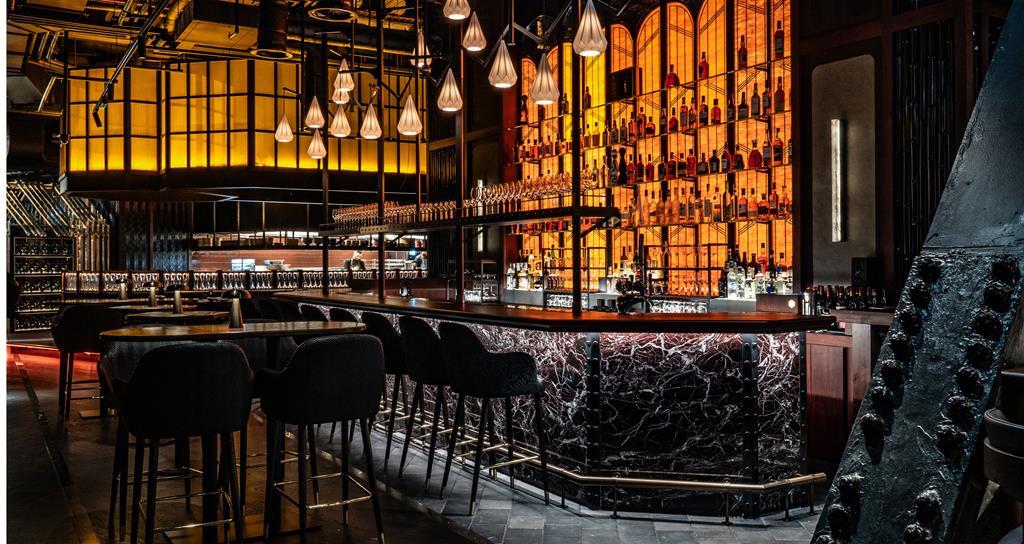 © Lucky Cat
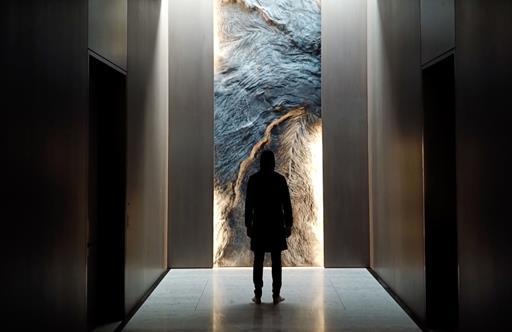
There’s Restaurant Gordon Ramsay High, the first offshoot of three-Michelin-star Restaurant Gordon Ramsay in Chelsea. “It’s a little bit of flamboyance in the air that would be hard to replicate anywhere else in the world,” says Ramsay of the 12-seat chef’s table, which serves an eight-course tasting menu of his signature Anglo-French fine-dining concept. Spring 2026 will see the launch of all-day brasserie Bread Street Kitchen; for now, more casual duties fall to Lucky Cat, the glamorous pan-Asian spot that Ramsay describes as “boisterous and vibrant – it’s a scene”.
Asian restaurants have a natural affinity for tall buildings, turning nighttime cityscapes into twinkling light shows that could be mistaken for Tokyo or Taipei. Cast your eyes east from 22 Bishopsgate, and The Stratford Hotel recently became home to Kokin, a seventh-floor Japanese restaurant offering a sushi bar, wood-fired grill and, with advance notice, a multicourse omakase menu based on a whole, sustainably sourced bluefin tuna.
In the West End, the London Hilton on Park Lane has welcomed Shanghai Me, introducing dim sum and pan-Asian cooking to a 28th-floor dining room with views over Buckingham Palace and Hyde Park. In Paddington, Singapore’s Cé La Vi has brought something similar to the 17th and 18th floors of a Renzo Piano-designed glass cube. The Marina Bay Sands original was a filming location for Crazy Rich Asians; with wagyu served as skewers, tataki, gyoza and tenderloin, don’t be surprised if a Crazy Rich Londoners sequel is in the pipeline.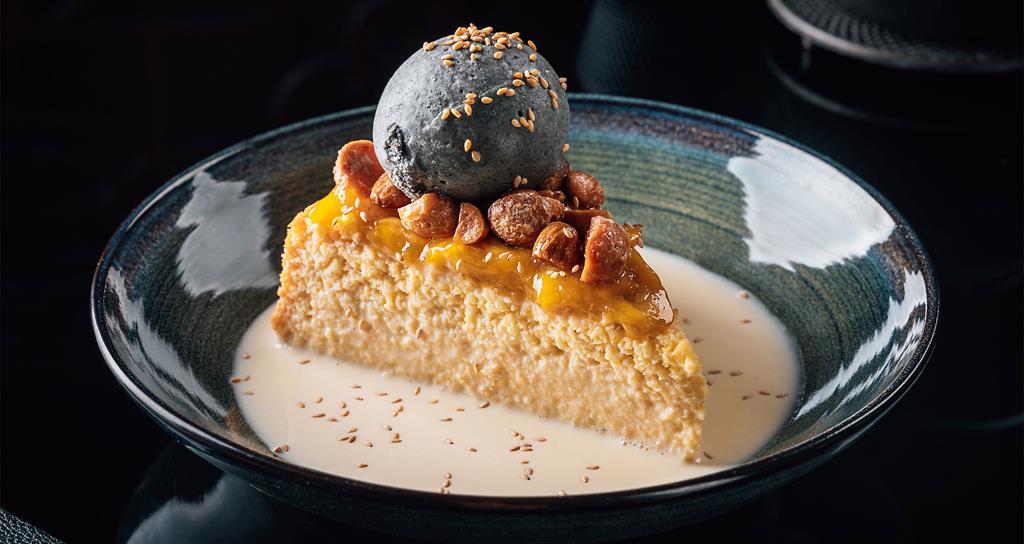 Shanghai Me (Photo: Artur Begel/Shanghai Me)
Back at 22 Bishopsgate, the view will be even more jaw-dropping when a Japanese garden and roof terrace opens early next year, which, along with Lucky Cat, will have a 24-hour licence. This might seem optimistic, given that the UK’s average dinner reservation time is now 6.12 pm, yet there are signs that post-lockdown London is learning to stay up late again.
At East London’s The Macbeth, landlord Jamie Allan has transformed a grungy Hoxton pub into a Portuguese sharing-plate specialist where last food orders are taken at 11pm on weekends and drinks “until we turn the lights on at 2am,” Allan says.
For something plusher, The Dover in Mayfair becomes the unofficial club of theatre performers who hotfoot it here after final curtain call, grateful to find somewhere serving New York-Italian comfort food and martinis until 1.30am.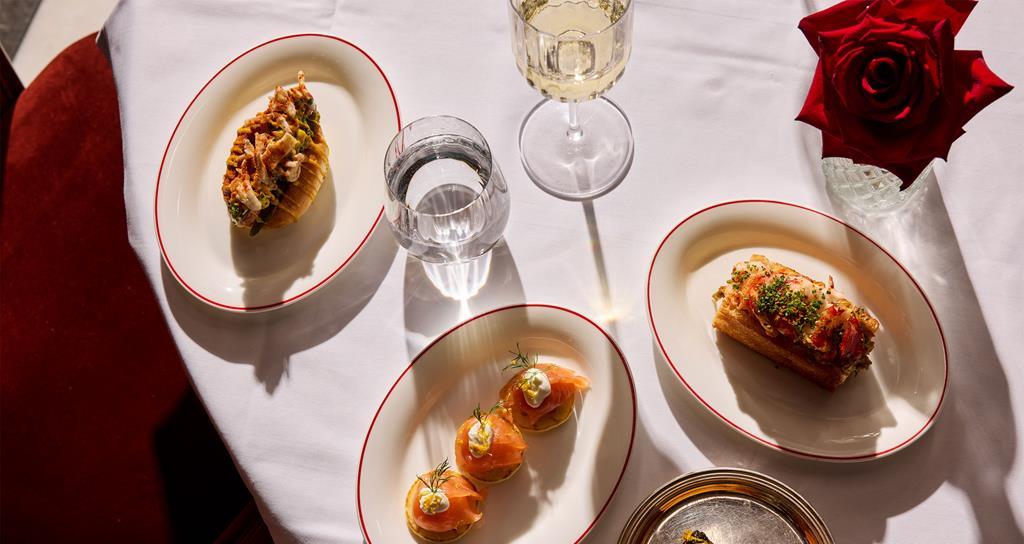 The Dover (Photo: Matt Russell/The Dover)
“When I worked at Joe Allen, last orders in the kitchen were 1am,” says Jeremy King, “and at Le Caprice, it was midnight. A lot of people say that nothing good happens after midnight, but I think a lot of good things do.” King made Le Caprice, The Ivy and The Wolseley the definitive London restaurants of the 1980s, 1990s and the noughties. His latest showstopper is the late-January relaunch of Simpson’s in the Strand, the historic complex of restaurants and bar rooms next to The Savoy, where Churchill, Wilde and Dickens all dined.
This no-expense-spared new incarnation will see the reopening of the Grand Divan, famous for its carving trolleys of roast beef, along with Simpson’s Bar and a new all-day space called Romano’s, which King hopes will serve food until midnight. Of greatest interest to night owls is the basement space Nellie’s (named after opera singer Dame Nellie Melba), which is planned to have a 3am licence.
“After midnight, guests will come down from the steps from the outside through a very discreet entrance and ring a bell,” King says. “Nellie’s will be very much directed at theatre practitioners and theatre-goers. I like restaurants where you’re lifted by the sounds when you walk through the door and there’s a hubbub that you don’t want to end.”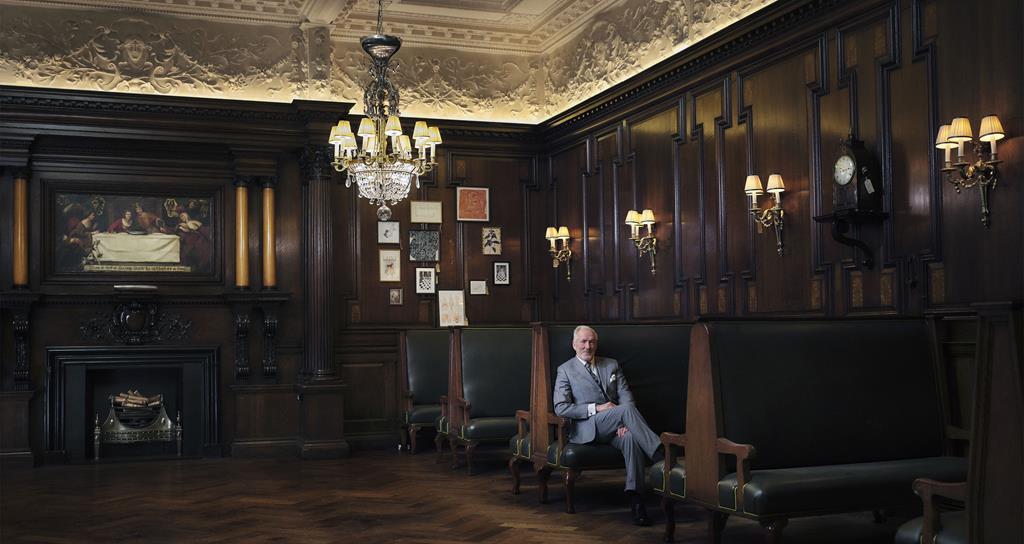 Simpson's in the Strand (Photo: Chris Floyd)
Nellie’s full name will be Nellie’s Tavern – the brass plaque outside Simpsons still bears the legend “Simpsons Divan Tavern” – but, with its live music and speakeasy vibe, it’s not somewhere to come in search of a traditional pub experience. But there are plenty of polished-up pubs that will deliver that, offering restaurant-quality food in smart surrounds while retaining all the charm of a local boozer.
The Devonshire got the ball rolling near Piccadilly Circus in 2023, combining a ground-floor bar that serves what many believe is London’s best pint of Guinness with a dining room serving a classic British menu based on top-notch native produce.
Now the pub’s trio of owners has opened The Marlborough in collaboration with Crisp Pizza’s Carl McCluskey, bringing what has been acclaimed as the capital’s best pizza (“New York method with Neapolitan ingredients” is how McCluskey describes it) to Mayfair. Expect a proper Victorian pub at street level and an NYC-style pizzeria in the basement.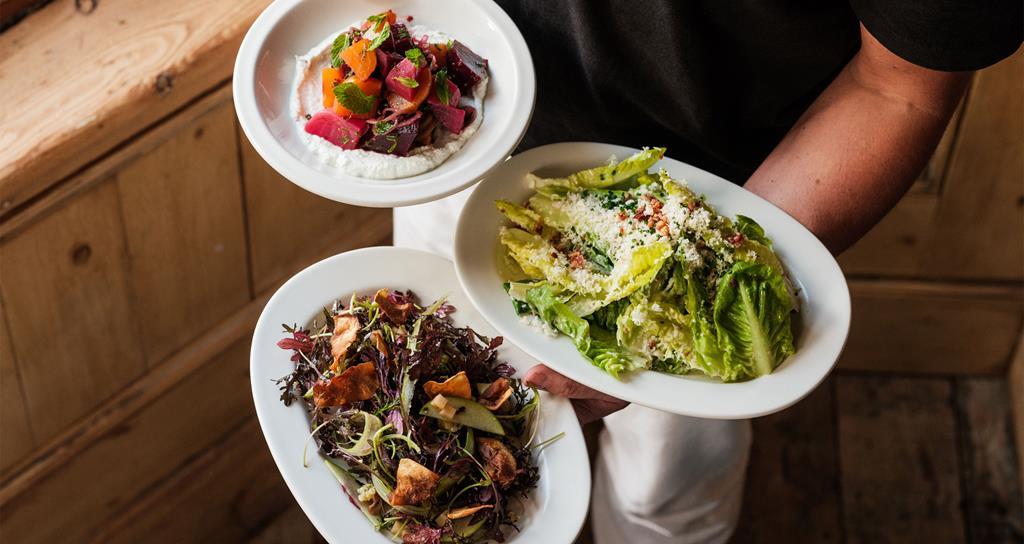 © The Hero
Then there’s Phil Winser and James Gummer, whose Oxfordshire pub The Bull Charlbury is the preferred local of Princess Beatrice and the Beckhams. Now they’re conquering London’s most upmarket neighbourhoods, one pub at a time: The Pelican in Notting Hill, The Hero in Maida Vale, The Fat Badger in North Kensington and, most recently, The Hart in Marylebone. A winning formula of heritage stylings combined with modern British cooking based on produce from their own Cotswolds farm is their secret to the perfect pub.
Most of these cool new pubs, like Shoreditch hot spot The Knave of Clubs, stick to the 1990s gastropub model – pub downstairs, restaurant upstairs – updated for the 21st century with bar staff as skilled in mixing cocktails as pulling pints. Downstairs at The Knave, chicken spins on a rotisserie grill and there’s a metre-long rail of Negronis. Upstairs is One Club Row, a standalone restaurant that co-owner James Dye describes as a “New York-inspired bistro: steaks and oysters, martinis and champagne”.
The Knave is the epicentre of Shoreditch’s revived eating and drinking scene. The East London neighbourhood was the capital’s coolest throughout the noughties. Now Shoreditch is back and, if the edgy vibe of old now feels as carefully curated as an influencer’s Instagram account (One Club Row’s artfully graffitied entrance is a social-media thirst trap), the food offering has had a glow-up, too.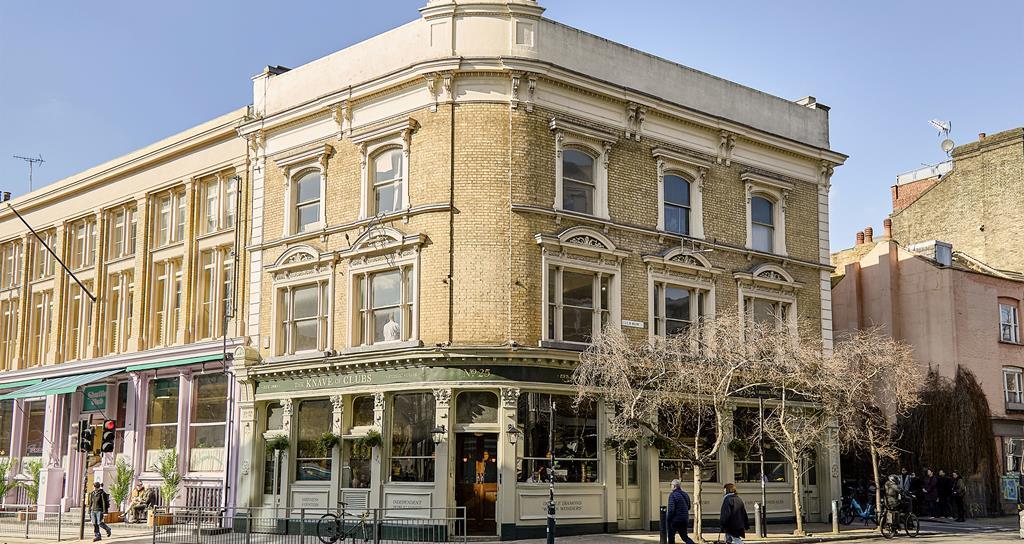 © The Knave of Clubs
“Shoreditch has a creative, open energy that’s really different to Mayfair,” says Bilbao-born chef Nieves Barragán Mohacho, who recently opened Legado, a follow-up to her Michelin-starred Mayfair restaurant, Sabor. “People come here ready to try new things, and I love that curiosity.” At Legado, that means the sort of Spanish cooking rarely encountered beyond the Pyrenees: Segovian suckling pig or quisquillas de Cádiz (raw prawn tail with a crispy fried head).
Next door to Legado is Singburi 2.0, a reboot of an acclaimed Thai restaurant in suburban Leytonstone. Here in Shoreditch, Sirichai Kularbwong, son of the founders, cooks alongside Nick Molyviatis, former head chef of Kiln: two of London’s best Thai chefs in one live-fire open kitchen.
Not to be confused with Legado is nearby Lagana, nominally a Greek restaurant but really part of a wider cuisine trend that is being dubbed “London Mediterranean”: see also Town in Covent Garden, the waterside Canal in Westbourne Park, the new Nela in The Whiteley in Bayswater and the chic Lavery in South Kensington. As The Lavery’s head chef Yohei Furuhashi puts it: “London diners want seasonal, ingredient-led food that feels vibrant and wholesome – Mediterranean cooking captures that perfectly. It has a natural sense of conviviality, warmth and generosity.”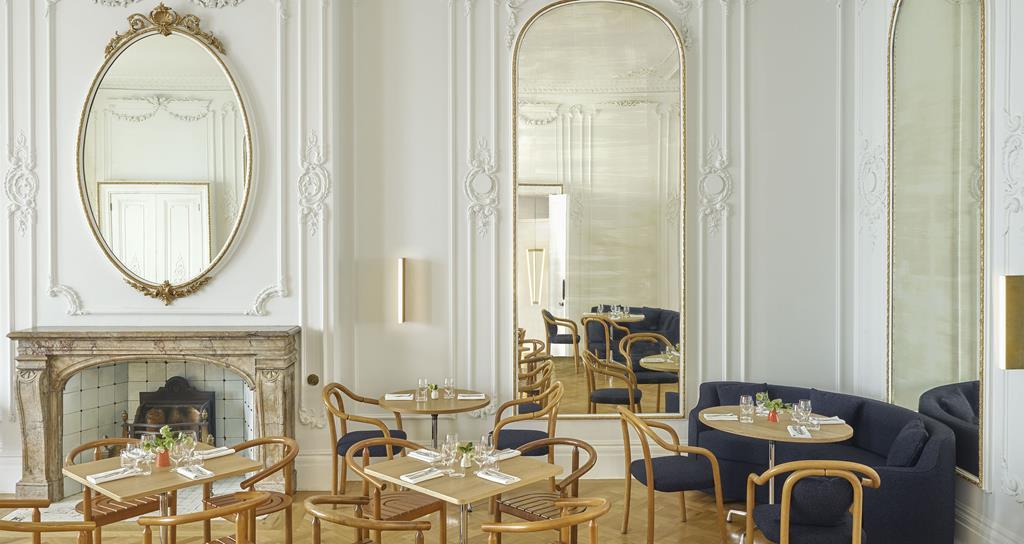 The Lavery (Photo: Henry Bourne/The Lavery)
Even fine-dining chefs have got the memo and loosened up. Also in Shoreditch is Bar Valette, a spin-off from the two-Michelin-starred Clove Club, where instead of tasting menus, former Clove Club chef Erin Jackson Yates serves southern French and Spanish sharing plates, using the same producers as at The Clove Club but at a more affordable price point.
It is an approach with considerable appeal for both chefs and diners at a time when many fine-dining restaurants are introducing à la carte options alongside their tasting menus. This sees Clare Smyth open Corenucopia in Chelsea, an informal follow-up to Core by Clare Smyth in Notting Hill. Smyth, who worked under Gordon Ramsay for 13 years, is the first female British chef to win three Michelin stars, and expectations are high not only for the quality of cooking at Corenucopia but also for the calibre of the clientele: Smyth catered the wedding reception of Prince Harry and Meghan Markle, while David Beckham held his 50th birthday celebrations at Core.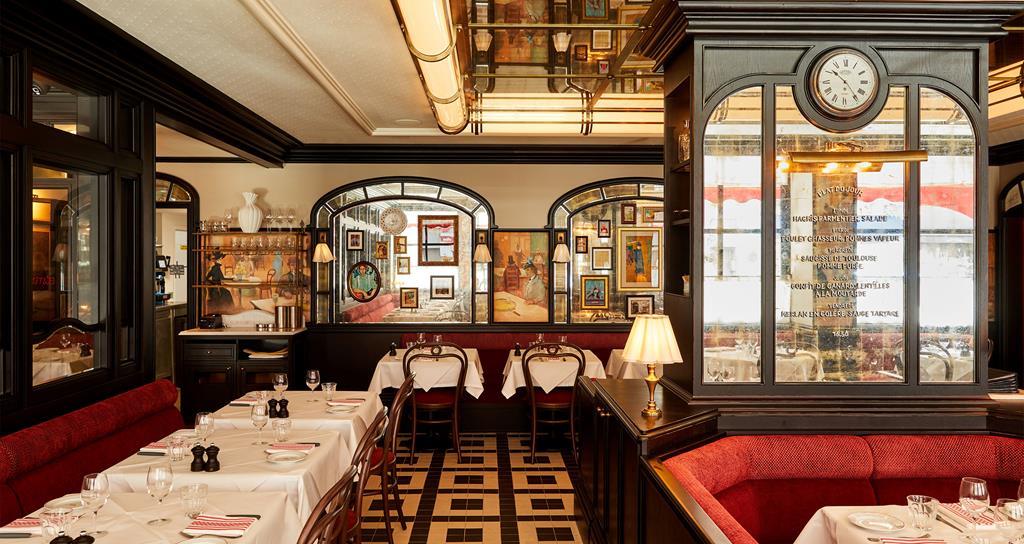 © Joséphine Bistro
“Fine dining is for special occasions,” says Claude Bosi, who opened Joséphine Bistro in Chelsea in 2024 as a casual complement to his two-Michelin-starred Brooklands restaurant at The Peninsula London hotel and followed it up with a second Joséphine in Marylebone a year later. “What chefs like Clare Smyth and I are doing is bringing that same standard to the more casual side of things, at a more reasonable price. Yes, sometimes it can be a bit noisy and the tables can be a bit close to each other, but for me, that’s what a bistro is about.”
It is a sentiment echoed by Legado’s Nieves Barragán Mohacho. “I wanted to create something that feels warm and genuine as opposed to formal or intimidating: a place where people can relax and still get food that’s very thoughtful. London is so exciting right now. The variety of voices and cuisines is incredible. There are still so many new openings, and people are hungry for these experiences. It’s incredible to see.” And incredible to taste, too.
Header: Jodi Hinds/Restaurant Gordon Ramsay