Shifting Tides
Once the bogeyman of the environmental movement, the superyacht industry is now leading the charge towards a zero-emission future.

For years now, hydrogen fuel-cell technology has been celebrated as the future of yachting. But integrating this new solution takes time – and reducing a superyacht’s carbon footprint requires more than just improvements to its propulsion system. The approach must be holistic, involving the hydrodynamics and propeller and hull design as well as the pervasive use of sustainable materials.
The watershed moment in sustainable yachting came in 2009, when Royal Huisman, the Dutch shipyard in Vollenhove, unveiled its groundbreaking – and innovation-laden – 58m ketch Ethereal. Owners Bill and Shannon Joy commissioned the ship as their own “private island”, a vessel designed for maximum autonomy that didn’t compromise on comfort and minimised negative environmental impacts. Bill described his new sailing yacht as a “floating lab”: even 17 years ago, he had allotted space for batteries in the ship’s layout, arguing that they would implement the new technology when it inevitably arrived.
Around the same time, research into methanol-hydrogen integrations for marine applications began. More than a decade later, heavy-duty fuel-cell applications began to make their way into large retrofitted vessels, a move spearheaded by Germany’s Meyer Werft shipyard, which in 2018 delivered AIDAnova as the first ocean liner that can operate entirely on liquefied natural gas (LNG). Concurrently, some tech-world titans, forward-thinking owners and the world’s leading shipyards began to experiment with new technologies that would improve onboard living, help reduce emissions, cut costs, and make yachting more efficient and, ultimately, greener.
 Breakthrough (© Feadship)
By 2019, early hydrogen-yacht concepts, such as Sinot and Lateral Naval Architects’ 112m Aqua, relied on pure hydrogen as fuel. At the same time, another visionary owner (widely rumoured to be Bill Gates) signed a contract through British brokerage firm Edmiston for an exceptionally ambitious superyacht with a volume exceeding 7,000 GT. With the history-shaping 118.8m Breakthrough, Dutch shipyard Feadship launched the first hydrogen fuel-cell superyacht, a milestone in marine engineering, in 2024.
Delivered in 2025, the design by UK-based RWD studio is elegant and fluid, despite the ship’s impressive size. “For the owner, the most important aspect of this project was to give this technical development a real push and to make the knowledge gained openly available to the entire industry,” says Jan-Bart Verkuyl, director and CEO of Feadship’s Royal Van Lent shipyard, where Breakthrough was built. She was sold in September 2025 through Edmiston, which now organises charters aboard the colossal vessel for €3.5 million per week, plus expenses.
This year, German shipyard Lürssen delivered the 114m Nausicaä, whose pioneering design and distinct technology put it in a class of its own. Built under the project name Cosmos, her interior and exterior were created by acclaimed Australian designer Marc Newson. The ship marks a defining moment for the 151-year-old shipmaker. “The delivery of Nausicaä has given me a profound connection to my great-grandfather, Friedrich Lürssen, who built the world’s first motorboat in 1886,” says CEO Peter Lürssen. “I am incredibly grateful for that. While innovation drives everything we do, Nausicaä has truly broken new ground, just as the six-metre REMS did 140 years ago”.
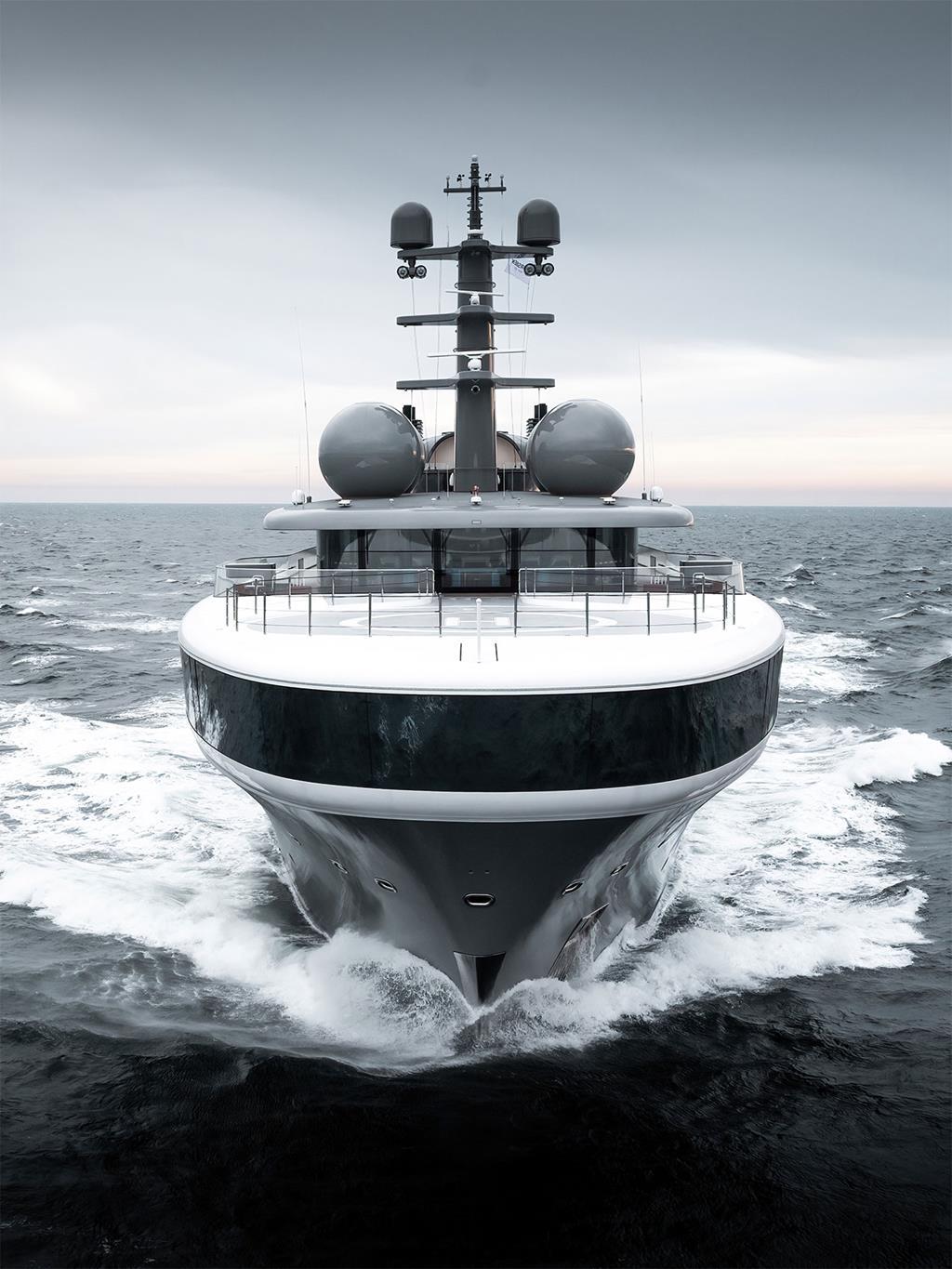 Lürssen Nausicaä (photo: Tom Van Oossanen)
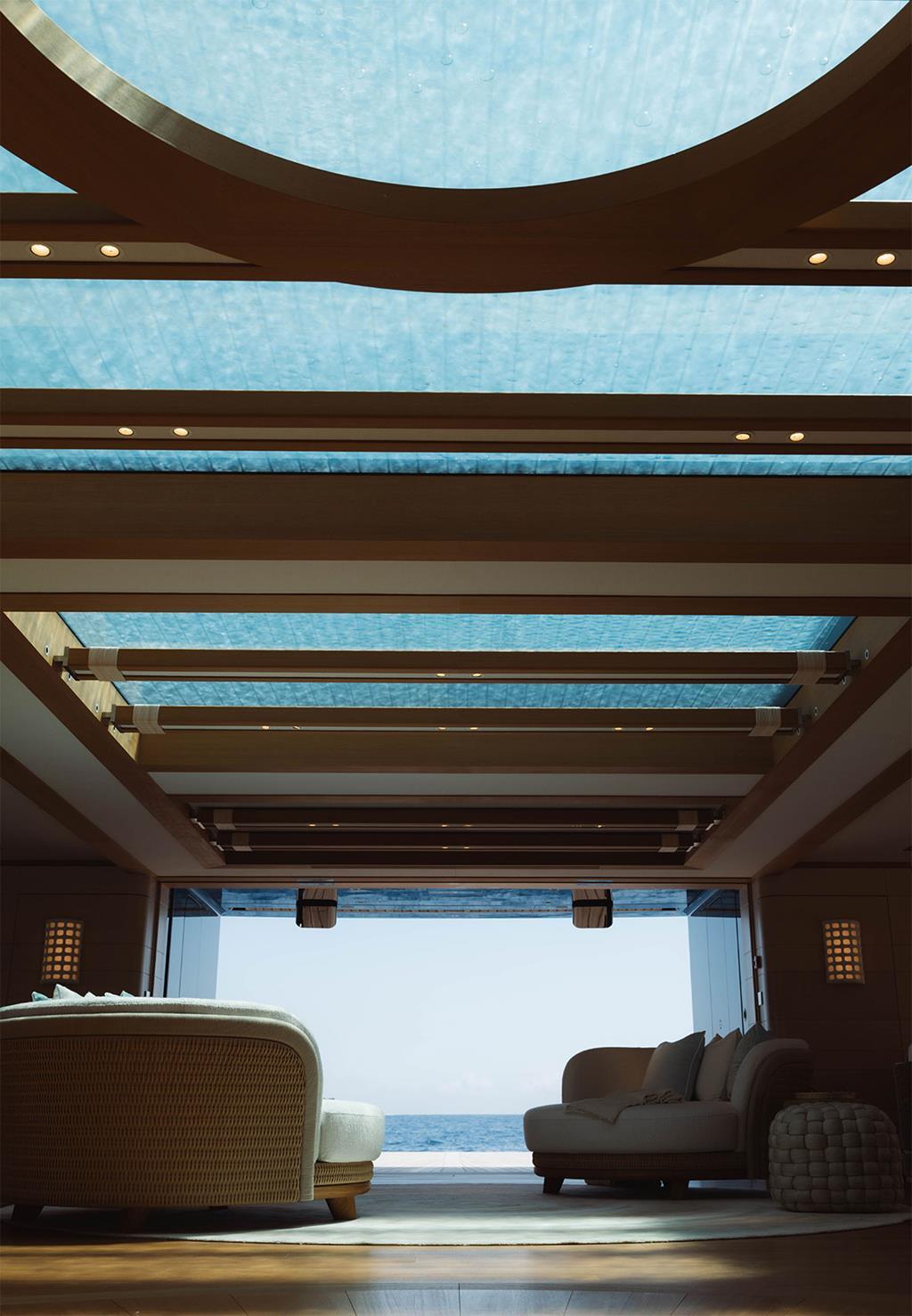
The vessel holds an Ice Class 1D hull, which makes her feasible for both tropical and polar cruising. One of the most remarkable architectural elements is the Skydome, a large glass structure composed of seven panes, each measuring 3 by 2.8 metres, 62 millimetres thick, and weighing more than a ton.
Equally innovative is the ship’s propulsion system, comprising a diesel-electric plant with five engines – two primary and three auxiliary, which drive fully electric Azimuth pods. The battery plant delivers up to two megawatts: enough to power all hotel systems simultaneously at peak load, operating silently with zero emissions for extended periods of time. A provision for a future methanol fuel-cell system takes Nausicaä’s ambitions even further: when the technology catches up, the ship will be able to generate electricity by converting methanol into hydrogen, marking an important step away from the use of traditional fossil fuels.
Next up will be Zero, Dutch shipmaker Vitters’ project 3094. A 68.9m performance ketch with a beam of 11.11 metres, the all-electric sailing yacht was built at the company’s Zwartsluis shipyard. As Marnix J Hoekstra, co-creative director of design studio Vripack, which designed the ship, explains: “If ever there was a boat that could change the status quo, this is it. From inside out, Zero puts creativity to the fore and leaves the rule book in its wake.”
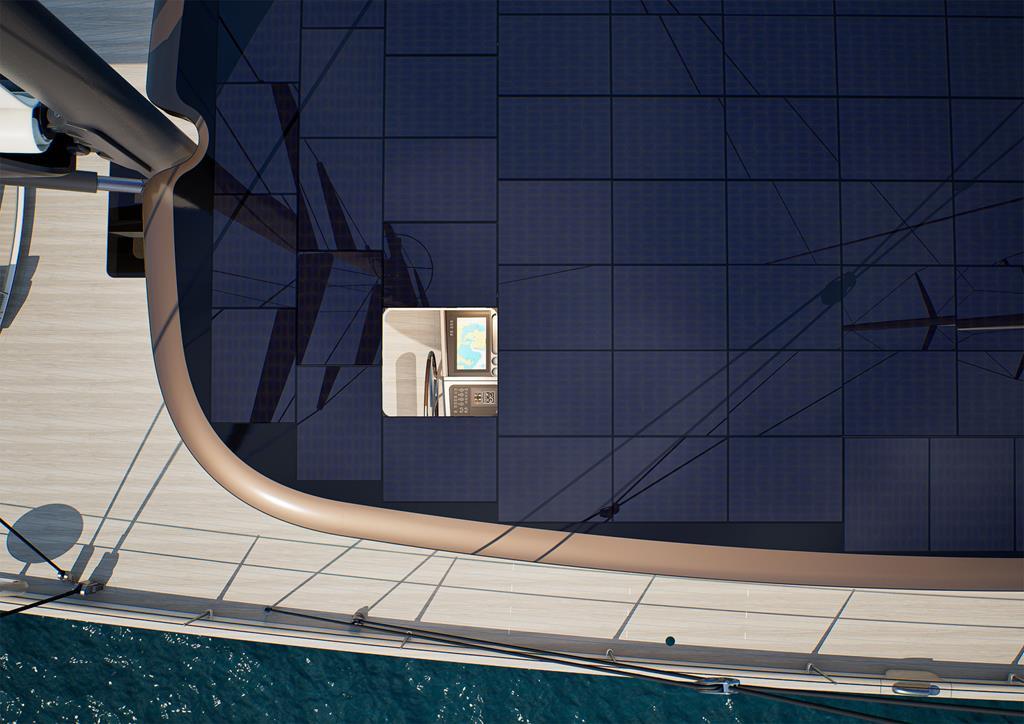 Zero (© Vitters)
The aptly named sailing yacht will have no combustion engines, making it a truly zero-emission vessel. High-density lithium-ion and PCM salt batteries, designed to store five megawatt-hours of energy (the battery equivalent of 88 Tesla cars), are built into the system. The energy is generated by hydro generators, a wind turbine and 100 square metres of hybrid solar panels, forming a rare trio of sustainable energy – hydro, solar and wind – that propels this go-anywhere yacht.
Over 60,000 man-hours of intense research and design preceded the laying of the keel in September 2022. Defined by flowing lines and organic shapes, Zero will travel silently and autonomously when she embarks on her maiden voyage this summer. The exterior by Dykstra Naval Architects looks rather classic with two powerful rigs, but the built-in technology is groundbreaking for the future of sailing yachts. She will be the grande dame of zero emissions.
Another iconic hydrogen fuel-cell superyacht – the first of its kind built in Italy – is available for charter through British brokerage firm Cecil Wright. Realised at Sanlorenzo’s shipyard in La Spezia, the 49.99m Contigo (formerly known as Almax) was originally commissioned by Max Perotti, the president of the Sanlorenzo group. Its minimalist interior comes courtesy of Studio Lissoni, and its onboard systems run with zero emissions, while at anchor operating on fuel cells that convert methanol into hydrogen. In a press conference, Perotti – among the industry’s leading voices in sustainability – stated that his goal is zero emissions in yachting by 2030, something into which he’s investing heavily.
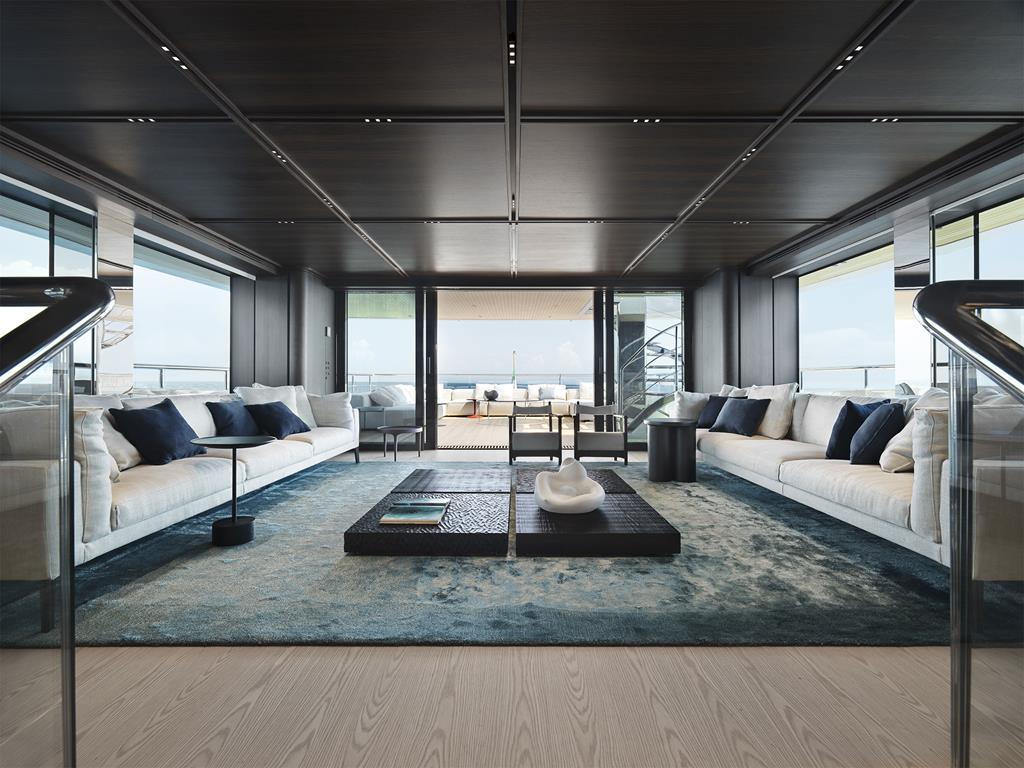 Contigo (© Sanlorenzo)
At last year’s Monaco Yacht Show, Royal Huisman unveiled plans for the superyacht Aera. The planned 50m hybrid catamaran, a merger between a sailing and motor yacht – already engineered and ready to build – is set to offer nearly emission-free cruising and zero-emission anchoring for up to 72 hours. The ship is part of Royal Huisman’s Project Tidal Shift initiative, which focuses on ecological sustainability and responsible business practices, and it shows: the yacht is set to use HVO biodiesel, reducing CO2 emissions by up to 89 per cent. The concept is a result of years of research and development by Royal Huisman, Rondal, Cor D Rover Design and Artemis Technologies, with an end goal of decarbonising the maritime industry and ushering in a new era of sustainable yacht cruising.
Aera’s technological innovations deserve the attention they have drawn since the ship’s announcement. At sea, a 35m-tall freestanding wing sail rotates 360 degrees, equipped with an automated control system making sailing as simple as operating a motor yacht, without winches, deck hardware and additional sails. The energy storage system (ESS) includes a 580kWh lithium-ion battery bank and three 62kg hydrogen tanks. Hydro generators and HVO biodiesel generators provide additional energy, while the electric propulsion system with two 500kW electric retractable propulsion units ensures silent and vibration-free operation. Aera is set to accommodate ten guests and seven crew members, utilising an entire toolbox of cutting-edge technologies to boost efficiency and cut emissions.
Projects like these – ones that put bleeding-edge tech and environmental consciousness to the fore – will undoubtedly write the future of the onboard experience, one that is both noiseless and emission-free. Now, at the dawn of the industry’s largest transformation, the decarbonisation of global shipping and yachting requires even more radical energy solutions. Alternative fuels are certainly part of the future, but another source of energy is steadily moving into the spotlight: nuclear. With industry leaders slated to discuss its use in a symposium in Hamburg this June, it’s clear that shipmaking’s gaze is, as ever, already fixed on what’s next.
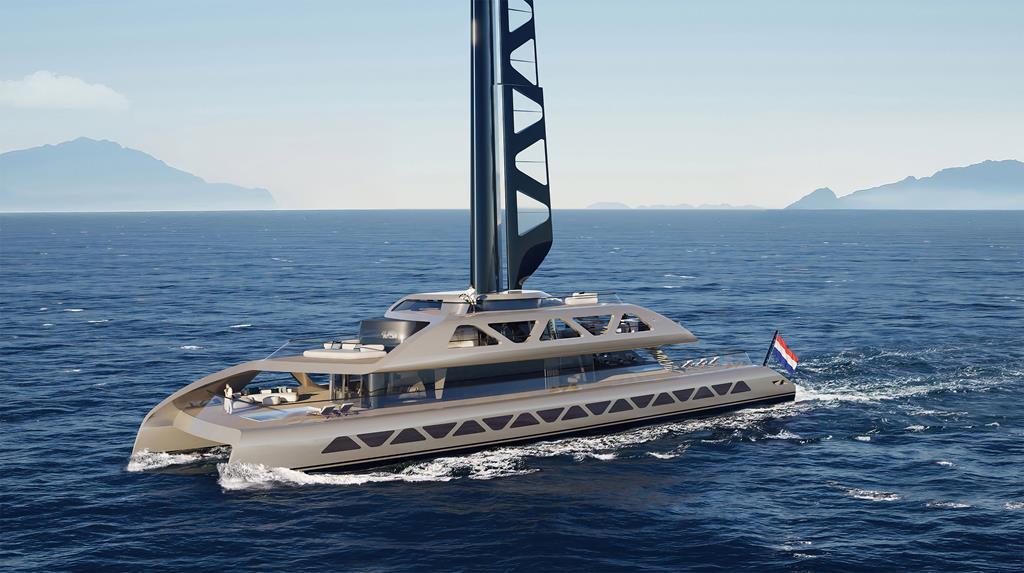 Aera (© Royal Huisman)