The Art of Losing Oneself
A brilliant fleck of confetti adrift in the vastness of the Pacific, the Tahitian atoll of Tetiaroa has long exerted an otherworldly allure. The Brando transformed it into a refuge where the vertigo of remoteness becomes the ultimate luxury.

Some places have a way of making you feel welcome and impossibly far from home at the same time. Barely off the tarmac at Tahiti International Airport, near Papeete, guests are met with a garland of tiaré flowers, plenty of smiles and music. But behind this warmest of greetings lies the dizzying reality of an archipelago lost in the heart of the world’s largest ocean. Here, distance is measured on a scale that’s hard to even fathom: Tahiti lies 16,000 kilometres from Paris, 9,500 from Tokyo, 8,000 from Santiago, 6,600 from Los Angeles, and 4,300 from Wellington. The constellations in the night sky appear to have shifted, and we are not far from the International Date Line – a reality at once geographical and temporal, rational and absurd, grasped on an intellectual level yet never quite felt.
Papeete, a curious capital, is only our first stop. Like many travellers pausing en route to various islands, we set down our bags at the InterContinental Tahiti Resort & Spa, a seafront hostelry where one comes to recover one’s bearings. It was only a few cables’ lengths from here that famed French explorer Louis Antoine de Bougainville and his ship, La Boudeuse, dropped anchor in April 1768. On this island offering “the most delightful spectacle”, the fruit was ripe, and the women naked. At the market, the ship’s crew was captivated by unfamiliar scents: parrotfish, taro, breadfruit and the lemons of the Marquesas. After nine days in Tahiti, the sailors saw, in the distance, “a land of modest height, covered in trees”. That island was Tetiaroa – our final destination.
At dawn, we board a small plane. Barely 50 kilometres remain before we reach the place for which we have crossed the planet: an atoll made up of a dozen motu – islets rising just a few metres above sea level, encircled by a coral reef. For a long time, Tetiaroa (“the one that stands apart” in Tahitian) was a retreat for members of the Pōmare dynasty, the reigning family until Tahiti’s cession to France in 1880. In the early 20th century, Tetiaroa was sold to a Canadian dentist, who turned it into a copra plantation.
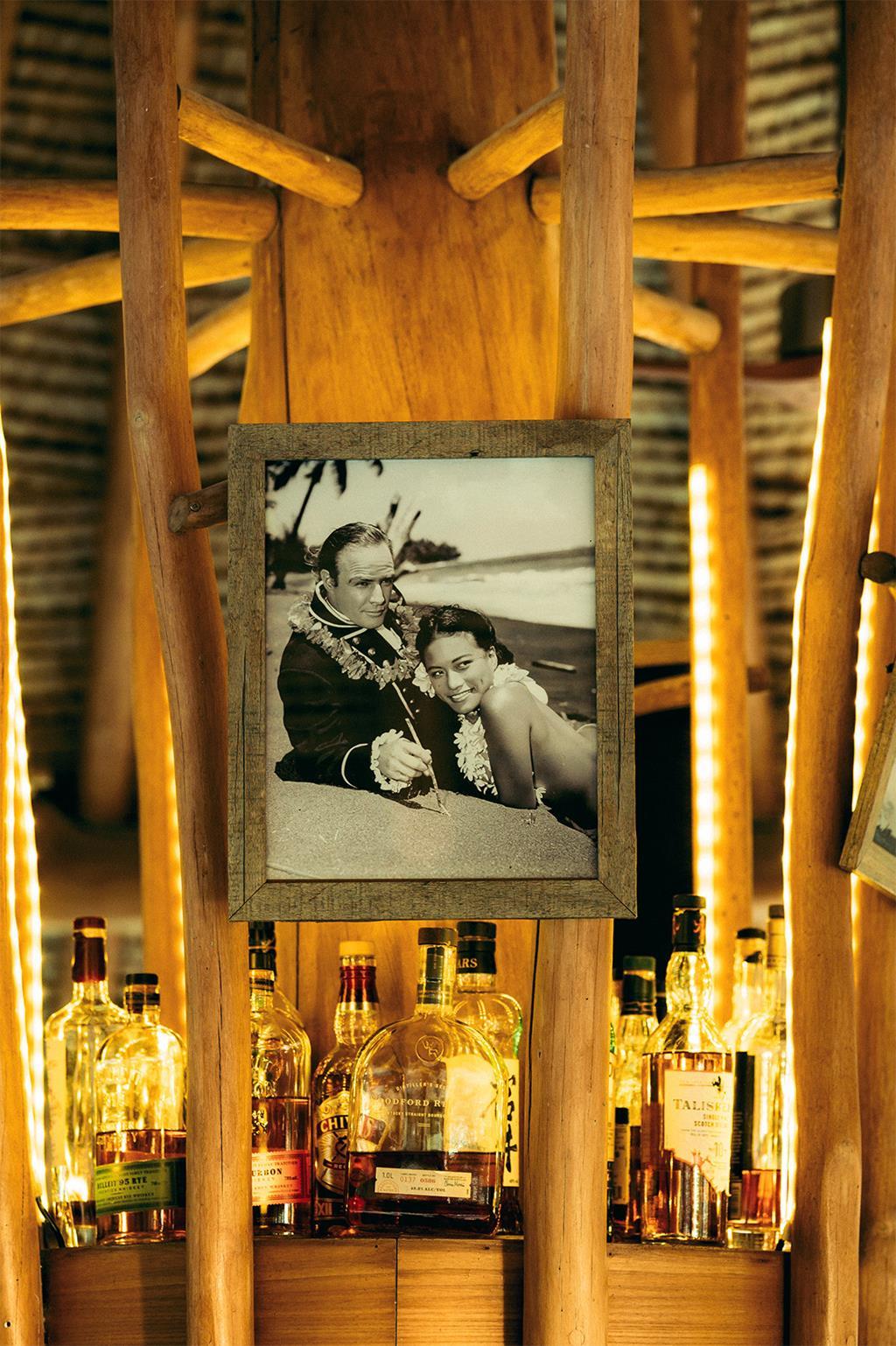
Half a century later, MGM was shooting Mutiny on the Bounty in the region when its star, Marlon Brando, fell in love with the place. In 1966, after a difficult negotiation process, he purchased all 12 motus of the Tetiaroa Atoll. The actor said it held a mystical pull over him, and he returned repeatedly over the course of 20 years in between films, between mistresses, between children. He harboured a dream of transforming Tetiaroa into a model for sustainable ecology. It was an unprecedented project, conceived with Richard Bailey, a leading figure in Polynesian hospitality – a refuge, laboratory and instrument for protecting the lagoon all at once. In July 2014, nearly 10 years after Brando’s death, that dream came to fruition as The Brando.
The flight from Papeete lasts barely 15 minutes, and you almost wish it were longer, if only to prolong the anticipation. We have scarcely set down our bags in the villa when Hugo, a guide from the resort, whisks us away. “You’ll understand better where you’ve landed,” he explains, as he guides us to bicycles – each already labelled with our names – to get a behind-the-scenes look at life on the island: the staff village, the canteen, the waste-sorting and recycling centre. Here, ecology is no marketing pitch; it’s the very backbone of the project. For power, the hotel has opted for solar energy (some 4,700 photovoltaic panels sit along the island’s airstrip) and coconut-oil biofuel, stored in lithium batteries. But the most telling innovation is the air conditioning: a SWAC system draws seawater from 1,000 metres below the ocean’s surface, where it lingers at around 4°C – an idea that came from Brando himself.
Yet The Brando’s true nerve centre lies a little further off, at the eco-station run by the Tetiaroa Society, an organisation founded in 2010 to build on the actor’s conservationist dreams. Each season, this “university of the sea” welcomes researchers, marine biologists, climatologists and ornithologists from around the world. Long focused on eradicating rats and invasive ants on the island, then on studying coral reefs, fish and turtles, its research programmes are now turning to seabirds – the ecosystem’s unsung architects. Rings, GPS tags and acoustic recorders now make it possible to track brown- and red-footed boobies, some of which have been traced as far as Ra’iātea and Mai’ao, proof of a foraging range far wider than anyone had imagined.
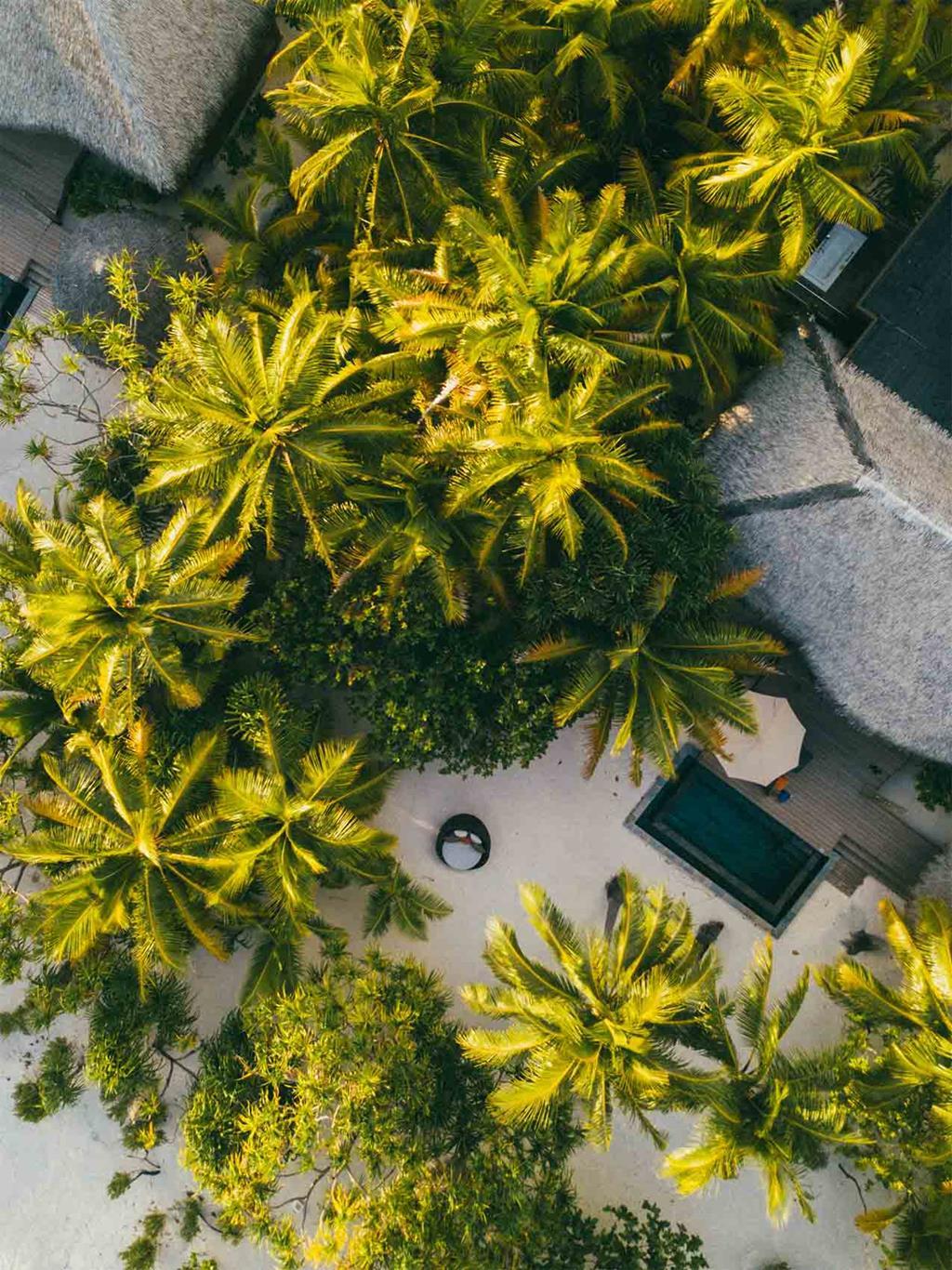
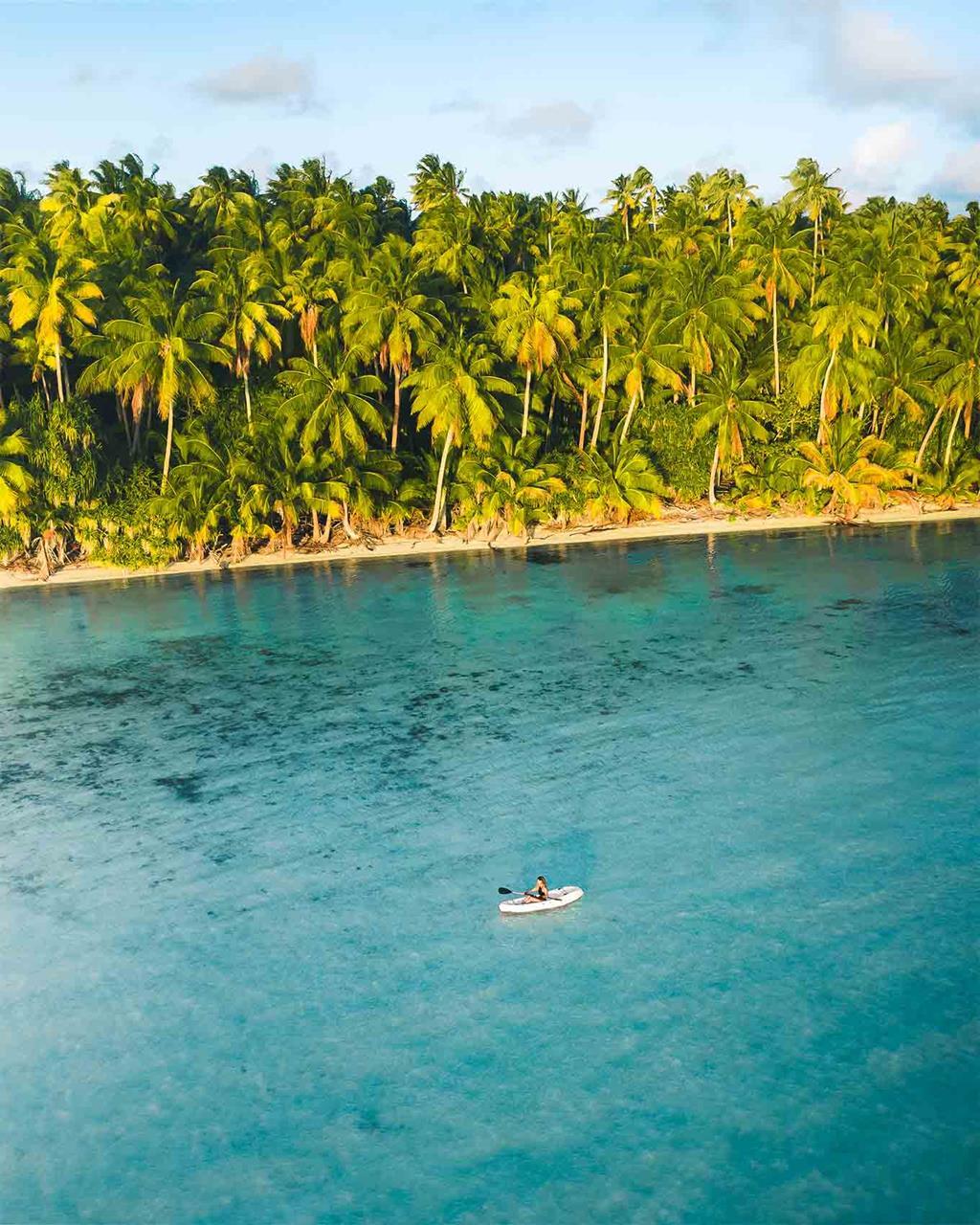
And then there is The Brando’s more familiar face: picture 35 villas overlooking a lagoon, awash in shimmering hues of the tropics. Every corner of the resort seems to belong on a postcard: ribbons of white or pink sand, coconut palms swaying in the trade winds, wheeling colonies of great crested terns, blazing sunsets. A technicolour dream come to life.
It’s enough to make you forget that, after nearly 12 years of operation, certain details betray the resort’s age. The minibar, with its KitKats and cans of soft drinks, seems stuck in another era. The spa and the roster of experiences would doubtless benefit from a little reinvention. “It’s a shame, but it’s The Brando,” a faintly resigned Californian couple later tell me. The Brando is indeed one of those rare hotels easily forgiven for almost everything, so completely do its moments of grace sweep the rest aside.
That very morning, as it happens, a release of turtles takes place in front of our villa. Born in the night, they fit in the palm of a hand. The sight carries with it a sense of life’s fragility: one in 100 will survive their first year, the rest undone by octopuses and fish; one in 1,000 will reach adulthood, facing the threat of boat propellers and plastic bags. Having swum thousands of kilometres, sometimes as far as Fiji, the survivors will return to lay their eggs, 15 or so years on, in the exact same spot where they were born. Though the phenomenon resists explanation, they are said to be guided by the Earth’s magnetic field, or by the memory of scents carried off on the Pacific winds at birth.
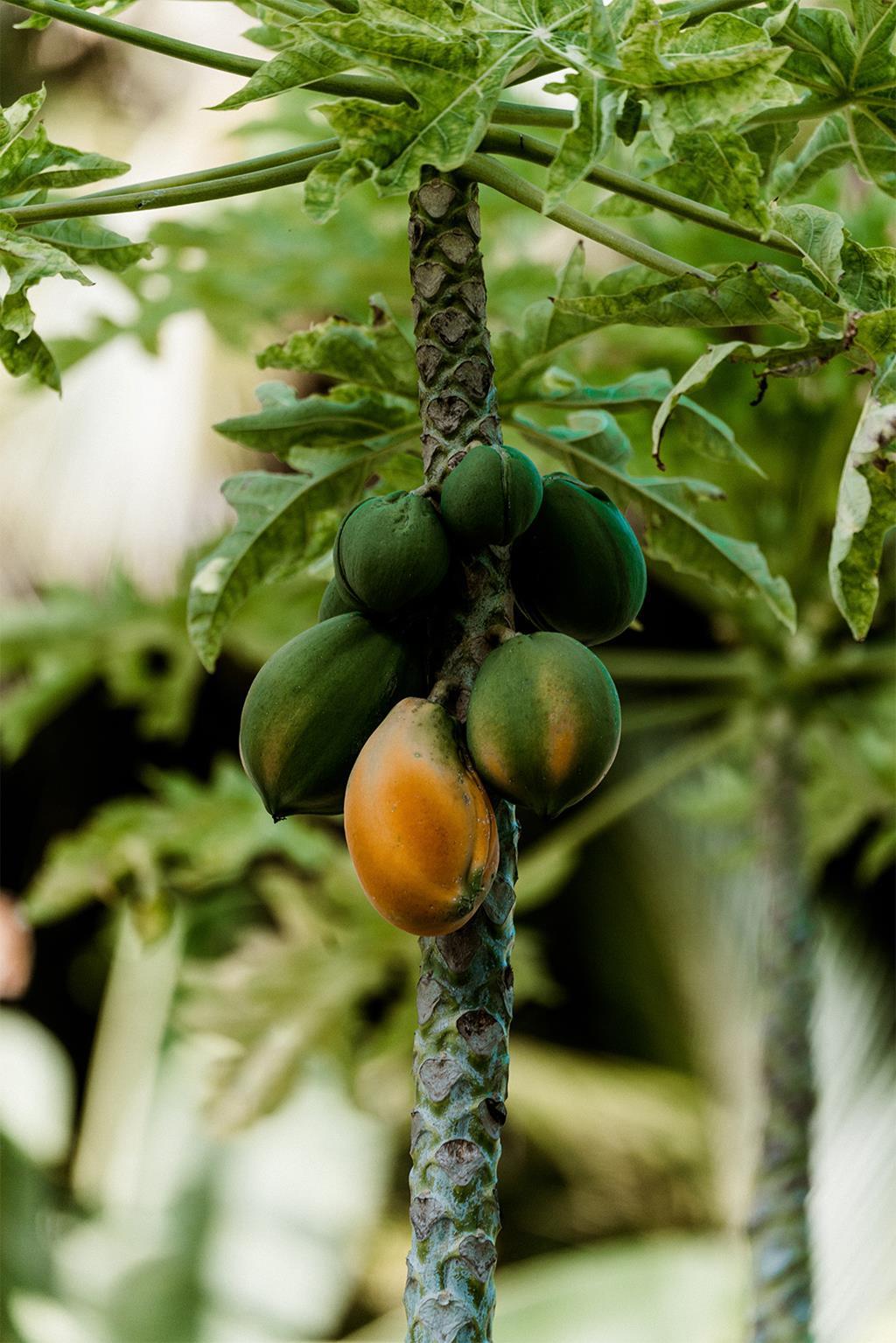
The same cannot be said of our own sense of direction as we lose ourselves on the island. But our wanderings do reveal a few secrets: a cold plunge tucked deep in the greenery, a gym that makes you want to break a sweat, a kitchen garden whose produce will find its way onto our plates that same evening.
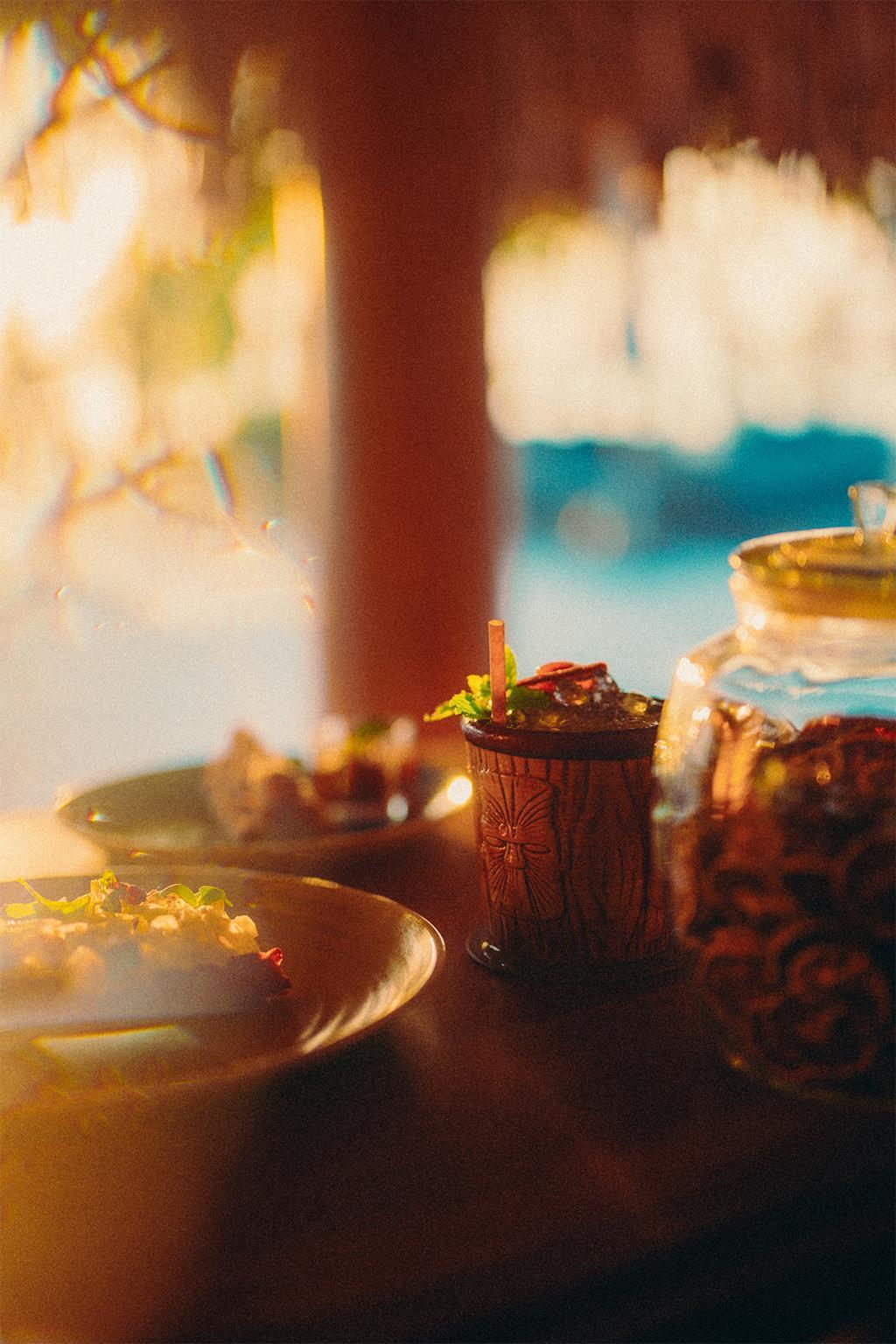
Indeed, The Brando allows no room for tedium, thanks, in part, to three restaurants: Les Mutinés, where, despite the controversy surrounding him, chef Jean Imbert still conceives the tasting menu; Nami, its Japanese counterpart, where just eight guests gather around a teppanyaki grill; and the Beachcomber Café, where a more relaxed vibe prevails.
The path to joy on this island is, quite simply, the most direct: Bob’s Bar, feet in the sand, where one delights in raw fish and the “real-life Mounds bar” that Brando himself conceived by melting chocolate in the half-shell of a coconut. You settle in for a cocktail and leave only at sunset, when the sky catches fire, and the black fins of sharks and other marine life bring the lagoon to life.
“Aita pea pea,” you hear echoing from the staff like a familiar refrain. It means that, here, there is never a problem. Except perhaps one: never wanting to go to bed, unwilling to let another day pass. Facing the contours of Moorea island ahead, cut out in silhouette in the distance, I think back to the words French polymath Victor Segalen wrote in a letter to a colleague in 1911: “I told you I had been happy in the tropics. This is violently true. During the two years I spent in Polynesia, I could hardly sleep for joy. I would awake and cry in drunken joy at the break of day.”
All photos courtesy The Brando