A Different Class
The burgeoning world of business-class-only airlines.

Over the past three decades, the global airline landscape has been built on a near-unanimous movement towards denser cabins and lower costs, as ever more seats are sold at ever lower fares. While the low-cost model has conquered almost every continent, a handful of carriers have made the opposite bet. Rather than multiplying seats, they have chosen to sell none below a certain threshold of comfort – and to do away with interminable boarding queues and points of friction.
The idea is instantly appealing. Yet aviation history is littered with graveyards where the ambitions of these business-class-only carriers lie buried. In the mid-2000s, Eos, MAXjet and Silverjet tried their luck on the North Atlantic. All promised a more refined, less expensive experience than the industry’s major carriers; all disappeared. The market then discovered a hard truth: the premium customer pays not merely for a seat, but for an ecosystem.
 Magnifica Air
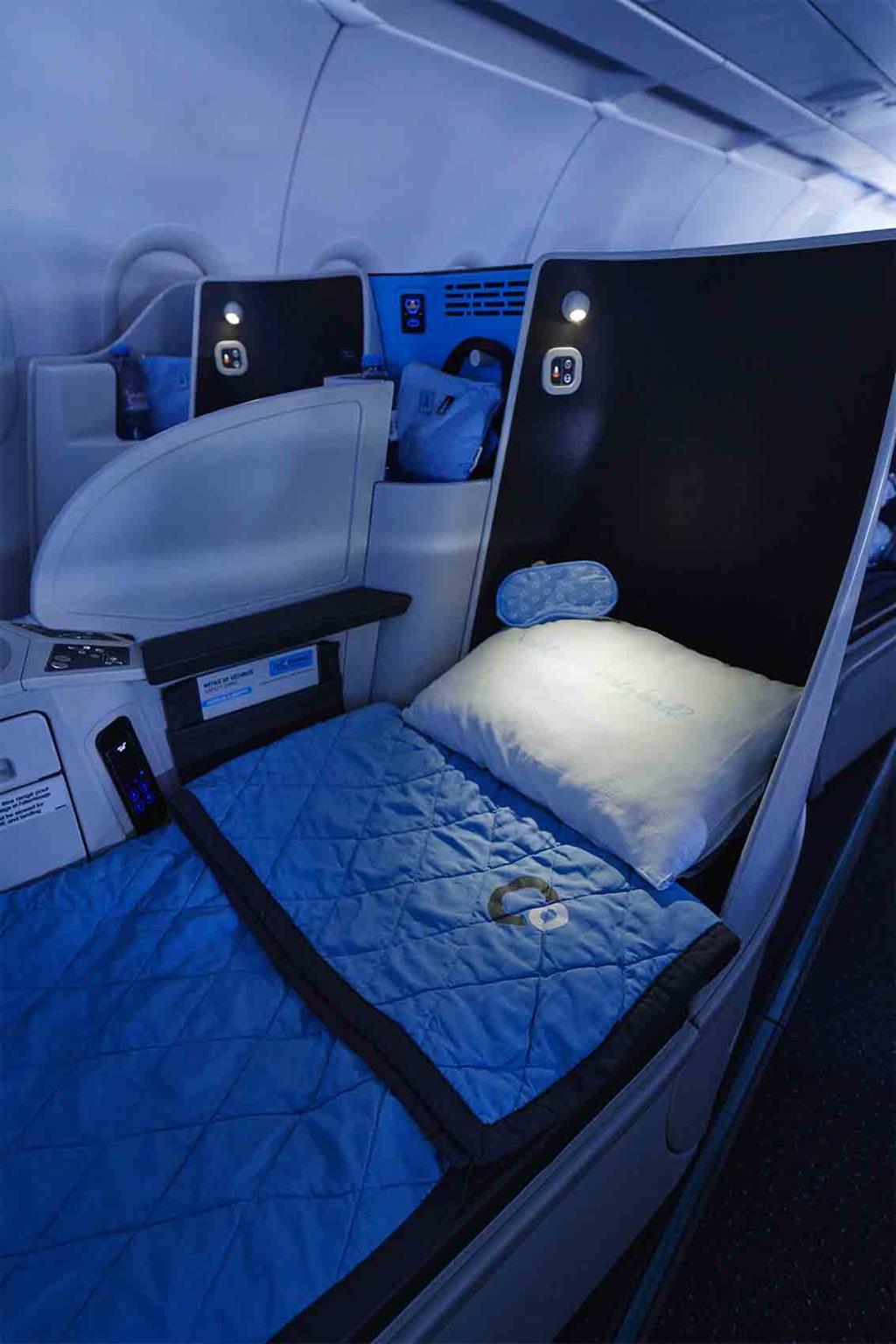
“These passengers are few in number, costly to acquire and highly demanding. Modern cabins, reliability, punctuality … We are held to a standard of perfection far beyond anything expected of a traditional airline, and we constantly have to prove ourselves,” notes Christian Vernet, CEO of La Compagnie, the French standard-bearer connecting Europe (Paris, Nice, Milan) with New York. Its fleet, entirely renewed since 2019, is built on the new generation of Airbus A321neo – modern, fuel-efficient aircraft configured with just 76 seats. “Price is obviously a competitive advantage – we are between 10 and 25 per cent cheaper than our competitors. But our real asset is the simplicity and efficiency of the service we offer, particularly on the ground,” Vernet points out. The most telling example is the boarding process: it takes scarcely ten minutes for every passenger to be seated once the doors open – a feat impossible to pull off with an aircraft carrying 200 to 350 passengers.
The recipe works, and the proof is in the numbers: more than 600,000 passengers carried to date, with more destinations planned. A fourth aircraft will join the fleet within the next 18 months to serve more distant horizons. Vernet makes no secret of his pride in what he calls, with evident tenderness, “the little French airline”. He remains wary, however, of a fragile model that requires a market dense enough in business travellers or premium leisure clientele to fill an entire aircraft – without the economy cabin that, on a conventional airline, helps balance the books. And then there is the unexpected: a technical fault or a bird strike on take-off means two or three days on the ground, managed with a single daily flight to absorb the disruption.
 La Compagnie
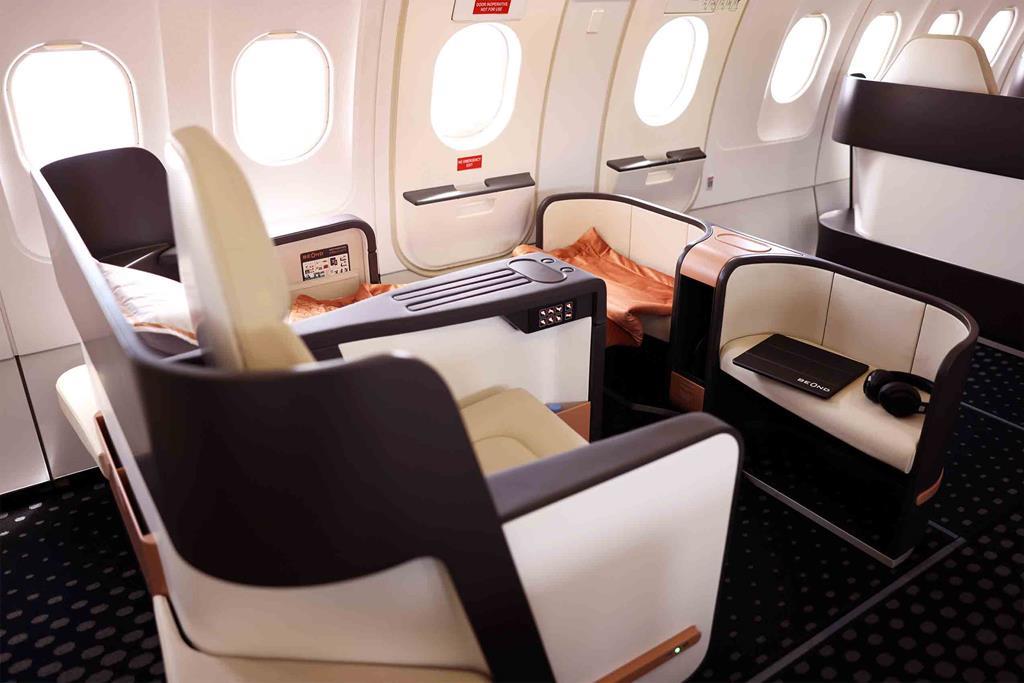
Faced with that market constraint, beOnd has taken a different kind of gamble. Since late 2023, the airline has courted leisure travellers bound for the flagship destinations of high-end tourism, departing from London, Moscow, Milan, Munich and Zurich. Though its launch communications centred on the Maldives, beOnd also serves Saudi Arabia (the Red Sea, Riyadh) and is preparing to open a base in Bahrain. “The challenge for us is not demand. The premium leisure travel market is solid and continues to grow. What concerns me more is execution,” says Tero Taskila, beOnd’s CEO. “When a passenger books a flight, they are not comparing us with another airline. They are comparing us with the best hotel they have ever stayed in, and we have no room for error. A large airline can absorb one bad flight among thousands of others. For us, every journey carries the reputation of the brand on its own.”
Unlike La Compagnie’s, beOnd’s fleet is older: two refurbished aircraft, an ex-easyJet Airbus A319 with 44 seats and an ex-British Airways A321 with 68 seats, both refitted with seats billed as fully flat – a promise worth qualifying, if reviews from passengers over 1.80 metres tall are anything to go by. Another limitation: on several of its routes, notably from Europe, beOnd must make a technical stop at Dubai’s secondary airport, its aircraft lacking the range to cover 8,000 kilometres.
 BeOnd
On fares, however, the gap with the competition is spectacular: a London-Malé return can cost a third of the price of Club World on British Airways, an advantage that beOnd says has earned it 8,000 travellers in its first year of operation. “We operate on an emotional logic. Our passengers are leaving for a honeymoon or a long-planned holiday, rarely out of routine. Their decision is dictated by the occasion, not by the speed of the flight or by points,” Taskila explains. “If we can deliver a consistently excellent service, loyalty will follow naturally.”
For Vernet of La Compagnie, loyalty is also at the heart of the battle. “Our main competitor is air miles,” he jokes. An overhaul of the current programme is under way, and the company is exploring partnerships with other airlines. In the meantime, its teams show no shortage of creativity in the air: book signings, guest mixologists, brand activations … and soon a string quartet – the CEO insists on it.
 Magnifica Air
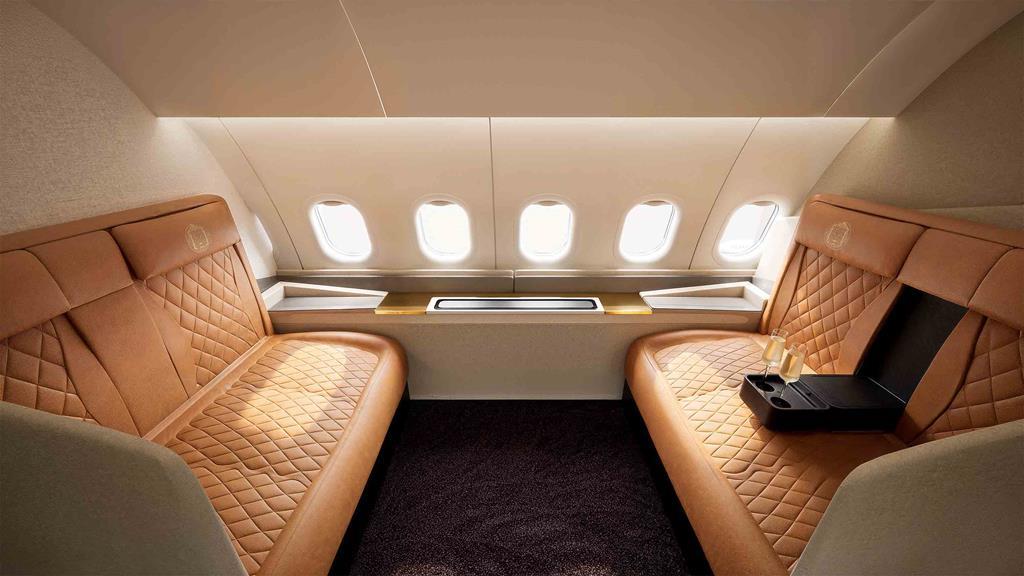
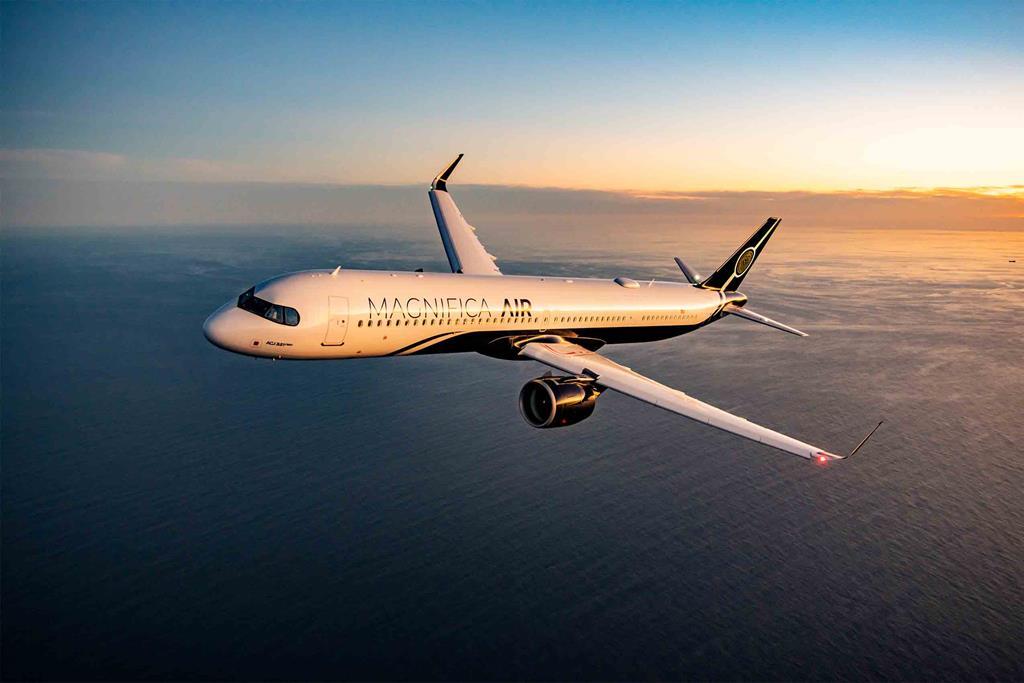
The appetite for exclusivity shows no sign of fading, and a new contender is preparing to push the concept further still. Founded by Wade Black, a veteran of business aviation, Magnifica Air intends to launch operations in the US in late 2027, slipping in between commercial first class and the private jet (with dedicated terminals, boarding 30 minutes before take-off, bags returned 15 minutes after arrival). The airline plans a fleet of six A220-300s and two A321neos, reconfigured to a fraction of their usual capacity (45 to 54 passengers), with enclosed suites at the front of the cabin and a bar at the rear.
Destinations have already been announced: New York, Miami, Los Angeles, San Francisco, Dallas and Houston, along with seasonal flights to Napa and the Caribbean. Far from being merely one more airline, Magnifica Air hopes to show that premium travel is no longer a matter of a wider seat or a better wine list, but of the gradual disappearance of constraints.
The Invisible Airport
While business-class-only airlines reinvent the experience in the air, entrepreneur Amina Belouizdad Porter is tackling air travel’s ultimate point of friction: the airport itself.
 (Image: Stanley Wu)
With your company, PS, you give commercial airline passengers access to an entirely private terminal. Why hadn’t this model emerged sooner?
Versions of it already existed, but they were operated by the airports themselves, with a purely functional approach: providing separation for those seeking privacy. We added a dimension of hospitality. You fly on your usual airline, but you escape the entire airport experience – a model previously reserved for private-jet travellers. We managed to secure an extraordinary number of approvals – from airport authorities, airlines and government agencies – and to make the impossible possible.
In practical terms, what does the PS journey involve?
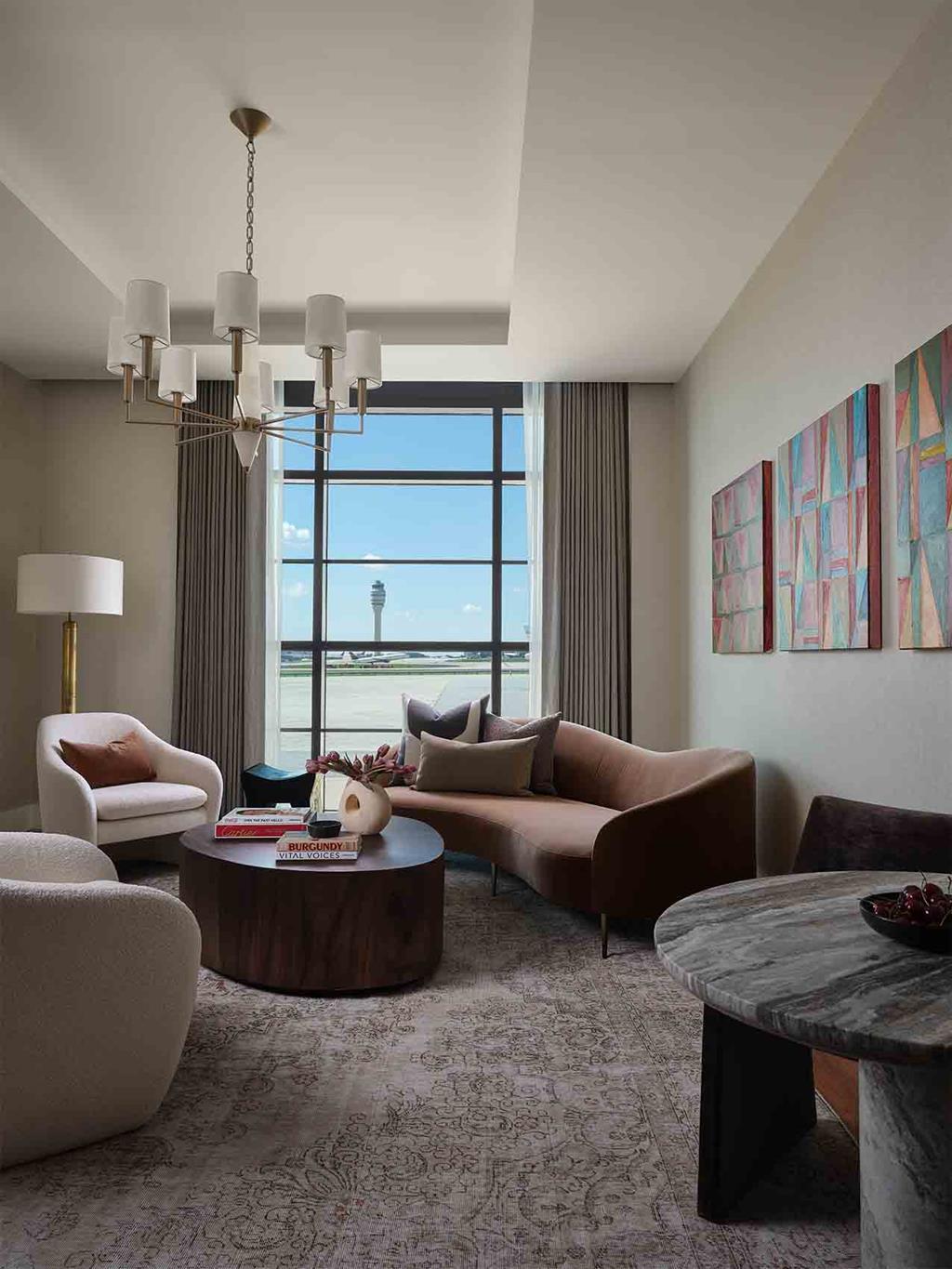
Our clients book a Suite or the Salon, and instead of heading to, say, Terminal 1, 2 or 3, they head to the PS terminal – no corridors, no queues. We take charge of the luggage the moment it comes out of the car, and passengers are reunited with their bags on arrival. We have our own security screening and customs, and we drive our clients directly onto the tarmac in BMWs – we are the only ones authorised to do so right up to commercial aircraft. On arrival, the same journey unfolds in reverse.
 (Image: Galina Juliana)
What kind of traveller is PS really for?
Many people assume PS is reserved for celebrities, but our regulars are mostly executives and entrepreneurs. Two-thirds of them are American, with 80,000 clients spread between Los Angeles – the airport where we began in 2017 – and Atlanta, as well as two newly opened locations in Dallas Fort Worth and Miami (Paris will follow in 2027). The UK, Australia and Saudi Arabia are among our main international markets, while East Asia is our fastest-growing region. We also see celebratory uses – honeymoons, birthdays – with economy-class travellers keen to preserve the quality of the experience on the ground.
Does PS reflect a vision of contemporary luxury?
Luxury today is no longer demonstrative. Our clients want to travel serenely, to save time and to protect their privacy. Our role is to make the system almost invisible. Real luxury, today, is no longer having to endure the airport. And our 86 per cent retention rate is a sign that we are on the right track.