A Head for Heights
From his solo ascent of the north face of the Grandes Jorasses to inaugurating new routes on 7,000m peaks in the Himalayas, Charles Dubouloz pushes the limits of what’s possible at high altitude. Here, he discusses embracing fear, chasing excellence and finding the right balance between humility and determination.

Your most demanding expeditions, like your ascent this past December of the iconic Divine Providence route on Mont Blanc, require courage unimaginable for most of us. How do you push past exhaustion, fear and doubt?
You don’t attempt very hard solo routes without a lot of experience. Over the years, the more I climbed, the more I felt that I was able to push myself further. Mountaineering is like a toolbox. At the beginning, you only have one or two tools but, after many years, you have many tools in your box, and you have to choose the right one at the right moment. I never have this feeling of stepping back because of fear. If I didn’t feel fear, maybe I would stop. Even on the ridge – it’s super-easy for me – but if you fall, you die. So you always have to feel this fear. I love it.
How do you decide where to set your limits, whether in the mountains or in life?
I’ve been looking for some kind of limit throughout my entire career as an alpinist. You work on the edge, so it’s always a story of balance. But now I think I understand that I will never find my limit, because I can always push too much. My only limit is death. As for my private life … if I want to do something, I do it.
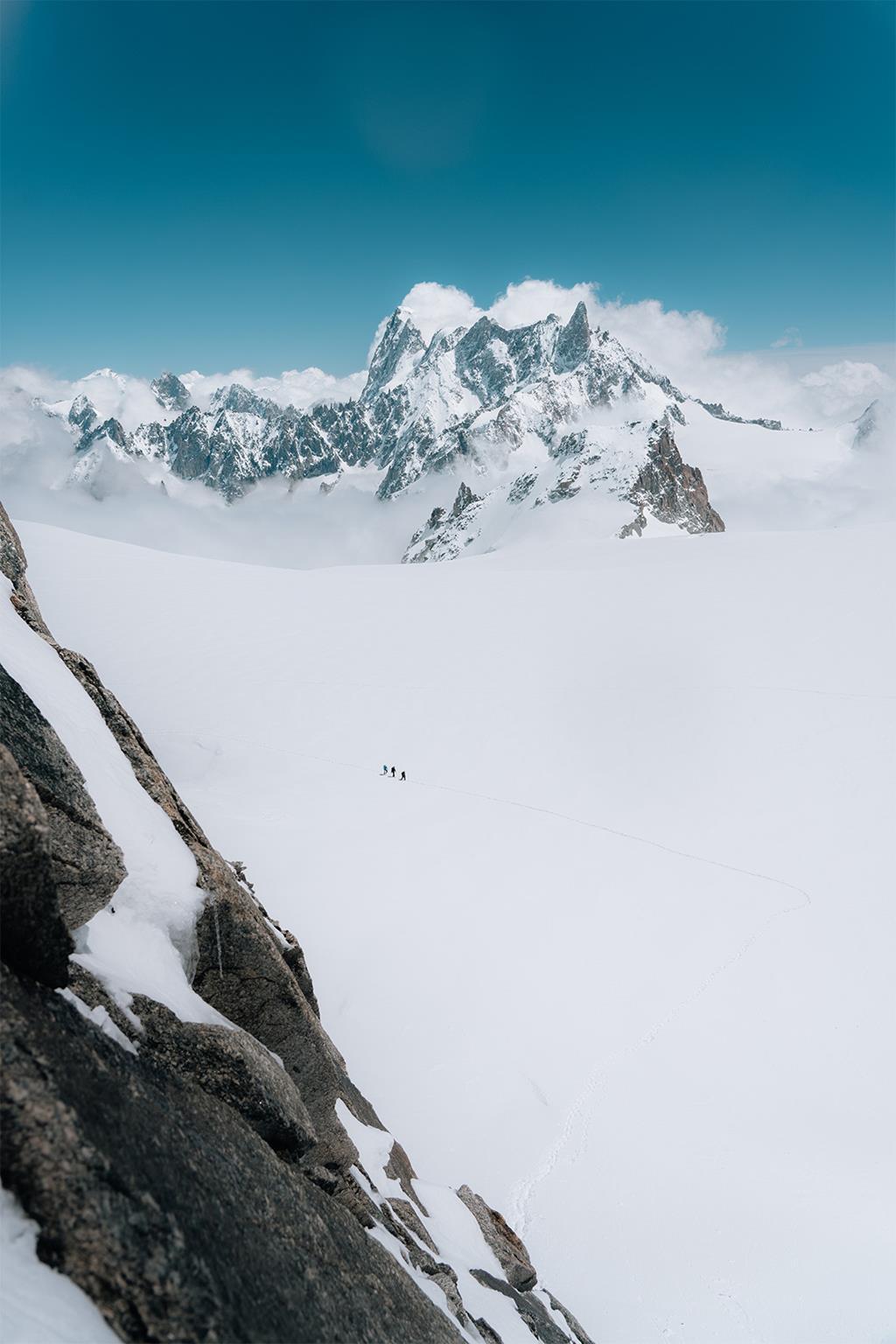
Many people associate alpinism with conquest, but in your expeditions there is also a strong sense of introspection. What are you really searching for in the mountains?
My generation of alpinists doesn’t care about conquering, because we understand that is not the way to climb. Maybe it was like that 50 or 60 years ago, when [alpinists from] countries like France, Italy, America all tried to be the first to reach the top of Everest. But today, we don’t have this kind of relationship with the mountains any more. We have a lot of humility. We are small guys trying to do hard things, push limits, and then we are happy to come back home.
Today, visibility in alpinism is often shaped not only by extreme achievements, but also by media and social-media exposure. What’s your relationship with self-promotion?
I don’t care about social media. I’m very bad at it. I’m just an alpinist; I don’t want to be an international superstar. What I care about is doing the hardest climbs and being the best in my sport. If I didn’t have my daughter, maybe I would spend my entire life just climbing.
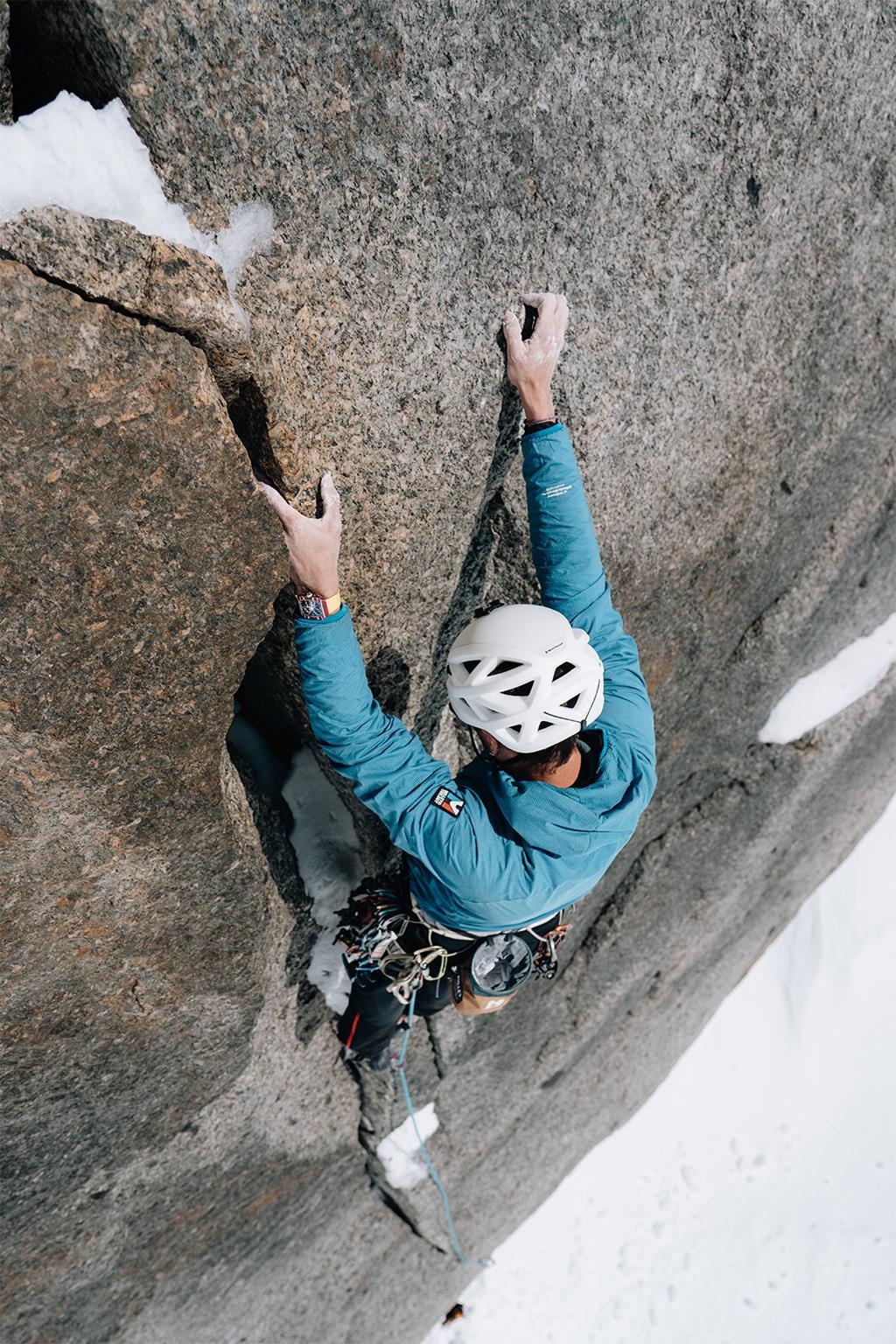
How important are sponsorships and funding in allowing you to pursue ambitious projects?
My expeditions are very cheap. For example, two months in Nepal with permits and stays at the base camp are around 10,000 euros. Sponsors are very important for me because of my daughter, for the financial aspect. If I die in the mountains, I don’t want to leave my family with nothing.
Your collaboration with Richard Mille feels very natural because both your climbing style and the brand’s philosophy are associated with precision, performance and pushing boundaries. How did this partnership come about?
The first thing I told them is: “You don’t need me to sell watches, and maybe with me, you won’t sell more watches.” I’m not an influencer; I’m not a big star on social media. I am a performer. If we work together, we can do great things, but I am not here for marketing. For me, the most important thing is still climbing. I think they appreciated the honesty. I think Richard Mille is extreme: extreme luxury, but also extreme precision. I’m the same in my climbing, so we understand each other in that regard.
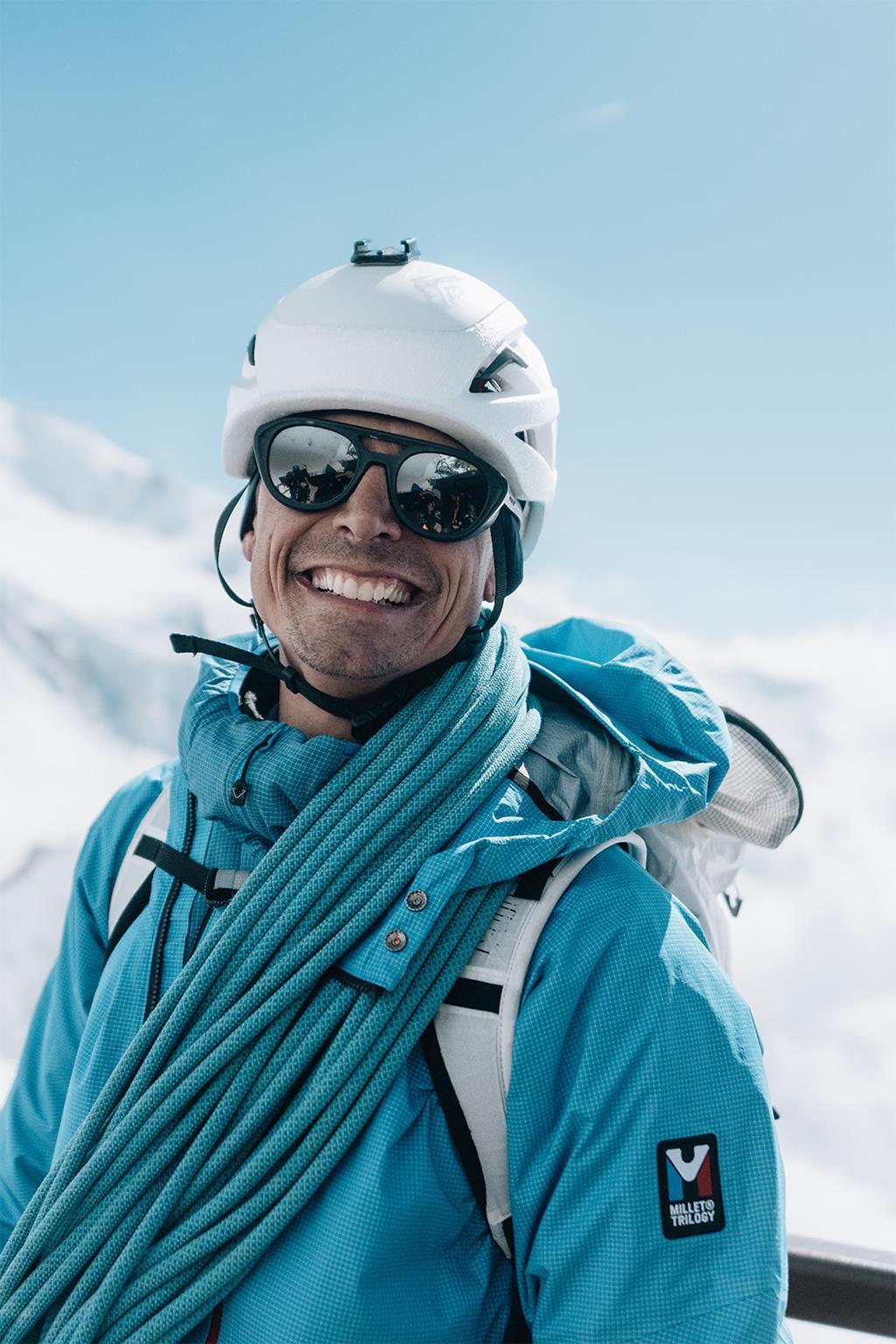
On your solo ascent of Rolling Stones, the famously challenging route on Mont Blanc, you lost your phone on day three, leaving you with no way to communicate or keep time. Has that experience changed the way you relate to time, including your decision to wear a Richard Mille?
What I like is super-simple stuff. For example, a nice axe – it’s a simple tool, but it always works. It’s the same for the watch. After three years of climbing with it, I never destroyed it. I scratch it sometimes, but it always works. I don’t care about phones or data. For me, what’s important is that in adversity, things are simple and reliable.
When you strip everything else away – sponsors, recognition, summits, results – what remains for you as an alpinist?
I think I’m a very basic human – I don’t need luxury. What I love is sweat. For me, the perfect place is climbing in the Alps. If everything disappears, I know exactly what I love most: to climb. That’s what I would do with my life.
Wrist Watch
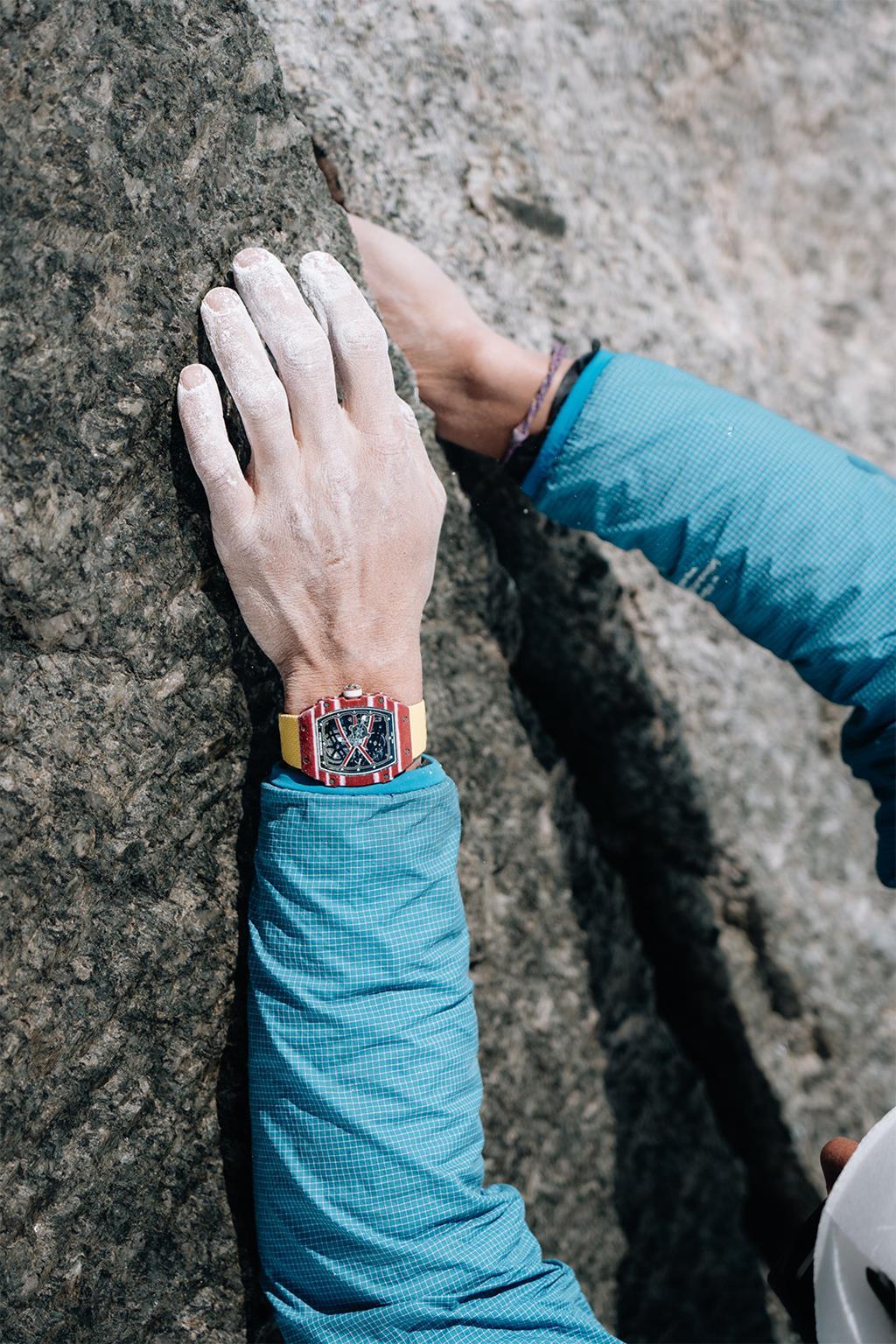
Mountain high and valley low, Charles Dubouloz dons Swiss watchmaker Richard Mille’s RM 67-02 Automatic Extra Flat.
Material: TPT composite materials, Grade 5 titanium
Dimensions: 38.7 x 47.5 x 4mm
Weight: 32 grams
Power Reserve: ~50 hours
Water Resistance: 30 metres
Movement: Calibre CRMA7 skeletonised automatic-winding movement
Strap: elasticated textile 3
Photos by Antoine Mesnage