The Other Sicily
In the months after summer, the island’s southeastern corner reveals its true rhythm: long lunches, crystalline seas, forgotten villages and a landscape that rewards those willing to linger.

“You must be Massimo.” Armed with the description I had been given that mild autumn morning, I couldn’t possibly mistake him: long blond curls, a thick gold chain, a face weathered by the sun, his deeply tanned torso left bare. “Can you take us over to Lachea?” He nods, unties the rope, and moments later we are gliding across the water. The three-minute, three-euro crossing aboard his nutshell of a blue-and-white fishing boat – from the tiny harbour of Aci Trezza to the island – feels like travelling through time. Remarkably little has changed since my parents brought me here almost every weekend for a swim more than 40 years ago. Even today, there are few signs of tourism along the Riviera dei Ciclopi, the rugged lava-stone coastline north of Catania, where the three Faraglioni rise from the Ionian Sea like miniature Matterhorns, said to have been hurled at Odysseus by the Cyclops Polyphemus in Homer’s Odyssey.
While Palermo hosts glamorous celebrity weddings, The White Lotus has turned Taormina into a global pilgrimage site, and Ortigia (Syracuse’s old town), together with Noto – the baroque jewel rebuilt after the devastating earthquake of 1693 – have become increasingly crowded in summer, the island’s most compelling story still lies a little further south. I grew up in Catania, and my childhood rituals rarely changed: mulberry granita with brioche at Savia, Bellini’s Norma at the Teatro Massimo, winter mornings skiing on Mount Etna followed by afternoons swimming in the Ionian Sea.
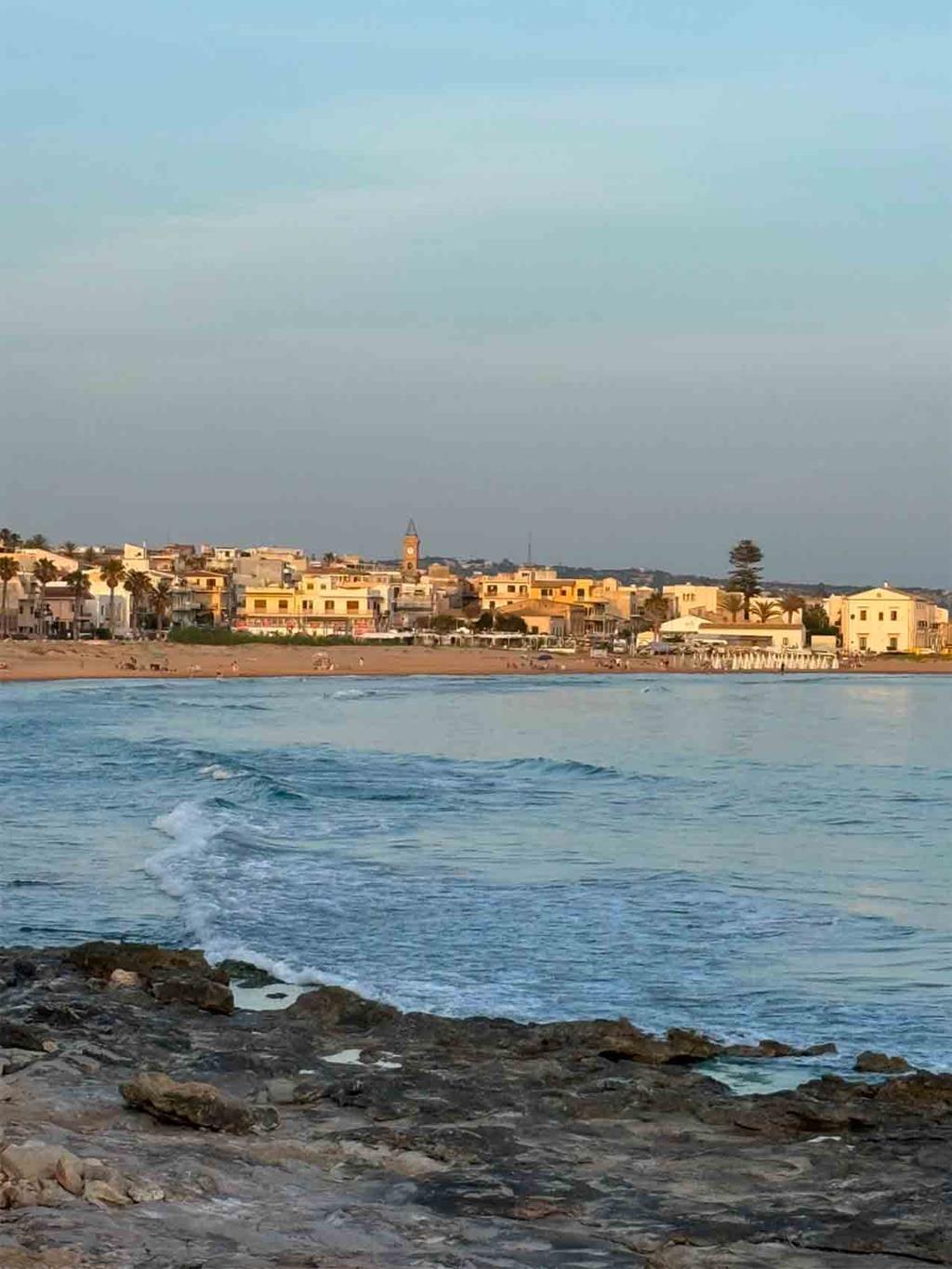 Donnalucata (image © Thomas Midulla)
Whenever time allowed, however, we drove south, towards Ragusa, Modica and Donnalucata, where deserted beaches, the day’s freshest catch and honey-coloured landscapes revealed a quieter Sicily. Today, this corner of the Val di Noto has, without much fanfare, become one of Italy’s most fascinating gastronomic destinations – thanks to a visionary generation of hoteliers, winemakers and chefs who have chosen to celebrate the land rather than reinvent it.
Few places capture this spirit better than Baglio Occhipinti. When Fausta and Arianna Occhipinti’s father acquired the estate outside Vittoria, the 17th-century baglio was little more than a ruin, abandoned for years, with collapsing roofs, crumbling walls and the traces of a former agricultural life slowly disappearing. What visitors experience today is the result of a painstaking, multiyear restoration. The old stone walls, courtyards and agricultural buildings have been brought back to life, creating a countryside retreat where the history of the place remains visible.
When I arrive, I find Fausta tending to her gardens, basket in hand, picking sage, tomatoes, basil and mint. We walk together through the vegetable beds and back towards the main buildings, passing rooms furnished with century-old Sicilian cabinets and period pieces: antique silverware, an old piano, and chandeliers hanging from the high ceilings. We end up in the kitchen, where everything we have gathered is transformed into lunch: sage leaves dipped in a light tempura, mint turned into a vibrant pesto, tomatoes served simply with bread baked from ancient Sicilian grains like Tumminia, grown on the estate itself, while the olive oil comes from its own Tonda Iblea trees. Alongside it comes a perfectly chilled bottle of Faustina, a fresh, mineral white wine made from Catarratto, the ideal companion to a lunch that tastes of the garden just outside the door.
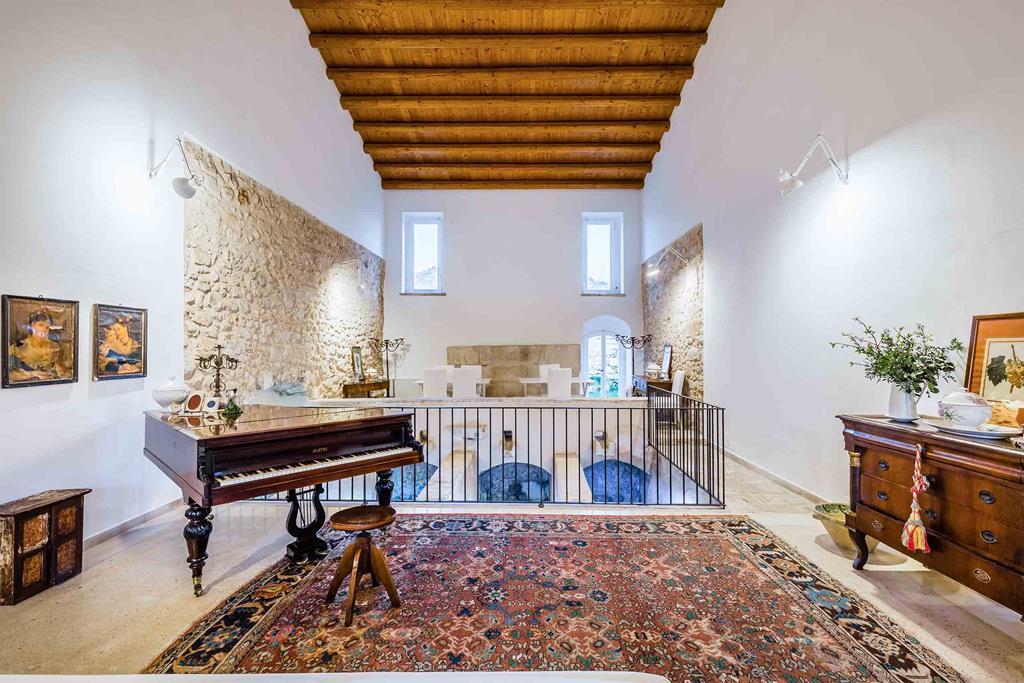 © Baglio Occhipinti
Arianna’s domain begins just a short distance away in the vineyards. Long before natural wine became fashionable, she was championing Sicily’s native grape varieties – particularly Frappato and Nero d’Avola, the grapes used to make Cerasuolo di Vittoria – through organic farming and a profound respect for biodiversity. Together, the sisters represent two sides of the same landscape: one expressed through hospitality and the table, the other through vines and wine.
The same conversation between tradition and reinvention plays out at tables across the region. If southeastern Sicily has become one of Italy’s most exciting gastronomic regions, much of the credit belongs to chef Ciccio Sultano. When he opened Duomo in Ragusa Ibla more than two decades ago, few could have predicted that this tranquil Baroque hill town would emerge as a magnet for gastronomes from around the world. Sultano remains the architect of the region’s culinary movement, inspiring a generation of chefs and helping create a thriving ecosystem.
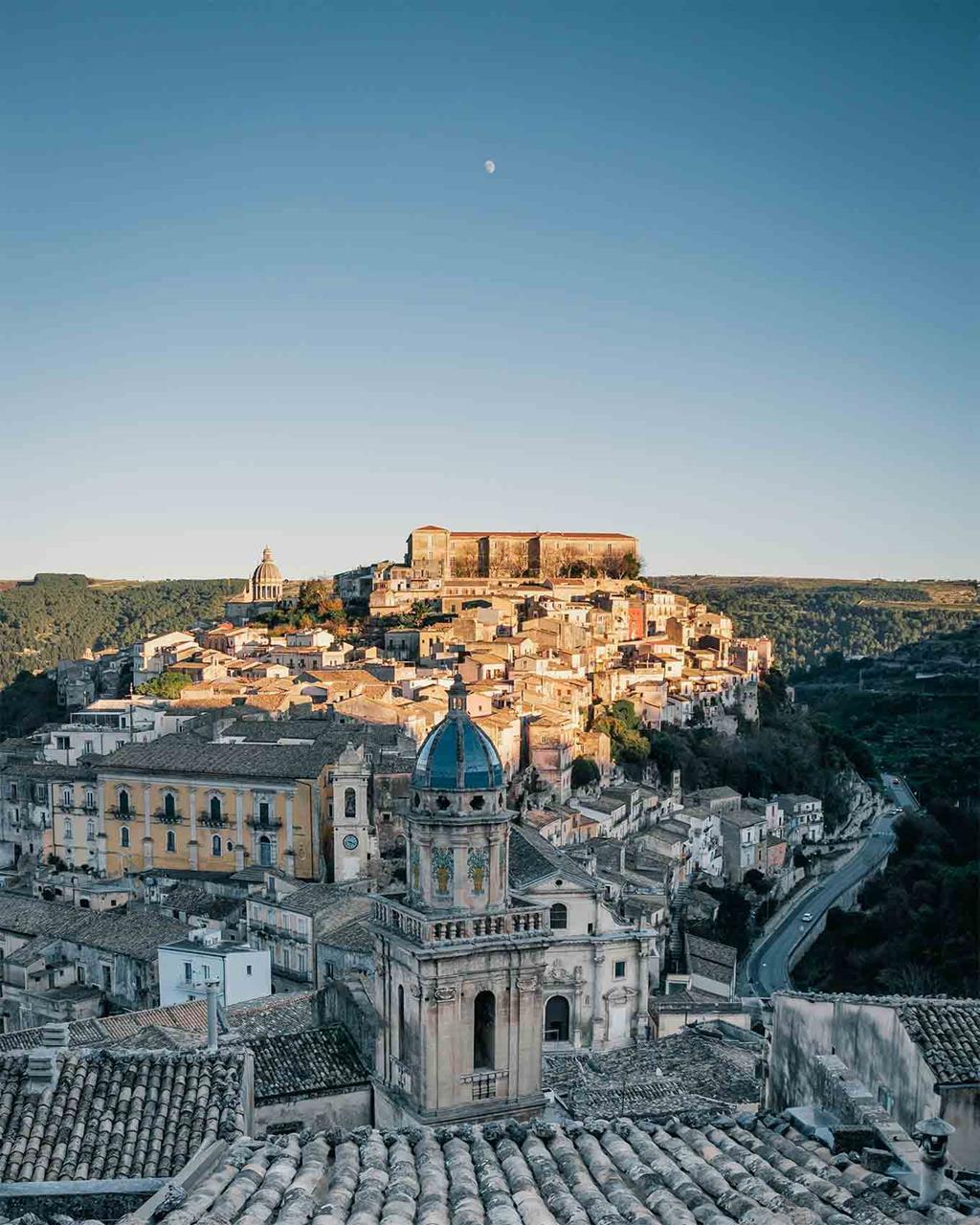 Ragusa Ibla (Image © Joseph Recca/Unsplash)
Lunch at Duomo unfolds with the assured confidence of an institution. The dining rooms aim to impress, though their interiors seem somewhat frozen in time, and the service is polished with an old-world grace. Not every dish surprises – the celebrated nuova caponata, for all its intellectual ambition, feels a bit too “decomposed” – but then comes a grilled local tuna belly with cantaloupe melon, pine nuts and onion cream that reminds me why Sultano’s influence extends far beyond his own kitchen.
Some thirty kilometres away, overlooking the beach promenade of Marina di Ragusa, VotaVota could hardly feel more different. Flooded with light, framed by vast windows facing the sea and centred on an open kitchen where chefs Giuseppe Causarano and Antonio Colombo work in full view, the restaurant has the energy of a workshop rather than a temple. Their cooking is fearless without losing its Sicilian accent: the delicate donkey carpaccio crowned with caviar that melts on my tongue, or an exceptional spaghetti alle sarde – one of the island’s oldest recipes – reinterpreted with a Japanese-style soba broth that lends the dish an unexpected smoky depth.
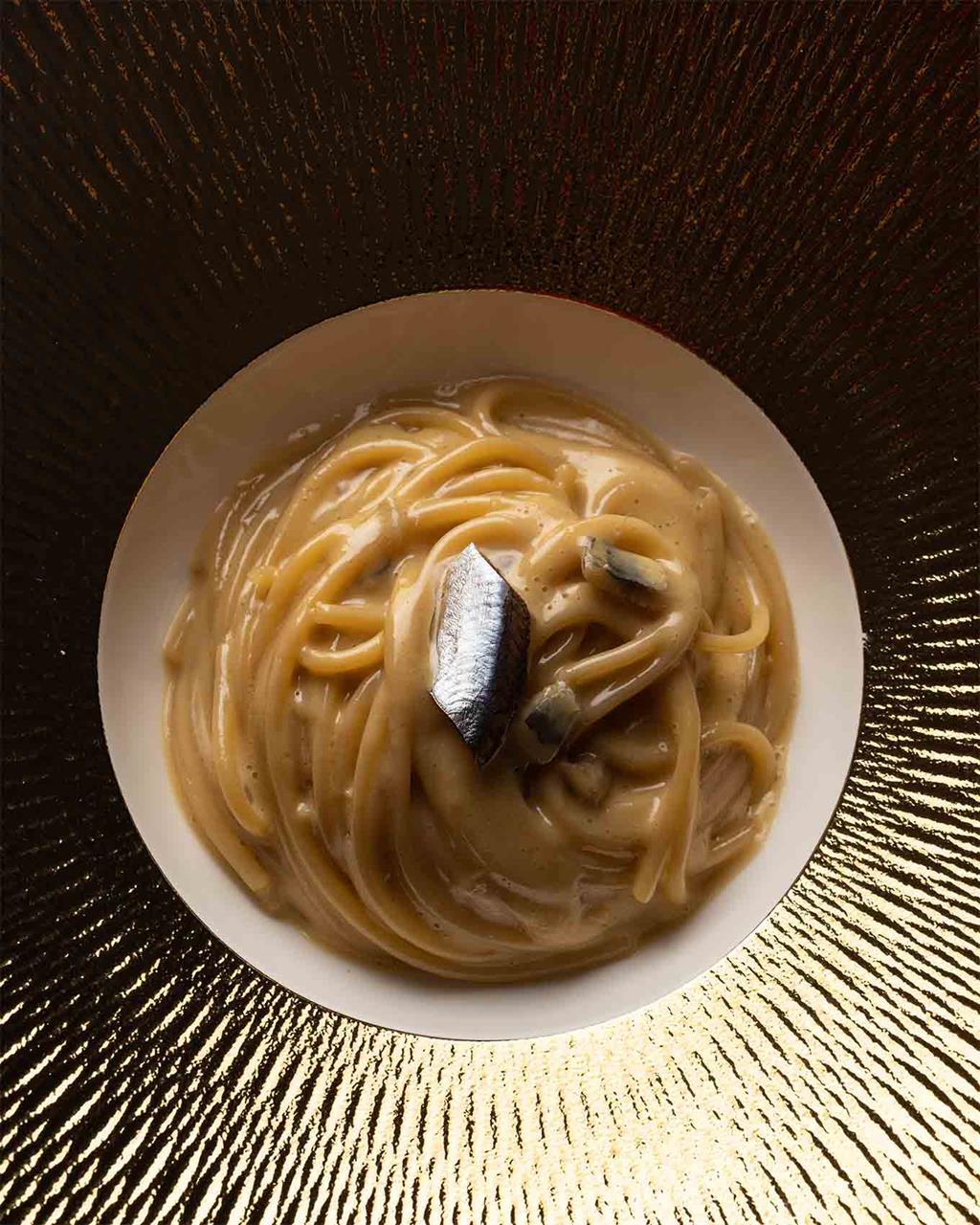 VotaVota (image © Paola Licciardello)
For all its culinary reputation, southeastern Sicily has long remained surprisingly underdeveloped in terms of high-end hospitality – but the winds are changing. A growing number of investors are turning their attention to the region, among them the Maltese entrepreneur Paul Gauci, who has taken over the tourist harbour of Marina di Ragusa and launched a ferry connection to Valletta. Across the region, desirable land plots and historic rustici are being acquired at a pace few would have imagined only a couple of years ago.
One such forgotten structure was Masseria d’Estia, an abandoned estate in the Hyblaean countryside carefully transformed into a private retreat, available through luxury villa specialist The Thinking Traveller. The estate comprises the masseria for larger groups and Nido d’Estia, a more intimate two-bedroom villa with its own pool, surrounded by carob trees, ancient olive groves, cornfields and the deep blue of the Mediterranean below. After days spent exploring the area’s rich gastro-scene, I found myself reluctant to leave.
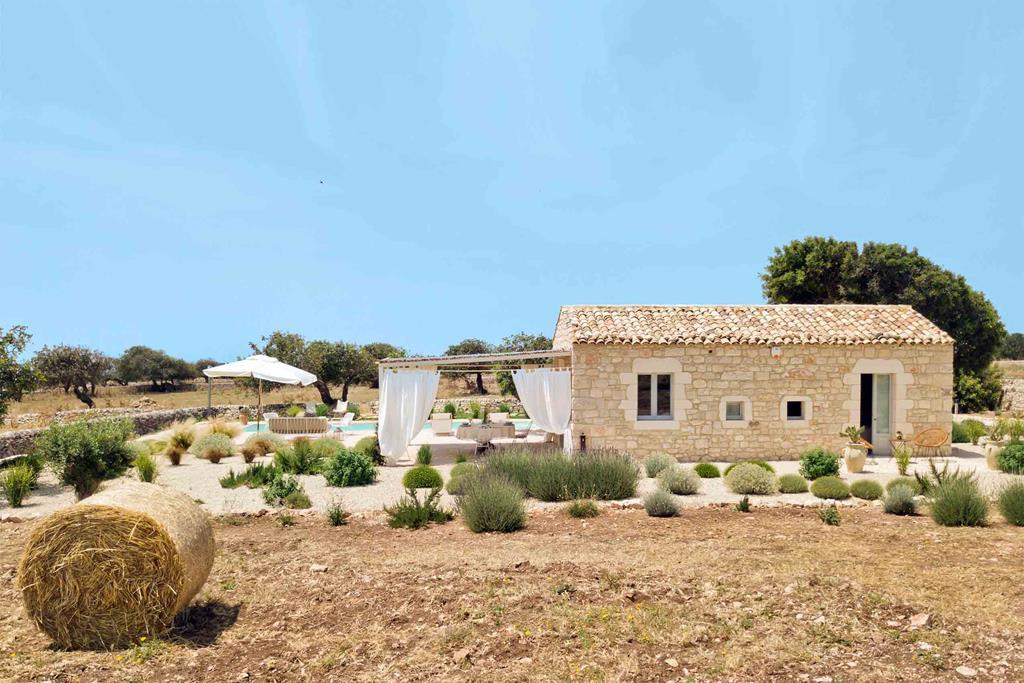 Nido d’Estia (image © The Thinking Traveller)
One evening, Giovanni, the private chef who comes to the estate, prepared a dinner to rival those served at many of the region’s celebrated restaurants: homemade pasta with sea urchin, sarde al beccafico reinterpreted with anchovies for a lighter texture, then a whole grilled branzino and a typical cannolo filled with fresh ricotta. The flavours I had spent days searching for across the Val di Noto had, in the end, quietly followed me home.
“Se vogliamo che tutto rimanga com'è, bisogna che tutto cambi.” If we want things to stay as they are, things will have to change. Lampedusa’s famous line from his novel Il Gattopardo still echoes across Sicily. In the Val di Noto, the challenge is not whether change will come, but whether it can preserve the character that has defined this landscape for generations.