Just Don’t Call It Barbecue
Across Europe, visionary chefs are turning to the most primal of cooking techniques to create innovative plates that are anything but rustic.

Everyone is cooking with live fire now – macho heat and char are blazing around the globe. Yet, in haute kitchens from London, Vienna and Stockholm to Modena, Madrid and the Basque Country, this is not merely the rekindling of an old flame. This is a new breed of fire cooking that is less about rusticity and more about refinement. Indeed, an open flame is never completely tamable, and chefs working with it need to be ultra-agile, but the effort is well rewarded: unlike a conventional tasting menu, each time an ingredient licks the flames, the taste is a one-off that’s real, unpredictable, more nuanced and more elevated.
At the fine-dining level, fire becomes a compelling narrative, allowing chefs to strip back food to its essence, and to consider every element of fire, embers and smoke and how present or fleetingly subtle they are and how they will interact with each dish. It’s a chance to apply new techniques, weave in the chefs’ own stories, and create dishes that are complex, progressive and emotionally resonant – not to mention surprising.
This is certainly the case at Massimo Bottura’s Al Gatto Verde restaurant, which was awarded both a Michelin star and a Michelin Green star in its first year. From the restored 18th-century villa-hotel Casa Maria Luigia – set in the Emilia-Romagna countryside and decorated with contemporary art on every wall – Bottura is quick to clarify one thing about the food: “This is not BBQ.”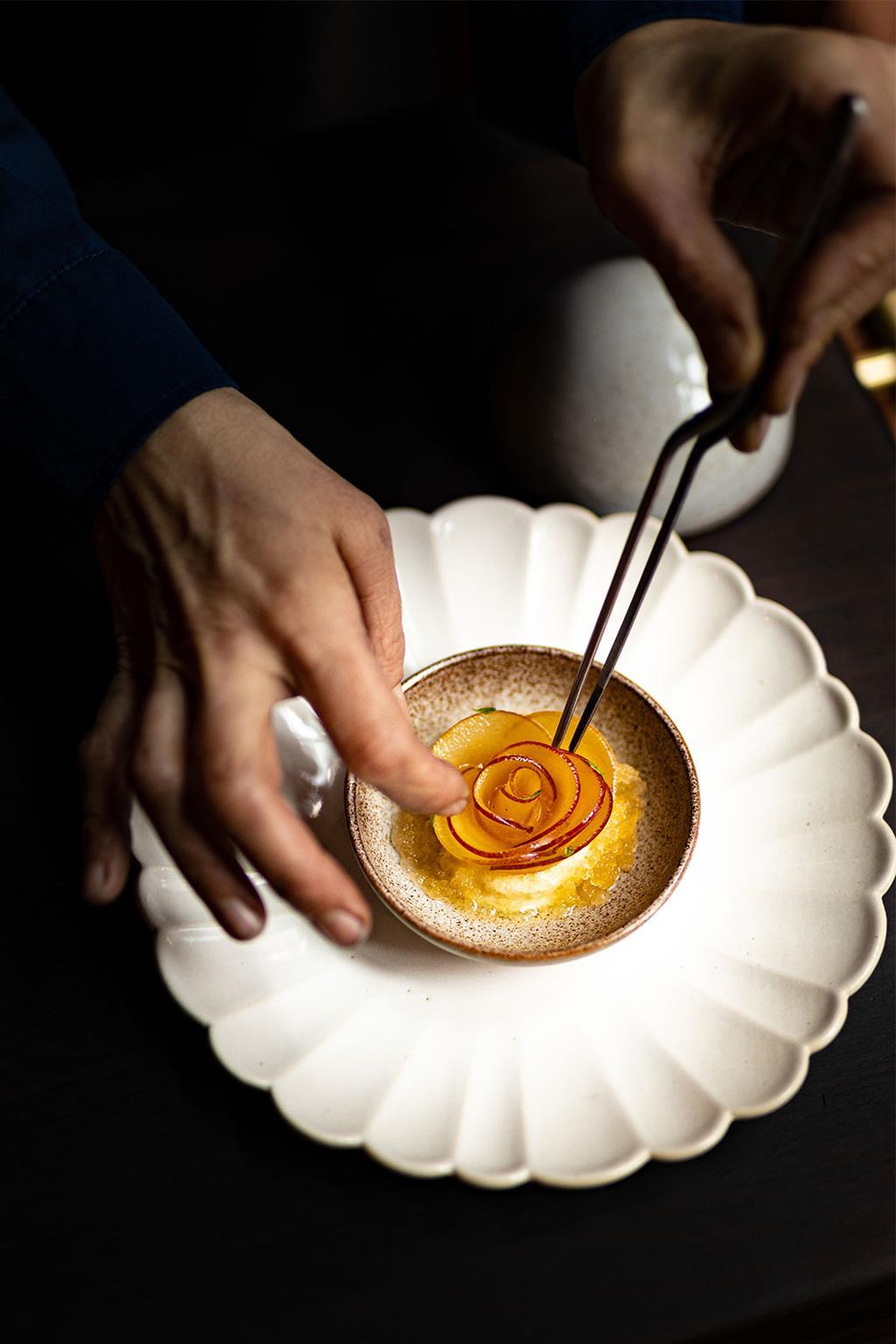 Ekstedt (Photo: Emma Johansson)
“As chefs, we do give even more of ourselves when heading up a fine-dining fire restaurant. We are watching and listening to the fire constantly,” says Argentinian-born Florencia Abella, head chef of Ekstedt in Stockholm, who was recognised as chef of the year for Sweden and Denmark by Falstaff earlier this year. “Precision becomes an act of constant response and adjustment – a dance between instinct and experience. It keeps us humble and sharp.” Abella’s passion is a natural extension of the ideals of Niklas Ekstedt, who first brought fire cooking into the fine-dining conversation 14 years ago with the launch of his eponymous restaurant. Born out of his desire to explore cooking in the time before electricity in his native Sweden, Ekstedt’s “analogue” cooking was groundbreaking at the time.
Fast-forward to 2025, I am sitting at the kitchen counter at Ekstedt with all my senses on full alert. It is a thrillingly visceral experience, like being in the engine room of a steam train. There’s a 100-year-old cast-iron stove, a fire pit burning bright with several grills, hot plates, and a hanging firebox for smoking, alongside cast-iron pans, fire cones, hay smokers and bellows.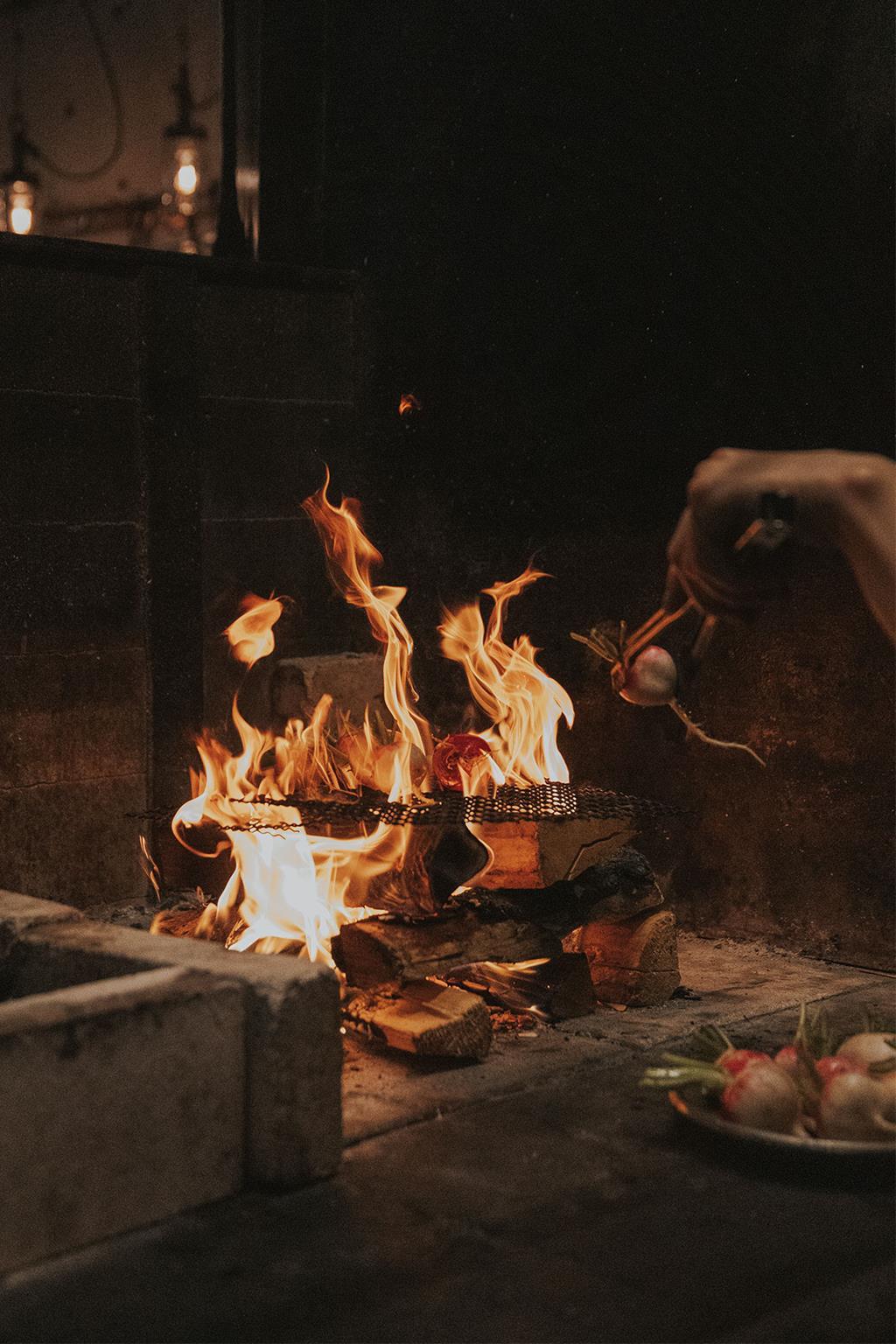 Ekstedt (Photo: Emma Johansson)
I join Abella in the kitchen to watch how her team prepares the transition course after having just enjoyed an array of highly creative snacks, including dry-aged beef served on roasted hay and charcoal cream, and cast-iron-fired flatbread with vendace roe and fennel pollen. The chefs use a flambadou, a metal fire cone on a long handle, which is heated in hot coals, then used to melt beef fat, which drips onto wild oysters. The oysters are finished with a beurre blanc and taste subtly smoky and sublime. “It’s a sensual way to cook,” muses Abella, and her young chefs nod in agreement. Several have come from three-star French kitchens and have had to completely reassess how they cook.
I’m wholly enamoured of the butter churned by hand in a vintage machine and the whey smoked with hay embers and enhanced with lovage oil and served with sourdough bread, yet this is by no means traditional: it is haute Scandinavian, led by fire. It’s an exhilarating experience, from the ember-baked scallops, spruce shoots and onions to hay-smoked quail with fermented white asparagus, cherries and juniper. Most surprising is the perfectly risen wood-oven-cooked cep-mushroom soufflé with woodruff and blueberries. The taste is sweet and earthy.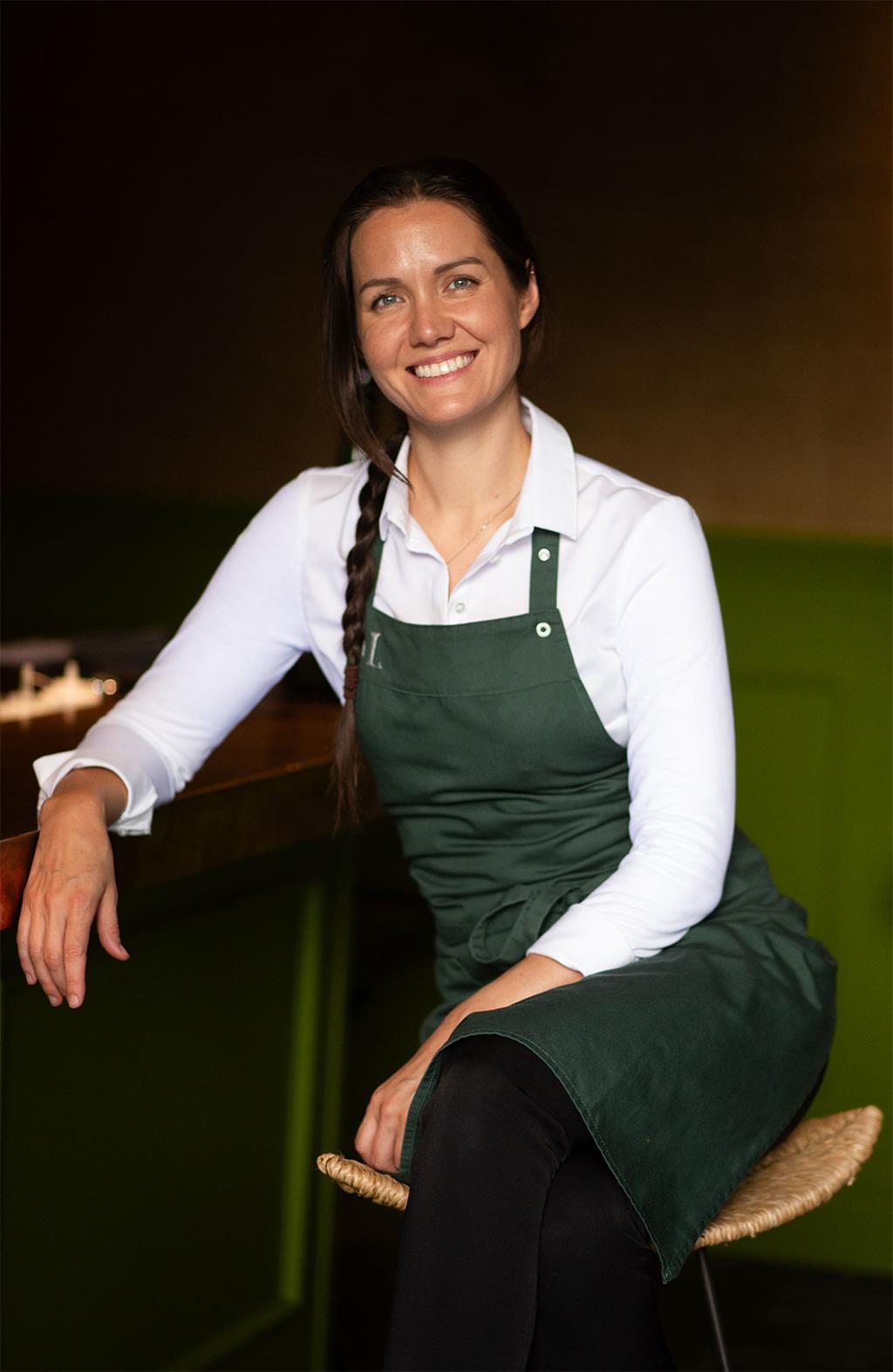 Jessica Rosval (Photo: Stefania Gambella)
“The philosophy of fire is about more than cooking,” insists Canadian toque Jessica Rosval, head chef of Bottura’s Al Gatto Verde. “It teaches a slow mindset: stay close to the source, stay curious, and be guided by how wood burns, how heat moves, how it develops flavour, how it changes with the wind, the humidity and the moment. You have to stay present, and react and adapt continually,” says Rosval from behind the dome-shaped MAM wood-burning oven fitted with a zero-pollution tank and its centrepiece Tuscan grill. For Rosval, fire cooking is not just about heat; it is about exploring and reinterpreting regional Italian traditions and making new cultural connections that feed into the dishes she creates. “Being based in the land of traditional balsamic vinegar, I am surrounded by a deep culture of wood, especially those used in the ageing of aceto balsamico tradizionale that impart flavour over the decades. I want to bring that same complexity into the slow smoking of food. For me, the wood isn’t simply fuel; it is a fundamental ingredient in the final dish.”
“I use beechwood for a clean, steady flame, Apennine oak for dense, long-lasting embers, and a rotating selection of fruit woods – like cherry, apple and pear – for delicate smoking,” elaborates Rosval. Her dishes are all about contrast: the bold heat of the open flame meets gentle smoke in smoked pasta, fleetingly burned on the fire with dashi zabaglione and smoked caviar; bouillabaisse is made with cold-smoked turbot, blue crab and prawns, and served alongside saffron-pickled fennel, cured orange and rouille. What looks like a carved pink rose is semifreddo, made using ashes from the oven and filled with sour raspberry and caviar, set on a kombu and nori cookie and bathed in rose-infused seawater.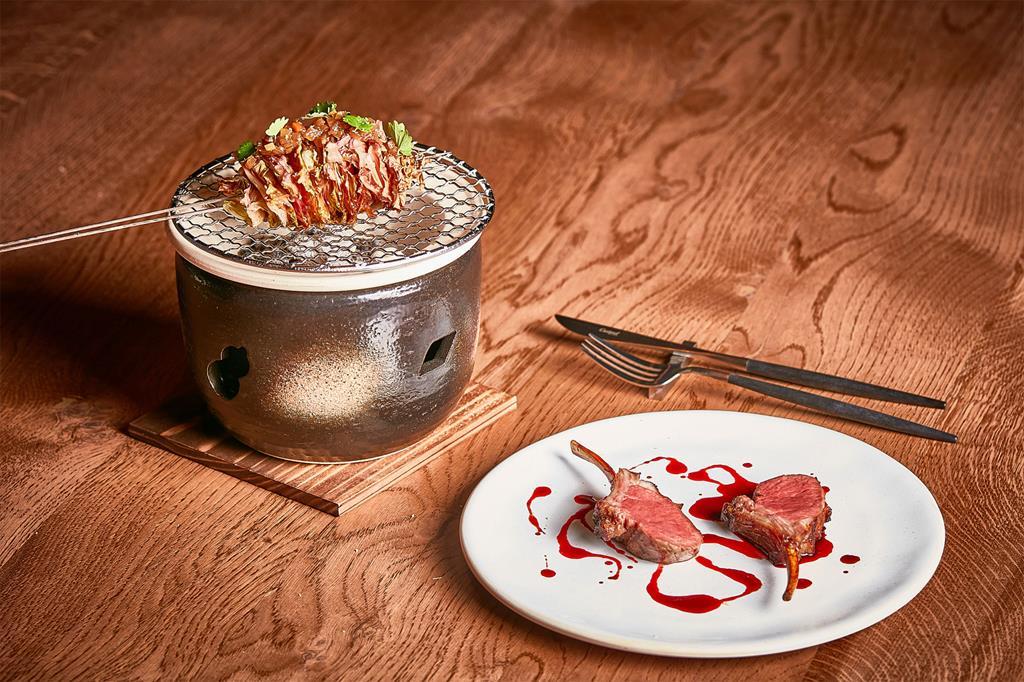 Humo
Humo
Every element of fire is considered at Humo in Mayfair, London, where Scottish head chef Robbie Jameson runs the kitchen, which features a bespoke four-metre-long wood-fired grill with a generous counter. The menu itself is divided into four categories: Ignite, Smoke, Flame and Embers. “The species of wood we use is crucial to how we develop dishes and flavours,” explains Jameson. “Every type of wood, from oak and cherry to walnut and beech, has its own profile of flavour as well as moisture and sugar levels. The way the wood smokes, burns, breaks down to an ember, and how it cools are all considerations.”
Reflecting the influence of Humo’s founder, Endo Kazutoshi, with whom Jameson had worked for seven years, Japanese ingredients and techniques are integral to the menu. Most stunning of all is the multistage preparation of a superlative hand-dived Orkney scallop. First, a stave from a vintage Speyside whisky barrel is heated over the embers. The scallop is grilled swiftly and served with a gently smoky sabayon of whisky and white kombu. Lamb, aged 33 days, is cooked on embers and served with a smoked beetroot sauce and grilled Castelfranco radicchio. Even dessert gets a technically impressive fire treatment: deconstructed lemon meringue pie, made with exceptionally vibrant Amalfi lemons, has an almond base; the Italian soft meringue is burned with oak smoke.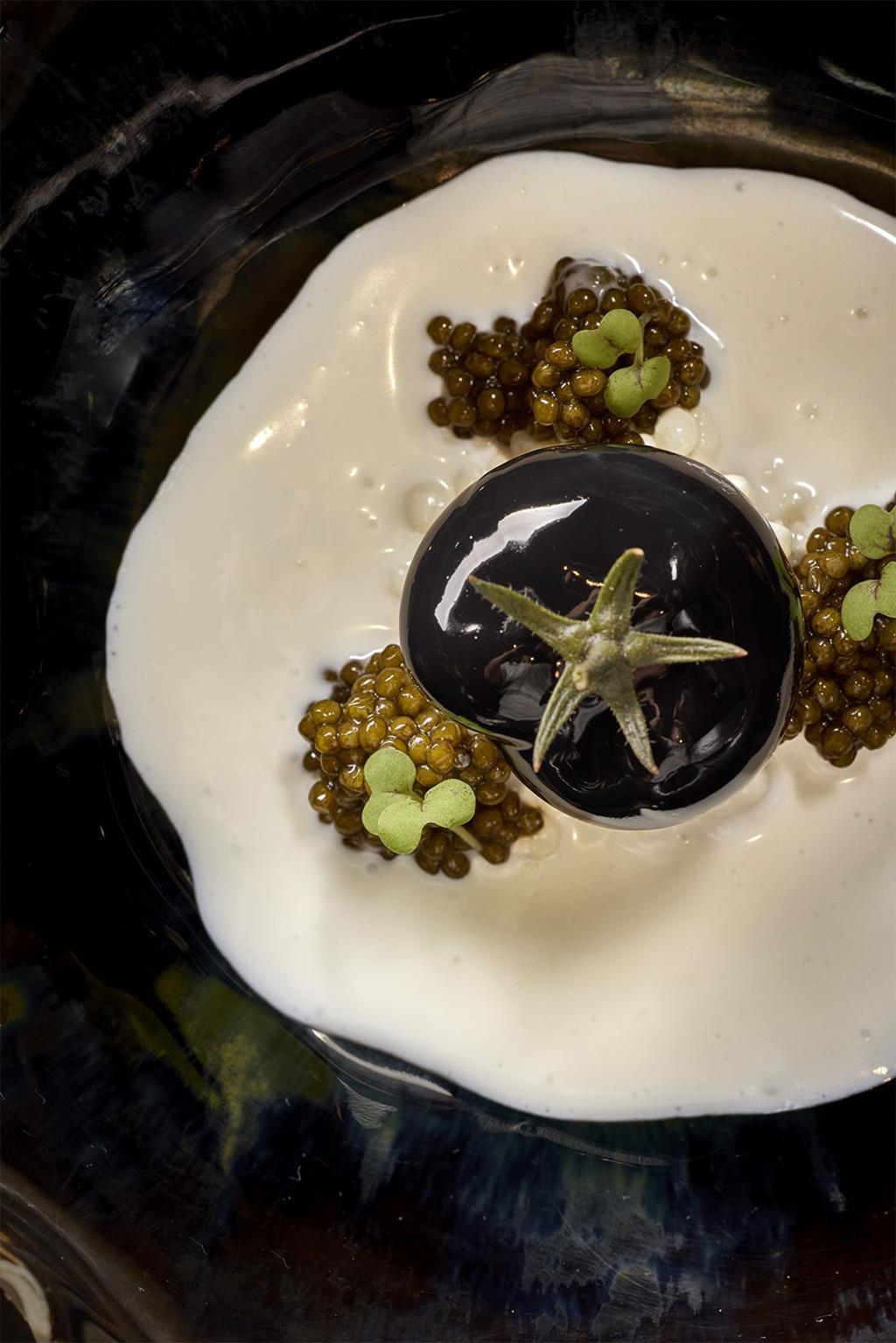 Smoked Room (Photo: Javier Peñas)
Fire omakase is how Dani García describes Smoked Room, immediately awarded two Michelin stars in Madrid (there’s a second restaurant in Dubai). Diners are seated in a dark, elegant room at a counter for eight, as if at a show or a traditional Japanese omakase restaurant. It is theatrical and immersive; the dishes are daring and ravishingly presented. Most memorable is the char-grilled baby eel prepared like a pasta with vin jaune velouté and hazelnut; and dry-aged grouper and smoked pork belly, a dish layered with smoky depth and umami, with teardrop peas providing a burst of freshness. Dessert of chargrilled pumpkin with caramelised pumpkin seeds and mandarin sorbet is a clever interplay of textures, smoke and char.
Daringly, Tetsuro Maeda – the Japanese protégé of Victor Arguinzoniz – opened Txispa in Axpe, the same village that plays host to Asador Etxebarri, and is pushing haute fire boundaries in a new direction. Maeda explains: “Rather than imparting smoky flavour, I seek to draw out the ingredient’s own roasted fragrance, such as Palamós red prawns cooked heads-down in the embers so their own juices flavour them delectably. Radically, Maeda is also exploring how to extract umami without relying on fat. As he says, “Fat no longer shouts, but whispers at Txispa. Our philosophy is very close to traditional Japanese cuisine: amplifying the essence of each ingredient.”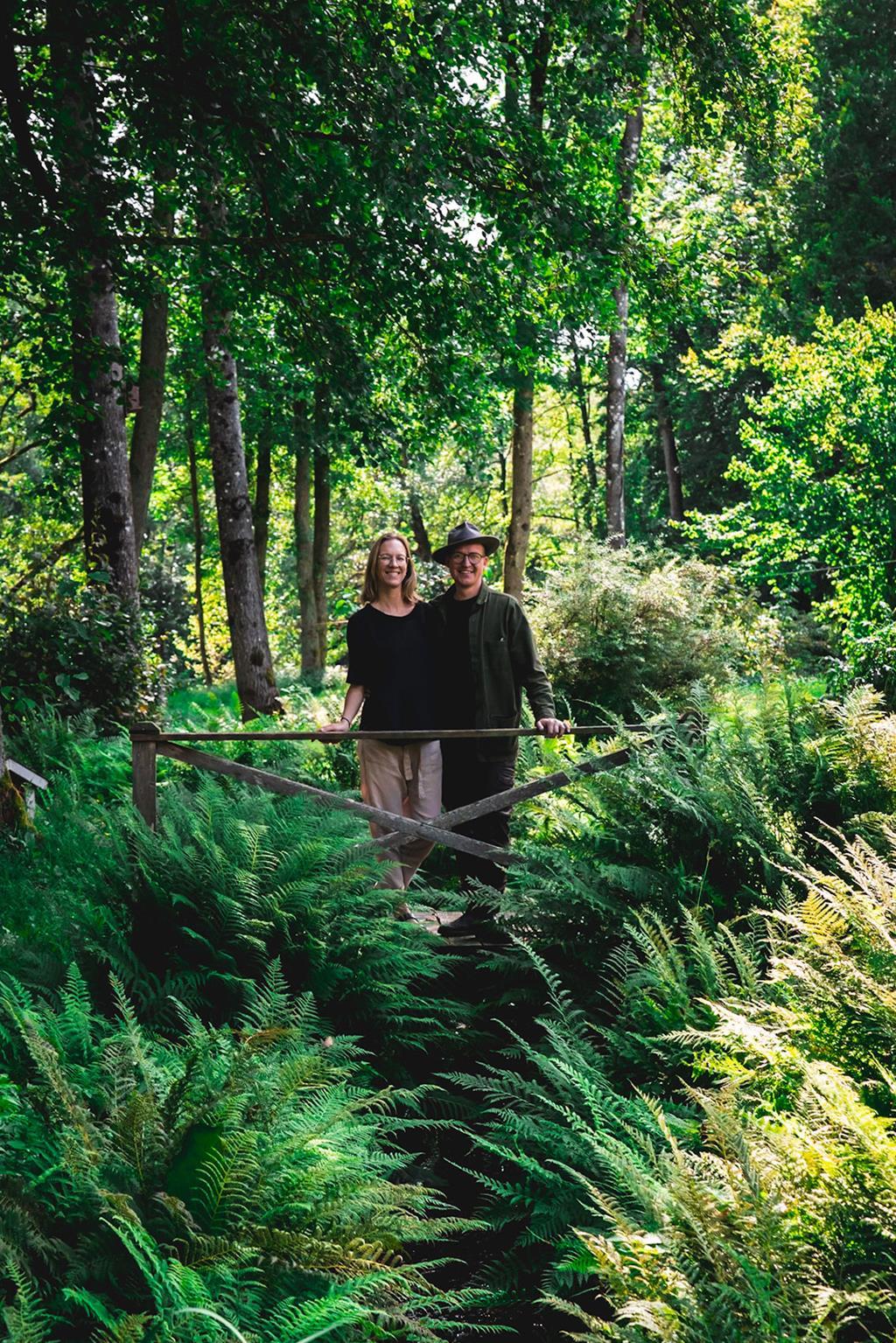 Eva and Nicolai Tram (Photo: Eva Tram)
Deep in a Swedish forest, Knystaforsen is a restaurant like no other, where the landscape dictates the ingredients and provides the wood to cook dishes such as a tartlet of burned onion with trout roe, mesmerisingly evoking smoking embers. Originally their home and retreat after an intensive culinary career in Spain and Denmark, Danish-born Nicolai and Eva Tram initially only invited guests on alternate weekends. Now they are a fully fledged – if unorthodox – restaurant with a Michelin star as well as a Michelin green star. Fire unites guests as diners from several tables gather around a bonfire outside for an intermezzo course. Æbleskiver, Danish doughnuts filled with pickled white gooseberries, are cooked on the flambadou. Campfire dining, yet not as one remembers from scouting days!
“Working with fire is like playing chess: you always need to think several steps ahead, anticipating how it will behave. That’s its challenge and its beauty,” says Stefan Doubek of Vienna’s Doubek, which opened two years ago and was speedily awarded two Michelin stars. Doubek has neither electricity nor gas for cooking, only a custom-built wood-fired oven with four fire pits.
“I see fire not just as a tool, but as a language, and it is never all on one note. There’s a constant tension between intensity and delicacy to achieve balance,” says Doubek. Cerebral dishes include Atlantic cod, dashi beurre blanc and charcoal-grilled peas. The fish is marinated with the dashi, cooked in the oven over indirect heat at almost 400°C, literally for a few seconds, surrounded by fire, yet barely touched by it. The peas are grilled directly in the embers, the charcoal intensifies their natural sweetness, and a few drops of kaffir-lime-leaf oil add further brightness. It’s a world away from the ubiquitous wood-grill restaurant.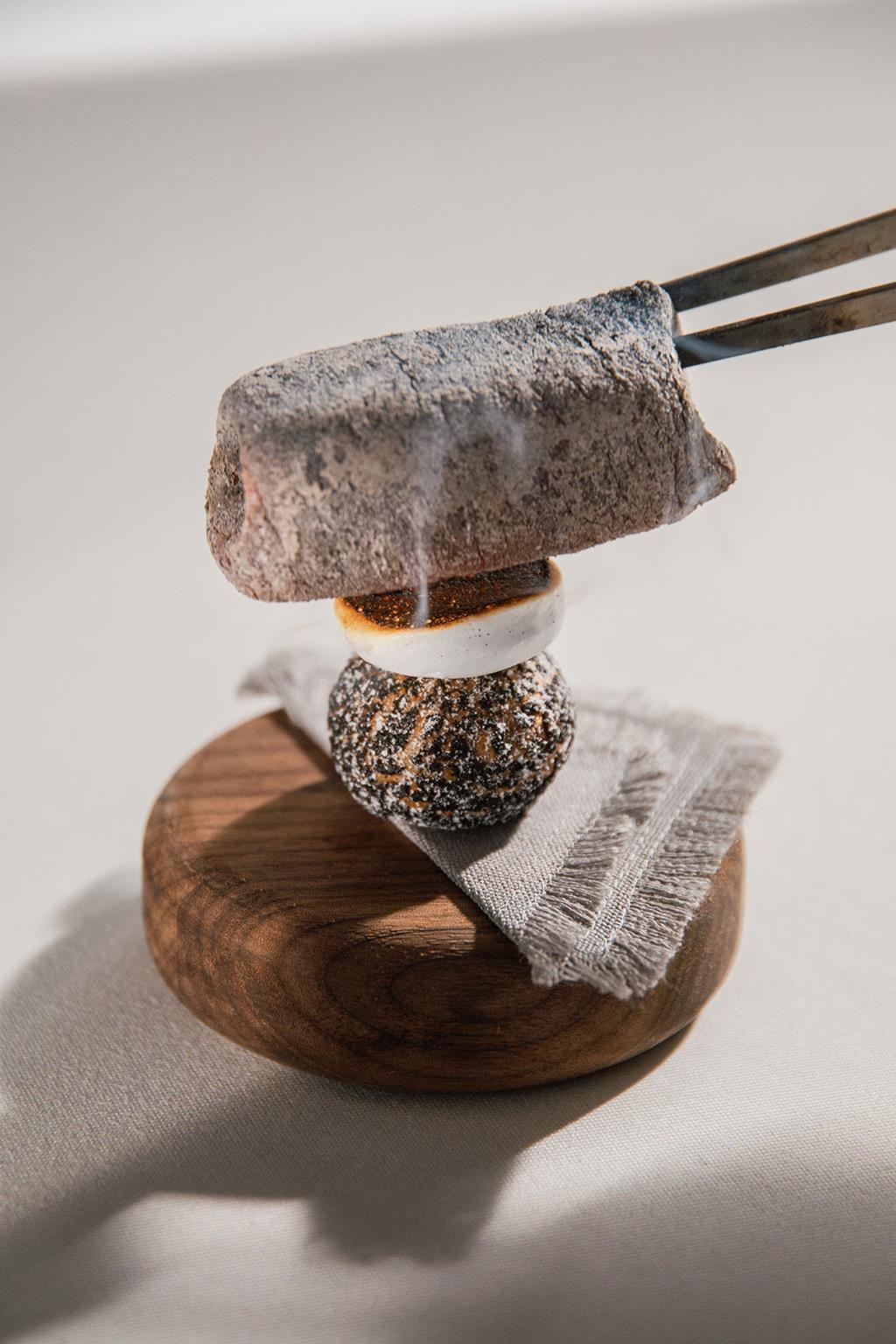 Doubek (Photo: Griesbacher-Tafner)