The Green Course
These Tokyo kitchens pushing flavour in astonishing new directions prove that sustainability doesn’t have to mean parsimony.

Within the culinary world, betting on sustainability comes with uncertainty: above all, the unpredictable availability of high-quality ingredients that neither break the bank nor degrade natural habitats for future generations of plants, animals or humans. Japan, as a relatively small ecosystem, is at the forefront of this battle.
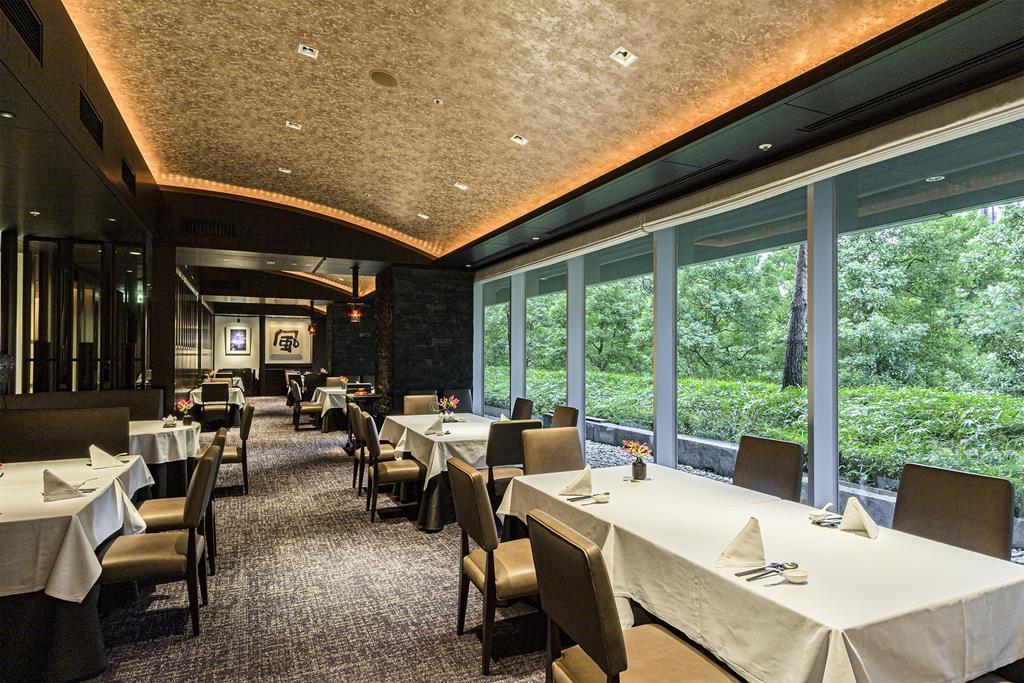
Tucked into an alley in Tokyo’s Minami-Aoyama district, Mærge is a modern French restaurant that has met the challenges of running a sustainable kitchen head-on. Opened in June 2025, the eatery (whose name combines the French word for “margin” and the English word “merge”) found near-instant fame when it snagged its first Michelin star that autumn – an unusually swift ascent to acclaim by Japanese standards. The main dining room, accessed via a corridor flush with plants, is flanked by concrete walls, but the space is still undeniably elegant and generously furnished with pieces by contemporary master craftsmen.
The sophisticated dishes appearing on various tables each night are just the final act of a much longer process rooted in relationships that extend far beyond the kitchen. “Supporting producers is essential to obtaining ingredients free from ‘deception’,” says Hideyuki Shibata, the chef-owner who harbours a proclivity for both unearthing obscure ingredients and forging deep relationships with the producers who supply them. Take, for instance, the free-range chickens bred by Gokigen Farm in Tsukuba City, in Ibaraki Prefecture. Their eggs have a clean, natural flavour devoid of unpleasant odours, making them easy to cook, delicious to eat, and near-indispensable for the exacting Shibata.
It is said that an egg’s flavour is determined by what the hen eats: you may be what you eat, but what you eat is also what your food eats. Gokigen Farm offers its chickens feed made from fermented vegetables grown on the farm’s own fields. This inevitably enhances the flavour of the eggs. But for Shibata, the story doesn’t begin – or end – with the egg. When he visited the farm in 2021, he learned that Gokigen was having trouble selling its older chickens. Their bodies languished in freezers, and they were destined for a costly disposal. So Shibata offered to buy them at ¥800 per bird. “To ensure a continued supply of delicious eggs,” he explains, “I wanted to help solve the problems faced by producers.” He named the old hens “Arama chickens” (after the farm’s manager) and began using them primarily for stock.
 (Photo: Hiroyuki Ono)
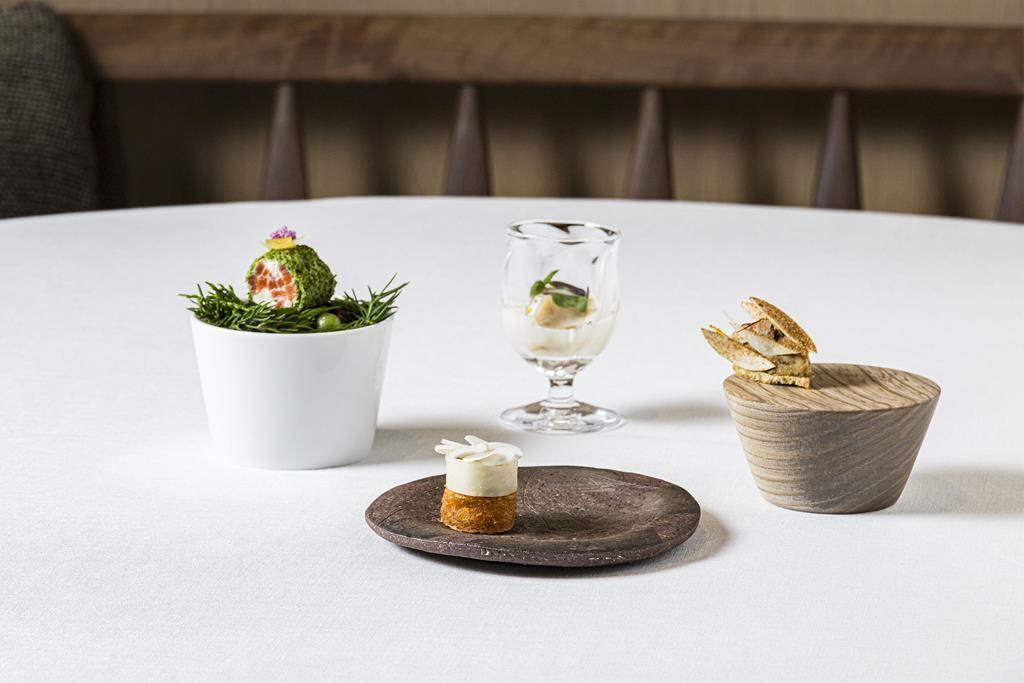
When Arama suggested Mærge begin using their meat in its dishes, too, Shibata responded with a chicken effiloché made with the flavourful, yet tough, meat of the old hens. The dish was based on a hunch. “Could the rich umami flavour of Arama chickens, raised on nutrient-rich feed, be comparable to that of Bresse chickens?” wondered Shibata. Inspired by a dish he encountered during his training in France, he got to work. Unlike many other chickens, Arama chicken is first tenderised through low-temperature cooking before being shredded into effiloché, retaining its “springiness” in every single fibre. Soon, the effiloché – served atop croustillant (thinly sliced potatoes baked, cut into shapes and fried) – became a signature dish at Tokyo’s La Clairière during the chef’s tenure there.
The success of the dish, now proof of concept, spurred its evolution: Shibata’s timbale de poulet d’Arama pinchos are now the opening act in Mærge’s 12-ish course menu. They are both firmly in line with the chef’s producer-friendly approach and deliciously imbued with the distinctive umami flavour of Arama chicken. It’s a fitting prologue to a well-considered dining experience with more than just food at its heart.
By 2024, Shibata had begun working with a food-production facility to make Arama chicken bouillon and fond de veau. Utilising some 600 birds each month, his approach had come full circle: he had converted the cost of disposal into profit. But he didn’t stop there. He soon discovered more ways of supporting producers, including the purchase of individual fruit trees, offering upfront management fees, and paying the equivalent of 300 kilograms of rice in advance.
 (Photo: Hiroyuki Ono)
While Mærge foregrounds underused ingredients while providing financial support to producers, two-starred Chinese restaurant Star Hill, within The Capitol Hotel Tokyu, is reconsidering ingredients whose value is widely regarded as seasonal. Particularly noteworthy is the hamo, a conger eel once favoured by the noted Shōwa-era epicure and artist Rosanjin. Though considered a summer staple, hamo is actually caught year-round, but demand typically dips after autumn.
Star Hill chef Takayuki Yamahashi chose to buck this seasonal orthodoxy. In his December menu, he elevated the rich taste of off-season hamo into a tofu pudding-style dish. “Lingering Hamo”, served with Jinhua ham, combines the eel with egg white to create a tofu-like texture. Visually resembling silken tofu, it offers a smooth mouthfeel where the umami of hamo shines through. The soup, dense with collagen extracted from the fish’s bones and skin, accentuates the ham’s rich aroma and saltiness, resulting in a truly profound flavour. The cooking method, which utilises every part of the conger eel except its innards, is exemplary in its resourcefulness.
As the conger eel’s bones are thick, Yamahashi employs a Huaiyang cooking technique: carefully removing the conger eel’s flesh with its bones intact and straining it through a sieve for a smooth texture, then combining it with egg whites into a clear broth to create something akin to douhua, a delicate Chinese dessert now reborn in a novel – not to mention sustainable – expression.
 (Photo: Reiko Masutani)
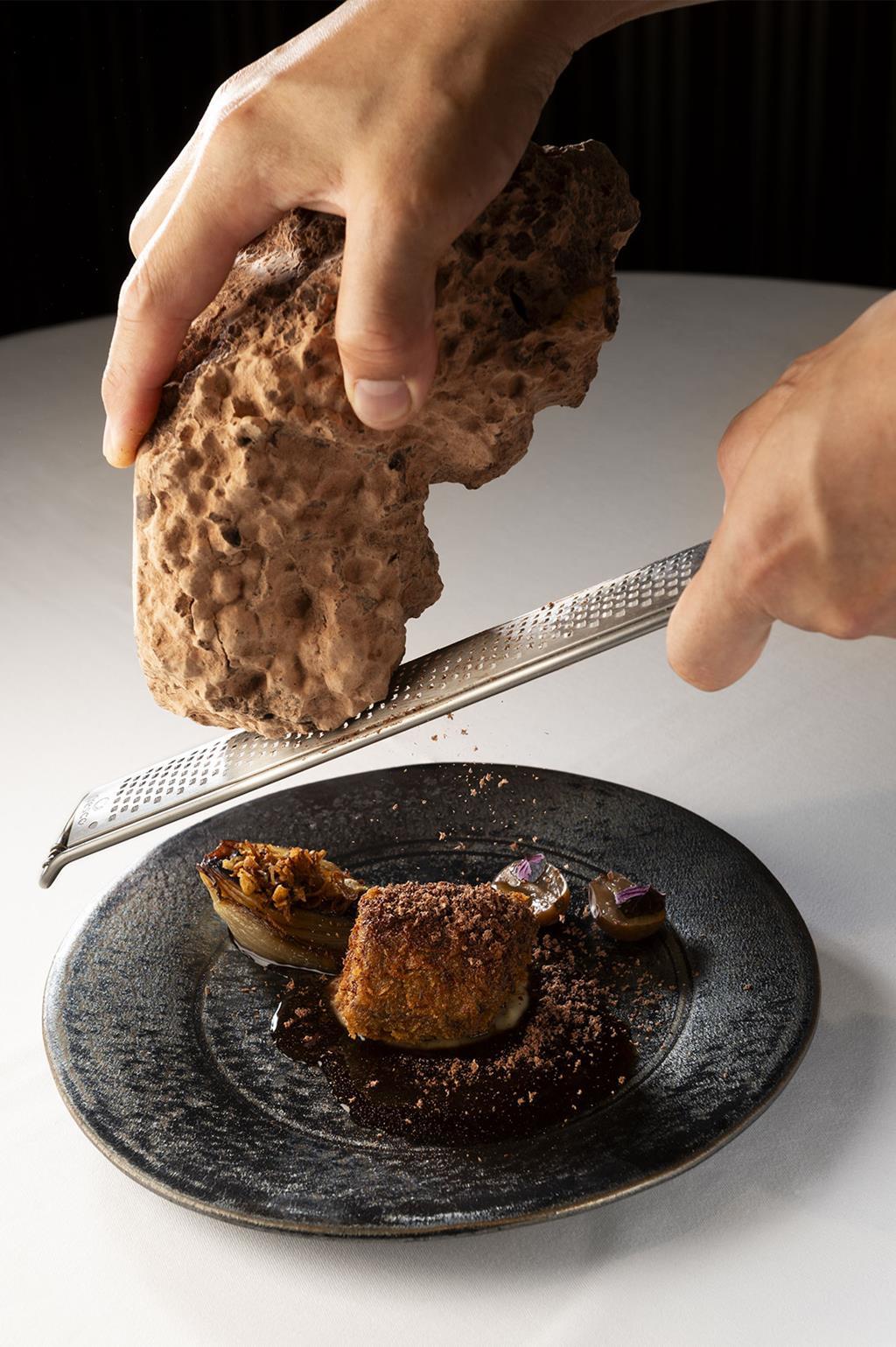
Like Star Hill, Nihonbashi’s La Paix, which has been awarded a Michelin Green Star for three consecutive years, makes the most of ingredients by balancing tradition and innovation. A recent standout course, its venison cutlet with Amazon aroma and Porto spice sauce, combines a contemporary lightness with the flavour of classical cuisine. While most venison consumed in Tokyo restaurants comes from Ezo deer, the star of this dish is venison first encountered by its chef-owner, Ippei Matsumoto, during an inspection of a processing facility in Tottori Prefecture. Originally captured for culling purposes and promptly processed, this meat proved more resilient than Ezo deer, with a finer grain and no unpleasant aftertaste.
The resulting cutlet was designed to highlight these characteristics. It impresses with a rewarding contrast between the supple texture of the lean meat and its crisp, fragrant coating made with fair-trade cocoa shavings that add a subtle bitterness and nutty aroma. The sauce, infused with spices like cumin and coriander in a base of venison stock and port wine, blends beautifully with the meat’s iron notes.
The whole ensemble is complemented with a fine confit made from Queen Nina semi-dry raisins cultivated by Sato Farm in Yamanashi Prefecture. The farm is instructed even to send grapes that have fallen from the bunch naturally. Indeed, as Matsumoto explains, French food is fundamentally “a cuisine that produces no waste”. Fish and meat are used to make stock without discarding bones, and fruit, too, lends itself to a wide range of uses. Making use of non-standard fruit helps reduce food waste, and sourcing it at fair prices also supports farmers. Matsumoto not only avails himself of non-standard agricultural output, but is also keen to protect marine resources. A member of the culinary collective Chefs for the Blue, he regularly works with underutilised fish and marine life farmed using sustainable methods.
 (Photo: Hiroyuki Ono)
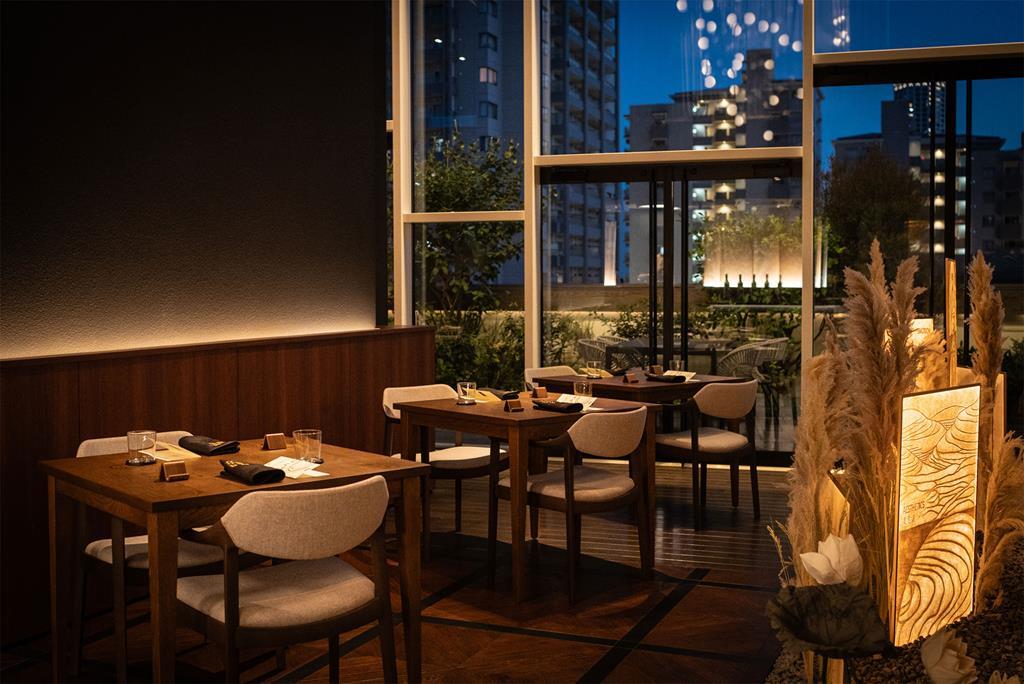
Sustainability can also extend beyond ecology to encompass memory and meaning. Nén Danang earned Vietnam’s first Michelin Green Star in 2024. In 2025, it pocketed a second, opening its first overseas flagship, Nén Tokyo, that September. The restaurant maintains a balance of roughly 50 per cent Japanese and 50 per cent Vietnamese ingredients, the latter comprising primarily spices and other speciality goods. By actively using overlooked produce such as straw and rice bran by-products as well as oft-ignored fish, Nén aims to reduce waste and find new beauty and meaning within the food cultures of both countries.
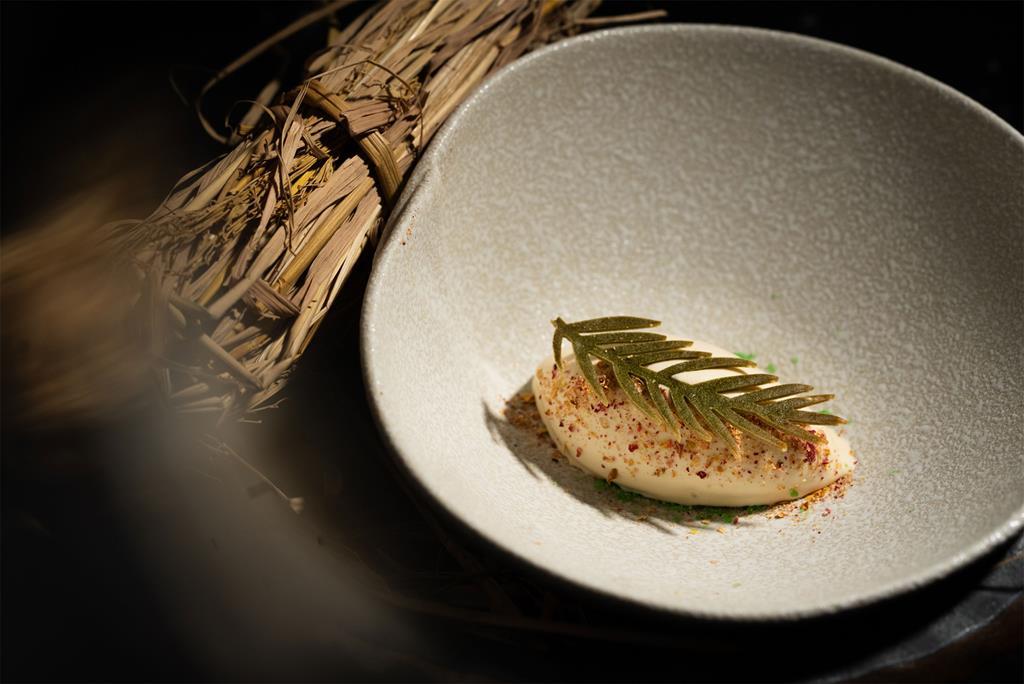
For instance, in a course dish titled “River, Mountain, Sea, Sky”, the use of smaller scallops, rarely favoured by the market, helps curb excessive demand for larger ones. The molluscs are seasoned with cardamom, shallots and chilli to lift their umami and aroma. The meal closes on a softer note with a dessert dubbed “Second Home”, which features milk ice cream infused with simmered straw and topped with tuilles baked with rice-bran powder. It pays homage to the rice-farming culture shared by Vietnam and Japan while revaluing by-products. These almost narrative creations embody Nén founder and the executive chef Summer Le’s steadfast commitment to sustaining these beautifully complex culinary traditions. It turns out that in the end, sincerity may be the richest flavour of all.
 (Photo: Hiroyuki Ono)