Between the Lines
There is more than meets the eye in Hong Kong’s museums and galleries, where an intoxicating cocktail of self-expression, memory and a centuries-long tradition of stoic defiance offers a soul-reviving balm in an age of overreach.

The more time I spent moving between the vast gallery spaces at M+, the more the contemporary art museum felt like classic Hong Kong, taking, it seemed to me, an interminable delight in risk with a feisty self-confidence and “up yours” spirit. On one wall, there was a sequence of four portraits by Geng Jianyi – faces laughing to the point of hysteria, wearing expressions of extreme irreverence. Around the corner, a three-minute video by Zhou Tao looped, showing shop assistants in China lined up before their workday, each shouting their assigned number on cue. Then, there was a polished wooden sculpture by Wang Keping of a mouth gripped by a hand, its neck restrained by a chain.
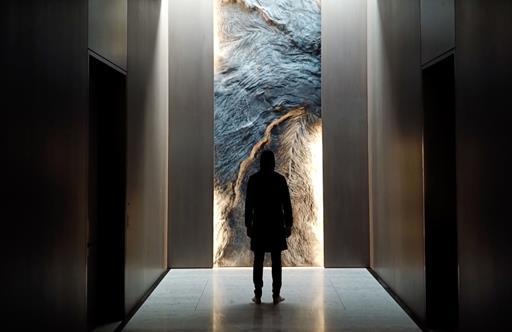
Some of the art here is unabashedly political, some playful, some pull off both. They are part of the Sigg Collection, one of the greatest troves of contemporary Chinese art on Earth, which chronicles the time around the Cultural Revolution to today. With more than 1,500 pieces from a single collector, and more besides, this visual arts museum, unveiled in 2021, secures Hong Kong on the world’s axis of art.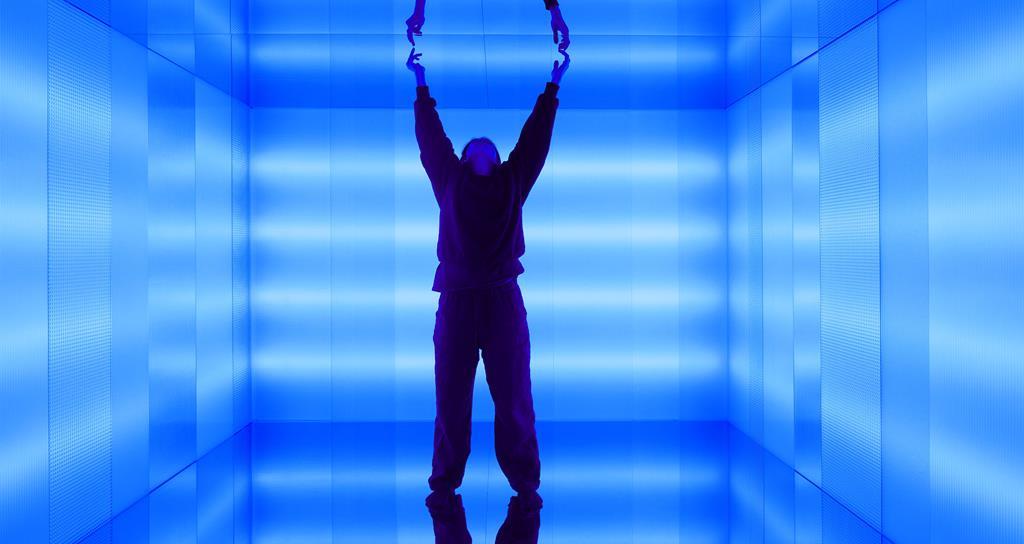 Nanda Vigo, Ambiente cronotopico vivibile, 1967/2023 Installation view of Inside Other Spaces: Environments by Women Artists 1956–1976, Haus der Kunst München, 2023 © The heirs of Nanda Vigo, Photo: Agostino Osio – Alto Piano,Courtesy of Haus der Kunst München
Some might argue that you can’t build culture by pouring concrete, but M+’s striking architecture can’t help but. Designed by Herzog & de Meuron, the lateral galleries stand in contrast to Hong Kong’s vertiginous cityscape. Inside, there’s a raw industrial aesthetic, and the exterior features a massive LCD screen, its coloured lights reflecting into Victoria Harbour. M+ is a keystone venue of the evolving West Kowloon Cultural District, sitting alongside the Palace Museum and Xiqu Centre for Chinese opera, and there are new theatres and performing-arts centres in construction. “People have finally stopped asking me about Hong Kong as some kind of cultural desert,” Doryun Chong, artistic director and chief curator at M+, told me. “Not only do we have cultural institutions of global reach, there’s been a sea change in the arts ecology – and a switch in how Hong Kong perceives itself.”
Chong gives much of the credit for this transformation to small, independent indigenous art spaces such as Para Site and Asia Art Archive, which, he told me, “have always punched above their weight”. When I was in town, Para Site, a 29-year-old institute of contemporary art in Quarry Bay, was showcasing modernist artist Ha Bik Chuen with an illuminating display of his collagraph plates, etched with Chinese oracle-bone scripts and imprints of sawdust, rattan and jute. Ha is renowned for documenting, with his camera, Hong Kong’s radical art scene in the 1980s and 1990s, a time of dramatic socioeconomic change in the city.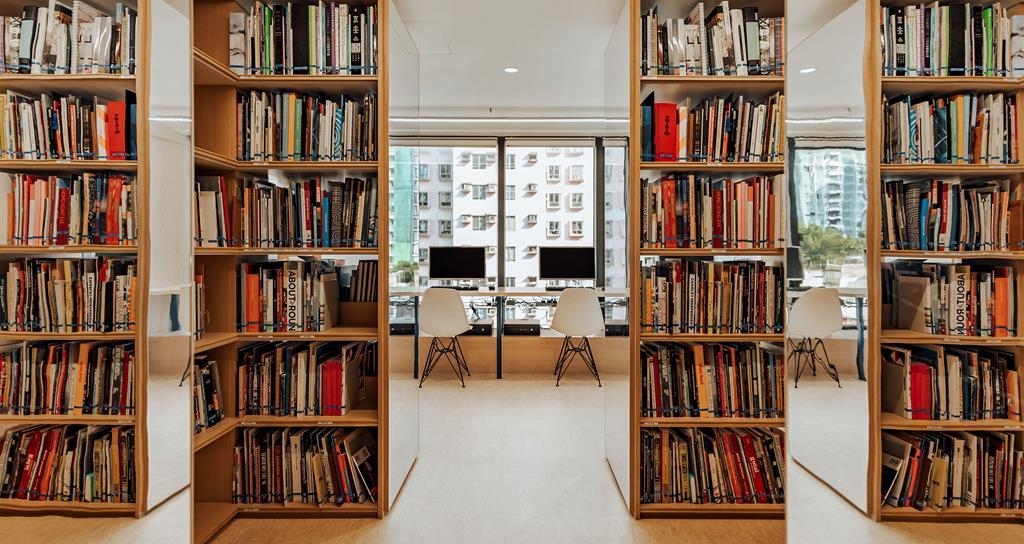 Asia Art Archive (Courtesy of Moving Image Studio)
Ha is also celebrated by the non-profit Asia Art Archive, a book-lined retreat in blond wood with natural light, open to the public and tucked away on the 11th floor of an office block in Sheung Wan. Much more than a repository of art history, it favours creatives, like Ha, with expanded roles in societies as critics, educators and journalists. “We want to see how artists travel, how ideas travel, rather than focus on the archive of an individual,” senior curator Özge Ersoy told me. There are few better places to see the world this way than in Hong Kong, one of the great mercantile ports, with all its fluidity and East-meets-West pluralism.
The tiny territory also boasts big-hitting galleries, such as White Cube, Hauser & Wirth and Gagosian; once a year, Art Basel Hong Kong erupts on the waterfront. All this crowns the city as a leading hub in the business of contemporary art – in spite of an uneven economy since 2019, when it was rocked by anti-China, pro-democracy protests. The authorities came down hard, and then Covid swept through, shutting down any semblance of mass public protests. When the national security law was passed the following year, it covered sedition, activities endangering national security and collusion with external forces. Some of the overtly political – including artists – fled; those who stayed are learning how to tiptoe around the boundaries. (Some spoke to me, but only off the record.)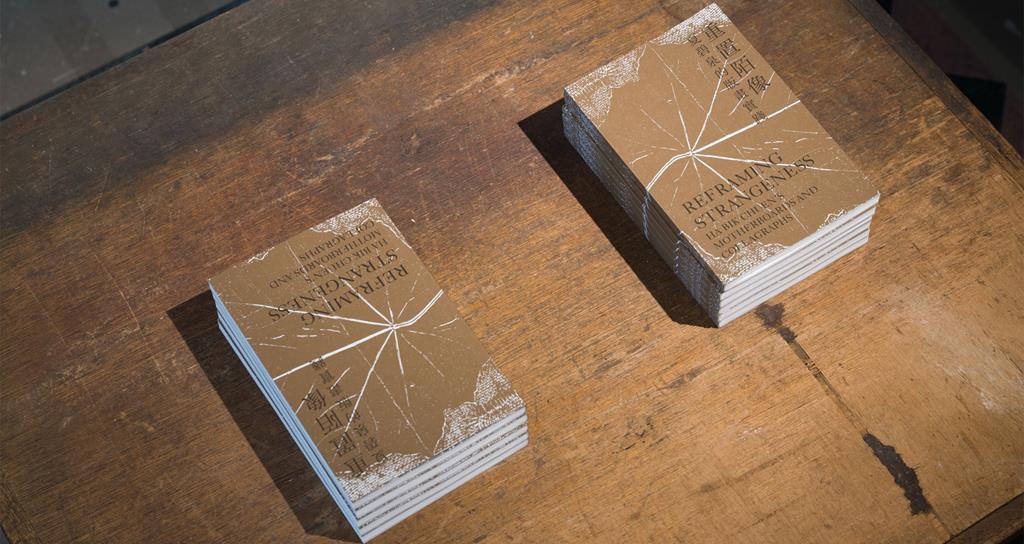 Catalogue of Reframing Strangeness: Ha Bik Chuen’s Motherboards and Collagraphs, Para Site, Hong Kong, 2025. (Photo: Felix SC Wong)
As founder of Grotto Fine Art, Henry Au-yeung knows these challenges well, as he exclusively showcases Hong Kong artists in his cavernous Shau Kei Wan gallery. “Before 2019, artists in Hong Kong only had to be brave,” he said. “Now, as new voices adjust to the new environment, if they want to vent their anger, they understand it is safer to ask questions than give answers.”
Of course, Hong Kong can no longer be singled out, as, around the world, the arts are facing down threats of cancellation, oversight committees and funding cuts.
I took the MTR metro south to the Wong Chuk Hang neighbourhood, navigating its evocative backstreets with mechanics working next to microbreweries and printing presses alongside outdoor-sports stores selling stand-up paddleboards. Among the industrial warehouses, I entered a goods lift, and on the third floor, I popped out at Gallery Exit to meet its co-director, Hilda Chan. Between shows, surrounded by boxed art and bubble wrap, she explained: “If artists want to say something, they will find a way; they are willing to push. But now the rest of the world is chaotic, too. The more pressing issue is how Hong Kong fits into that new world.”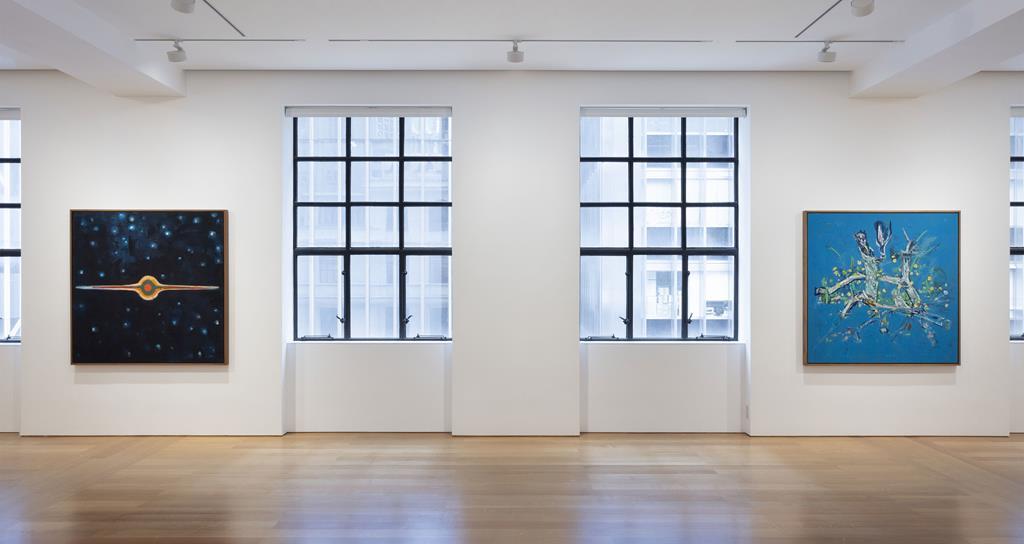 Cy Gavin 2025, installation view, Artwork © Cy Gavin, (Photo: Ringo Cheung, Courtesy Gagosian)
Back in Central, Tai Kwun is a non-profit arts venue housed in the former colonial police station and prison. Here, I met Pi Li, head of art, in the vast complex’s JC Contemporary gallery, which was showing an exhibition by Japanese artist On Kawara, resonantly named Rules of Freedom, Freedom of Rules. Li used to work at a gallery in Beijing that I myself used to frequent 30 years ago, and he was quick to warm up. “It’s like Hong Kong is on a seesaw with the mainland,” he said. “When China goes through a culturally conservative or nationalistic time, Hong Kong can play an important role in contemporary art and modern culture. Our institutions are more open; it’s a more relaxed environment to talk about common urgent issues. These are sad, challenging days all around the world, but limiting conditions create ingenuity.”
Tai Kwun is an island of culture in a sea of retail and commerce, made up of a series of courtyards in red brick and granite, with exhibition and performance spaces as well as outlets to eat and drink. “We have the resources, facilities, good programming, a diverse, mature audience, interesting curators and media,” Li went on. “All that is significant.” It helps Tai Kwun attract around a million more visitors annually than the Pompidou Centre in Paris – perhaps not all that surprising given the population of 87 million-plus in the Greater Bay Area, which incorporates Shenzhen and Guangzhou. “Hong Kong is now more porous with these surrounding regions, we’re able to have more exchanges,” said Chong at M+. 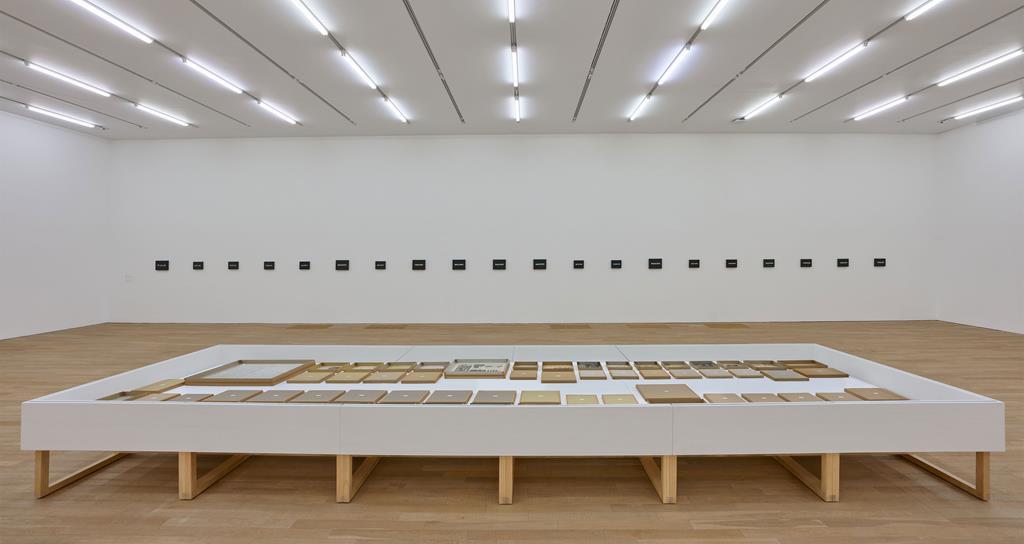 Exhibition view of On Kawara: Rules of Freedom, Freedom of Rules, Tai Kwun Contemporary, Hong Kong, 2025 © One Million Years Foundation
Hong Kong is undergoing another extreme shape-shift, exploring, as it is now, the interplay between local identity and global influence; its future trajectory is, yet again, unclear. At the University of Hong Kong, I met up with Ying Zhou, who teaches architecture and had just returned from the Venice Biennale, where she had been co-curating the Hong Kong exhibition. Her research looks at arts ecologies in Hong Kong, Shanghai and Singapore. “Artists in Hong Kong have been wary since 2019,” she said. “They don’t provoke nowadays, but they do say, ‘We will remember’.”
“Are you more careful?” I asked.
“Yes, everyone is,” she replied. “We are learning how to deal with the overreach.” Yet she also added that you could never have Asia Art Archive or Para Site in China, or even Singapore. “They’d be shut down,” she said. “These places are a resistance.” And where there is resistance, there is hope.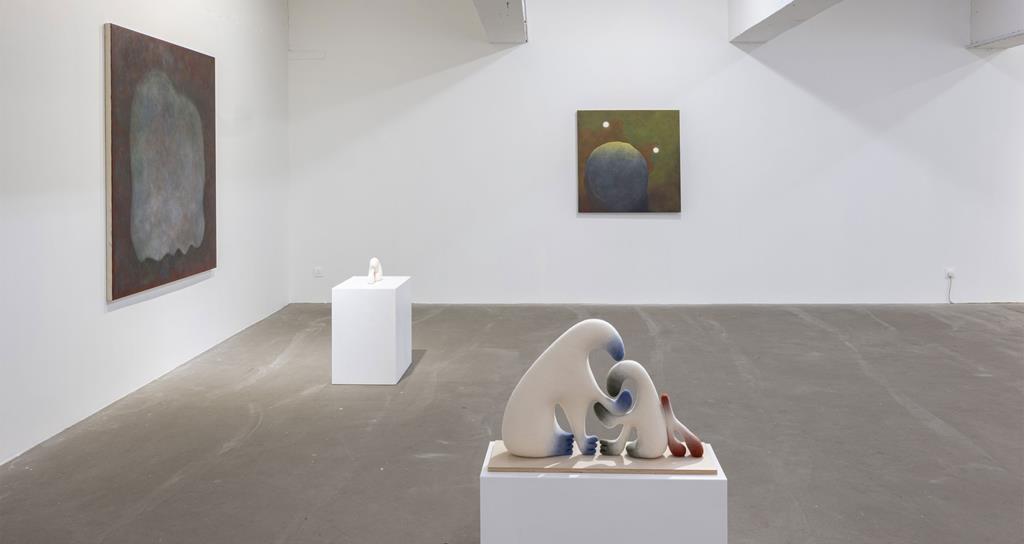 Installation View of Those Off Gazes, Courtesy of Gallery EXIT and the artist
Where to Stay
Mandarin Oriental is a Hong Kong landmark, dating back more than 60 years, and with waterfront views. The signature Cantonese restaurant Man Wah is on the 25th floor, across from The Aubrey, a buzzing izakaya-inspired gastro bar. The Murray, Hong Kong, A Niccolo Hotel is set in a historic 1960s building with interiors by Foster + Partners, just beside Hong Kong Park and within earshot of the bells of St John’s Cathedral. Popinjays serves Italian food on the 26th floor and also has seating on the alfresco terrace.
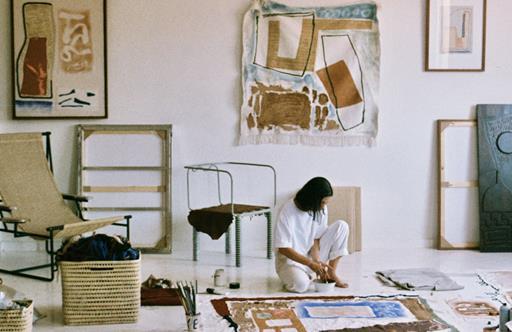
Header: Grotto Fine Art (Copyright: South Ho)