Friendship Island
How a group of friends’ weekend retreat became a blueprint for mindful hospitality.

Towards the end of 2003, a group of friends – expats working in Singapore, most of them in finance – heard of an uninhabited island for sale in Indonesia’s Riau Archipelago at the edge of the South China Sea. One weekend, they took the ferry to the resort island of Bintan, hired a fishing boat and set out to explore. Eight kilometres offshore, they found it: a 15ha speck of virgin rainforest ringed in shell-strewn white-sand beaches, pristine reefs and mangroves, and dotted with white granite boulders.
There was no sign of human habitation, bar some fragments of pottery – evidence, they think, that historically merchant ships used to stop there (there is fresh water on the island). “It was hard to believe this piece of paradise so close to Singapore could have remained uninhabited and untouched,” one of the friends recalls. So they clubbed together and bought the leasehold title to it.
At first, they used to come and camp, bringing gas canisters to fuel a field kitchen. But over time, as their families and desire for comfort grew, they had bamboo villas built, designed to have minimal impact on the ecosystem. And having implemented an infrastructure and realised that there was only so much time they could spend there, the group set about adding more and turning it into a hotel, named Nikoi after the island.
Publicised largely by word of mouth, it was an immediate success, so much so that its owners began to look for another island. And so, in time, Nikoi acquired a sister property, Cempedak, another larger uninhabited island in the same archipelago.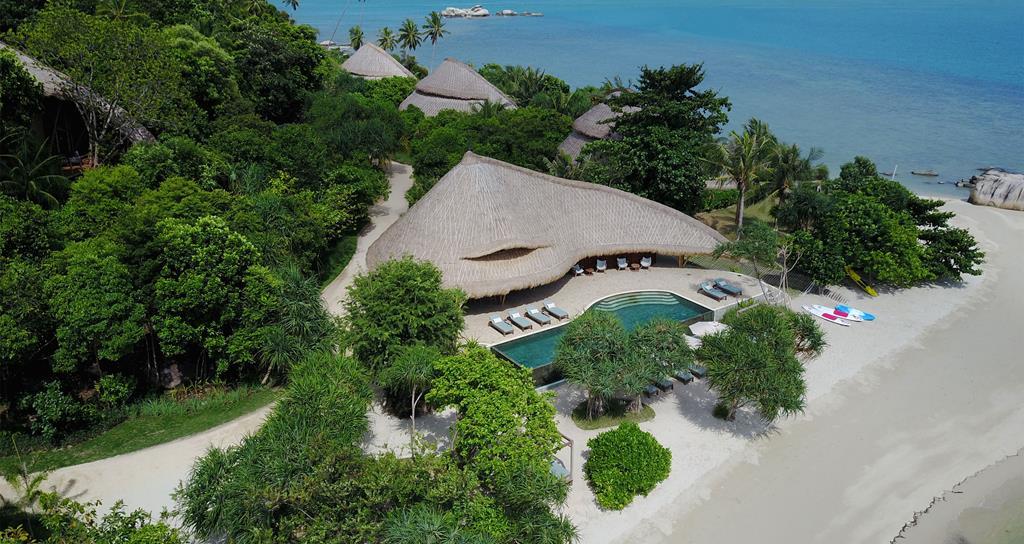
If Nikoi is a family resort, Cempedak is aimed at adults. There are 20 spacious (over 150sq m) and secluded two-storey, crescent-shaped villas ranged across its 17 hectares. Built from bamboo and thatched in alang-alang grass – and admirably free of any sort of plastic – there are half a dozen on higher ground, surrounded by rainforest with views out to sea, the rest are closer to the beach, which is picture-perfect at high tide, less so when the sea recedes to reveal mudflats you won’t want to cross to reach the water. But each has its own teardrop-shaped 15sq m pool, and there’s one large enough to swim laps at the Boathouse, where a selection of Laser sailing dinghies, RIBs, kayaks, paddle boards and a handsome 1970s speedboat are stored.
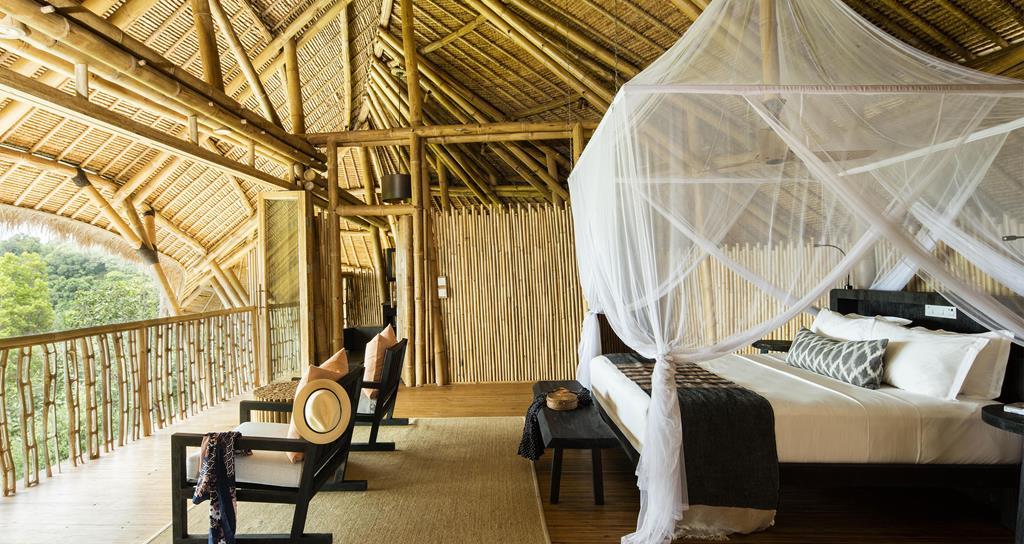
The villas are all, to some extent, open to the elements at the front, though the bed and downstairs seating area are protected by folding wood-and-glass screens. There’s no air-con (instead, there are ceiling fans and sea breezes), nor are there locks on the doors (there’s a safe in the dressing area). During my visit, the only intruders – a fact of life in an equatorial jungle – were animals: a water monitor, looking disconcertingly like a baby Komodo dragon and almost a metre long, shared our garden; the crab that scuttled into the pool overflow; and the bat that strayed into our bedroom one night. No harm done. My husband and I were safely under a mosquito net, not that there were any mosquitoes.
Elsewhere, we spotted majestic oriental pied hornbills (imagine a monochrome toucan), Brahminy kites, sea eagles and stork-billed kingfishers – just a handful of the 50 bird species identified on the island – not to mention butterflies the size of your hand and the glittering webs of golden orb-weaver spiders. There’s a daily nature walk led by one of the staff, and, for the intrepid, a more challenging ranger-guided walk through the tangled depths of the island’s hilly interior, which is home to silver-leaf monkeys and the even shier, critically endangered Sunda pangolin.
I had feared five nights might be too many and there’d be nothing to do but, looking back, I doubt even a full week would have felt long enough. Aside from rock climbing, archery, tennis and croquet, there were boat trips to neighbouring islands with stilted fishing villages and sea-nomad communities. And there’s a delightfully unpretentious and inexpensive spa, where the only soundtrack is the sea, and the quality of massage is outstanding.
Most guests, however, barely stray from their villas except, each evening, to the Dodo Bar, a splendid structure with a spiral pagoda roof thatched in black Balinese temple grass and named after the extinct bird, whose closest living relative – the rare and extravagantly plumed Nicobar pigeon – is still found on Cempedak. From there, it’s a short walk along an elevated walkway to the restaurant, where every table has a sea view and there’s a large open kitchen.
Three-course meals are served three times a day: a lavish breakfast of fruit, sticky Indonesian cakes and pastries, and then eggs (sourced, like many of the ingredients, from the hotel’s farm on Bintan), or something spicy with noodles or rice; an Indonesian lunch; and a more international dinner in the evening.

In principle, there’s no choice at lunch and dinner, but likes and dislikes (and allergies and intolerances) are accommodated without fuss. Not only do the staff remember your name, but also how you take coffee, whether you prefer still or sparkling water and, in our case, that we’d always prefer a local dish to a European one if a switch were possible.
Indeed, the beauty of the island notwithstanding, it’s the confident, chatty, caring and clearly cared-for people who work here – a staff of over 250 across both islands – who make it such a happy place to stay. (I’d give Lulu a job in a heartbeat.) I loved the pride with which one of them took us into the staff kampong (village) to show us the stupendous bank of batteries where the solar power is stored, and the way the ranger with whom we explored the island invited us to a staff volleyball match that evening. “We’re not professional,” he said. “But we’re very competitive.”
Some are graduates of education programmes funded by the hotels’ charity, The Island Foundation, which runs teacher training and projects for villagers across the archipelago, offering classes in subjects ranging from soil management to English and IT skills. It’s chaired by one of the four friends who first set out to find the island. And the company that owns and operates Cempedak and Nikoi is still headed by another of the founders.
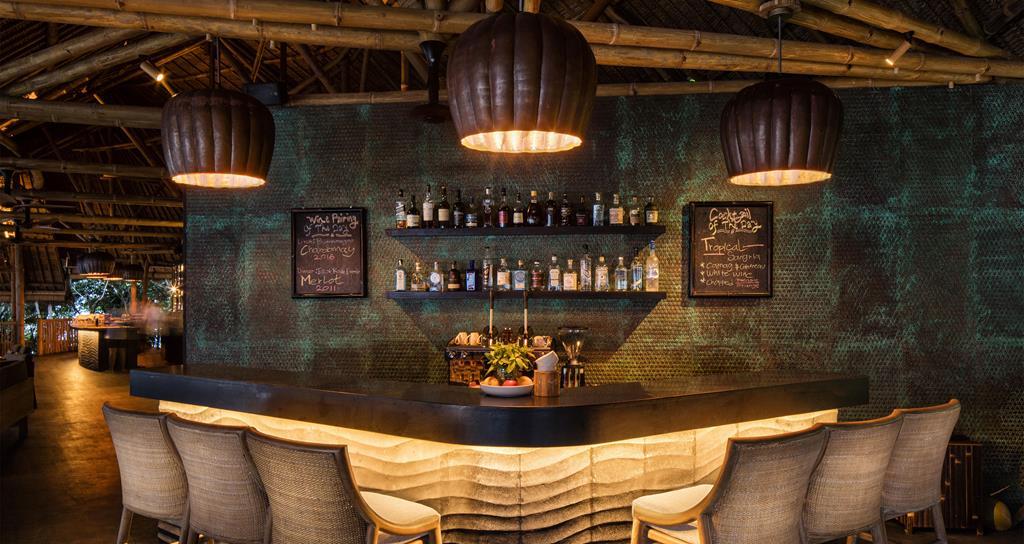
And perhaps this is what makes it so special. It’s a slick operation, no question. There are cold towels and welcome drinks, and air-conditioned cars to meet you from the moment you arrive in Bintan. And there’s no faulting the villas’ comfortable, thoughtfully lit and immaculately maintained interiors.
But just as the original Aman Resort, Amanpuri, grew out of a decision by its visionary founder, Adrian Zecha, to build himself a holiday home on Phuket, and the first Family Coppola Hideaway (there are now six), Blancaneaux Lodge in Belize, began life as a place to which Francis Ford Coppola, who’d acquired a taste for jungle living while shooting Apocalypse Now, would retreat to write, so there remains the very real sense that it was born less of a desire to build a business than to create the perfect setting for a laid-back tropical holiday. The next stop on our Indonesian itinerary was Amanjiwo. I loved that, too. But it’s Cempedak I’m pining for. 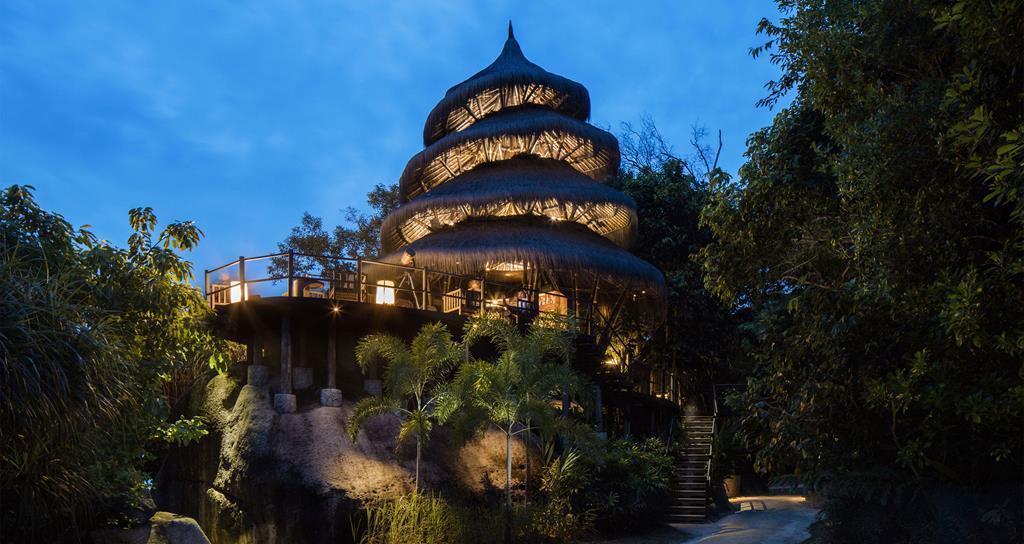
All images courtesy of Cemepdak Private Island